
11 Bedroom Paint Colors for Rooms That Face the Street

On this page13 sections
- A warm greige, not a blue gray
- Soft clay, stopped before pink
- Pale oat, lighter than the curtain
- Sage only with the warm bulb already in
- A sand that does not match the blinds
- Deep taupe on the headboard wall only
- Trim a step lighter, not paper white
- Ceiling in the wall color, flat
- Skip the colors that flicker in headlights
- Eggshell, and a nap of the roller in one direction
- Three chips, then one night
- Tips Before You Start
- FAQ
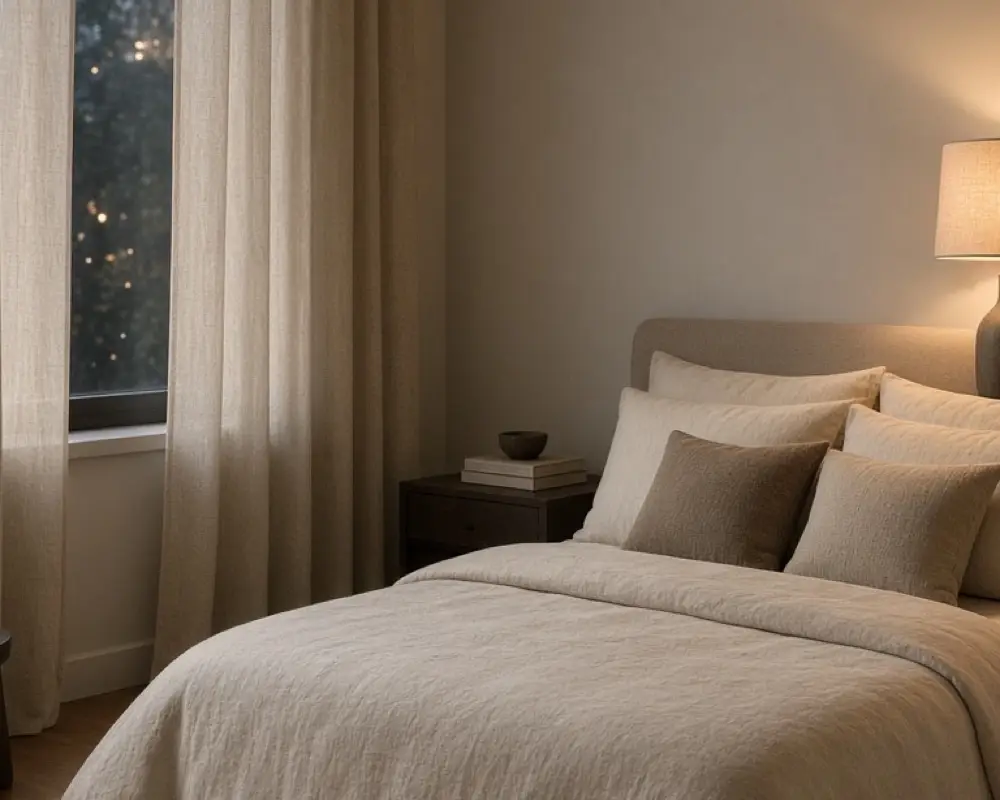
Relaxing bedroom paint colors change after dark when the room faces the street. A chip that looked soft at noon can go blue under a streetlamp, or pink under a warm bulb you did not test. The useful colors here are the ones that stay quiet with the curtain half drawn and a 2700K lamp on. We are not picking a trend. We are picking a wall you can sleep beside.
Paint the sample on the wall that gets the street, not on a board you carry from the store. Look at it at 10 p.m. The sage bedroom post is one family of greens. This list is the wider set for a room that never goes fully dark.
As an Amazon Associate I earn from qualifying purchases.
1. A warm greige, not a blue gray
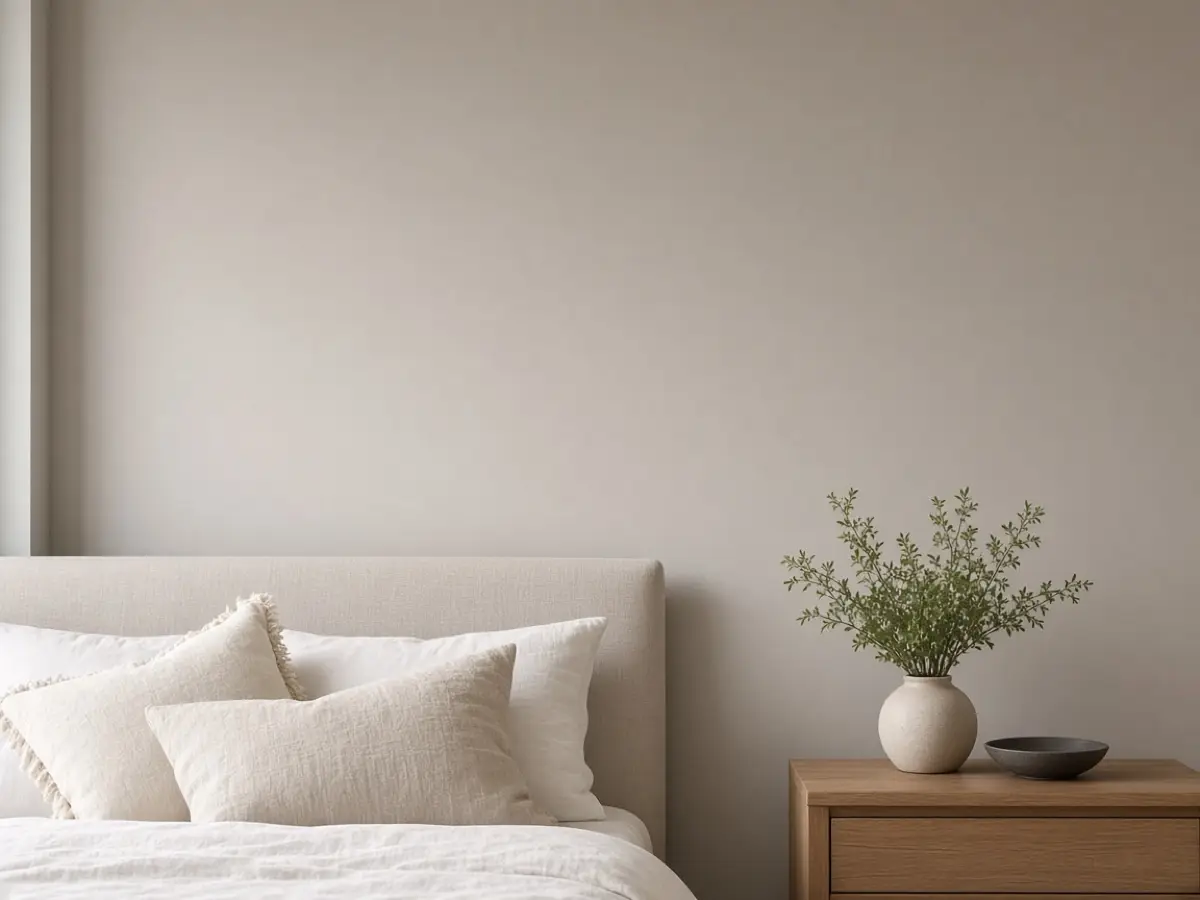
Greige works in a street-facing room when the gray is brown, not blue. Blue gray picks up the LED streetlight and looks like a hallway. Ask for a greige with a warm undertone and paint a two-foot square by the window. If it looks like wet concrete at night, it is the wrong can.
Keep the sheen eggshell on the walls. Flat hides dents a little better, but it marks when you wash a scuff, and street dust does land on the sill wall. Eggshell cleans. Do not go satin on a wall you see from the pillow. The shine will catch every headlight.


2. Soft clay, stopped before pink
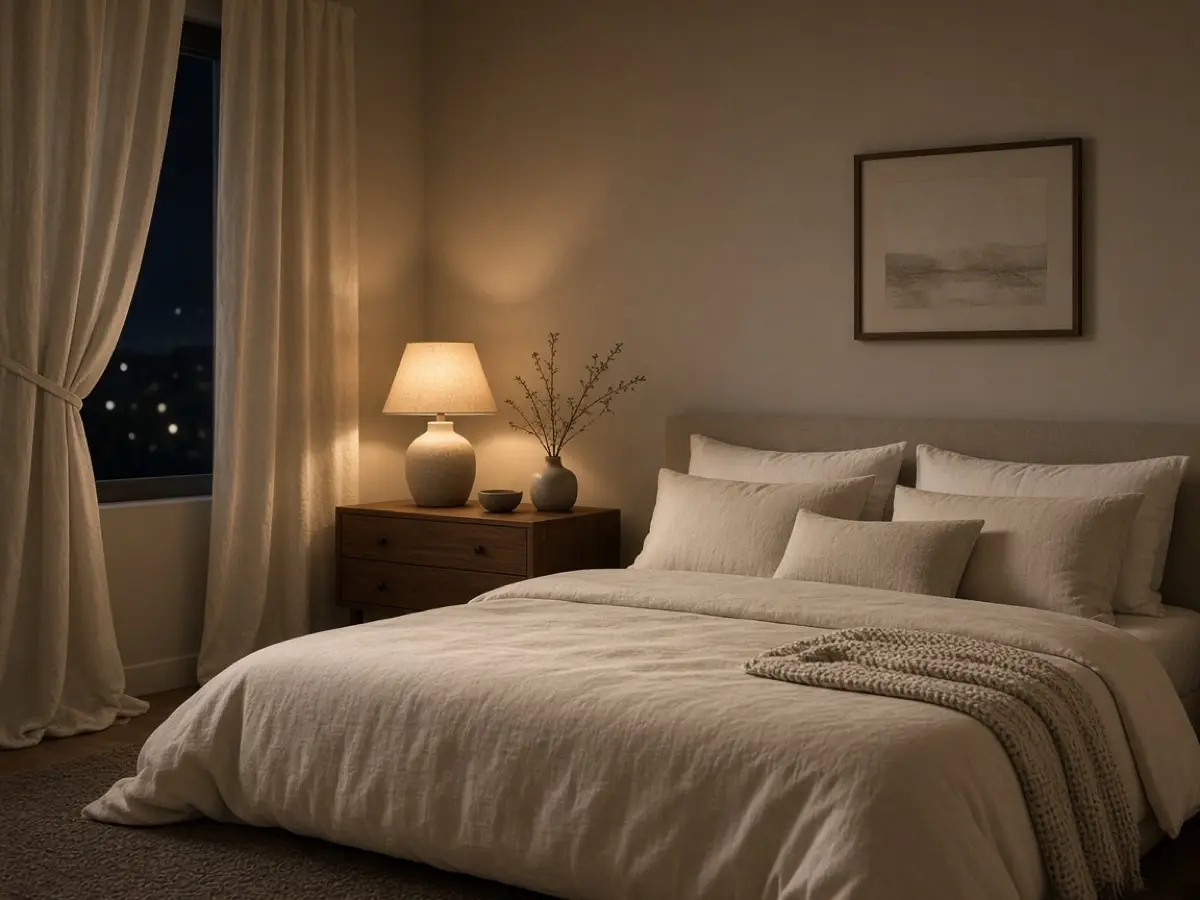
A light clay, the color of a flower pot watered down, stays warm when the street is cool. It fails when it slides into pink. Put the sample next to your sheet. If the sheet looks dirty and the wall looks rosy, the clay is too red. Pick the one that makes the sheet look clean.
Use it on all four walls if the room is small. A single clay accent behind the bed, with white everywhere else, makes the white look bluer at night. One color is calmer. The guest room can use the same can if that room also faces the street. You will not need two formulas.


3. Pale oat, lighter than the curtain
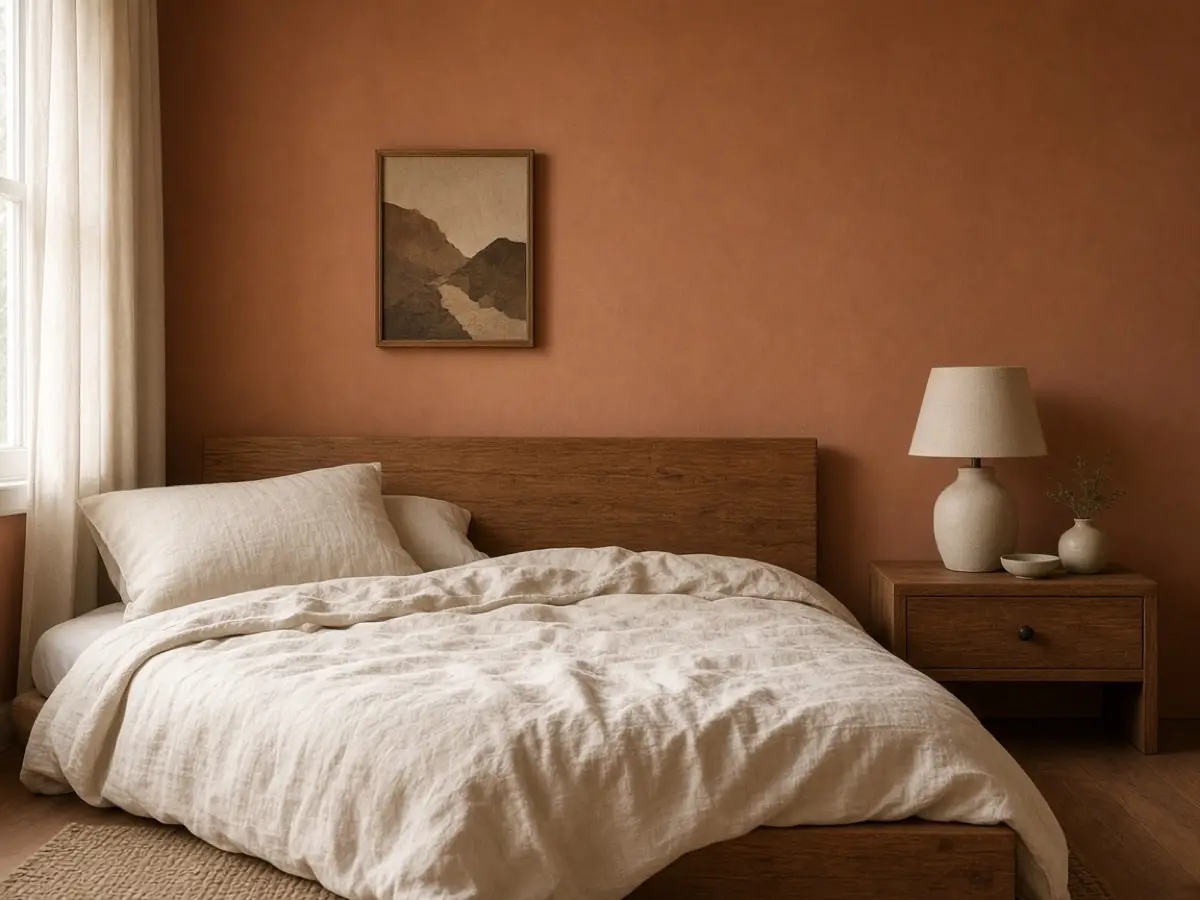
Oat is the safe relaxing color when you are unsure. It is a yellow-beige with the yellow almost gone. It reflects a little of the street without mirroring it. Choose it a step lighter than the curtain so the window does not look like a bright hole in a dull wall. If the curtain is white, oat still works. If the curtain is gray, oat keeps the room from going cold.
Paint the sample large enough to include a corner. Corners are where oat can look yellow. If the corner goes mustard at night, step lighter, not pinker. Lighter oat is still oat. Pinker oat is a different color.


4. Sage only with the warm bulb already in
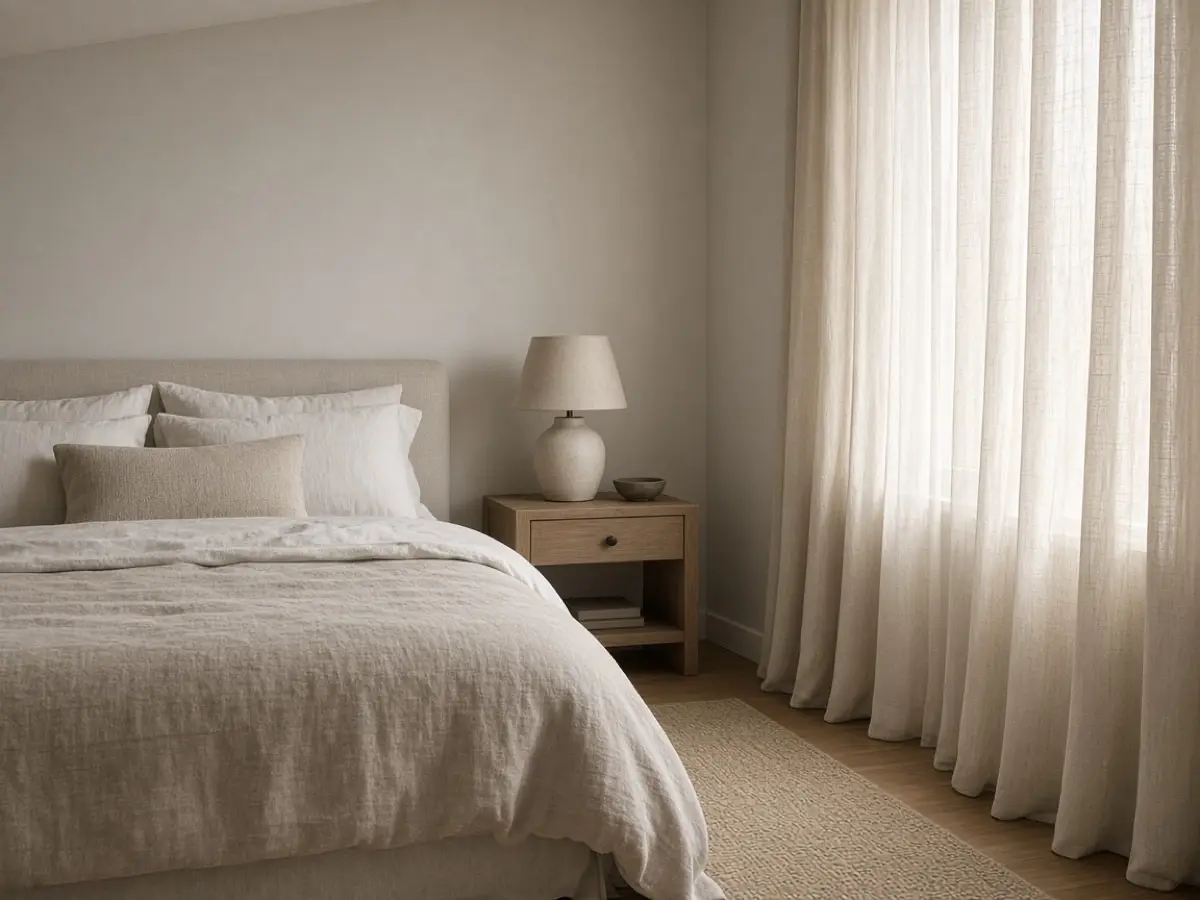
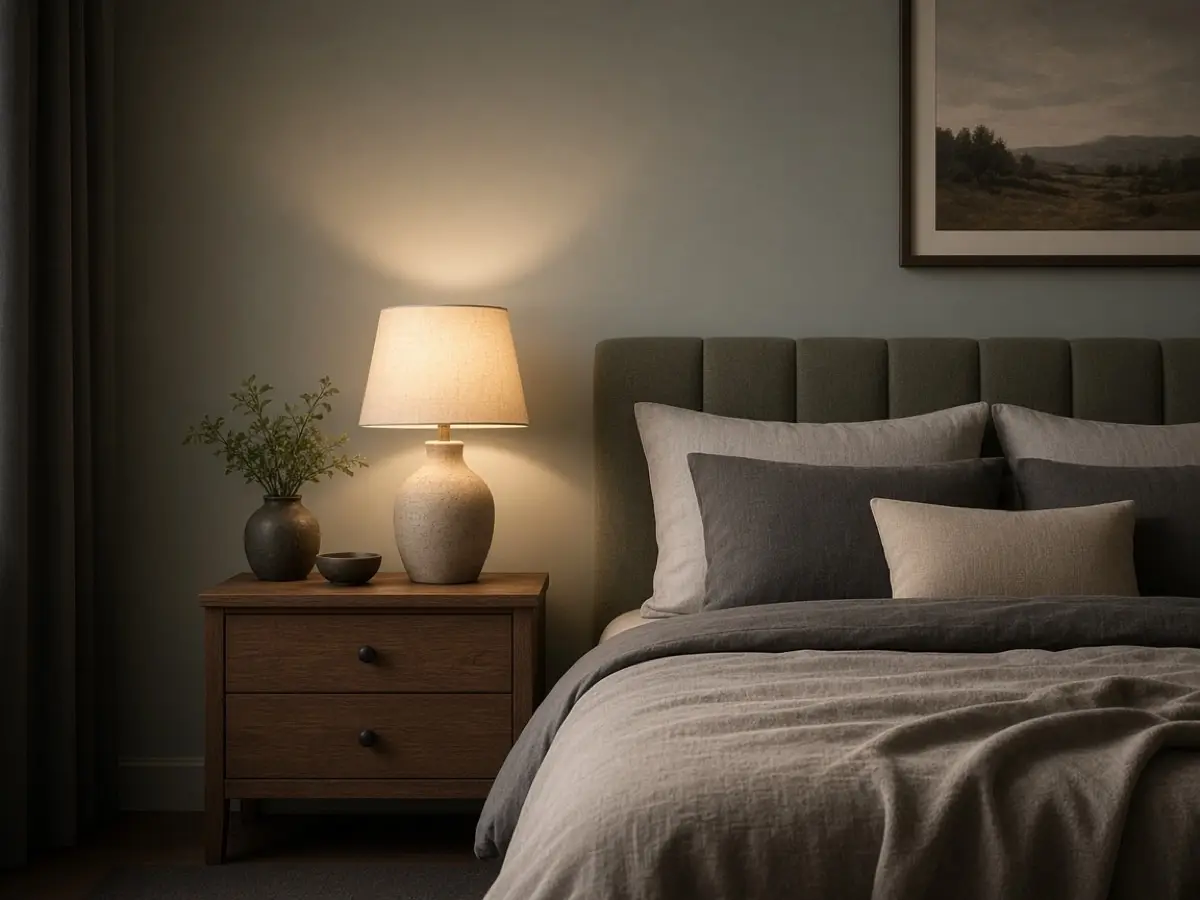
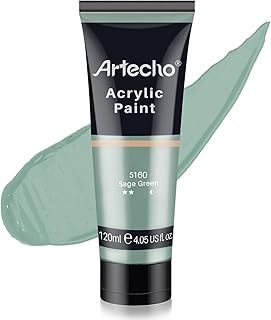
Sage can be the calmest wall on the block, or it can go mint under a streetlamp. It belongs here only if the bedside bulb is 2700K and you have looked at the sample with that bulb and the curtain open. The sage post walks through gray pairings. For a street room, use the duskier sage, the one that looks a little gray in the can, not the one that looks like a lawn.
If you cannot change the bulb, skip sage. Greige or oat will behave better under a cool lamp you are stuck with. Do not buy the gallon to “see how it feels.” A sample pot is the whole experiment.


5. A sand that does not match the blinds
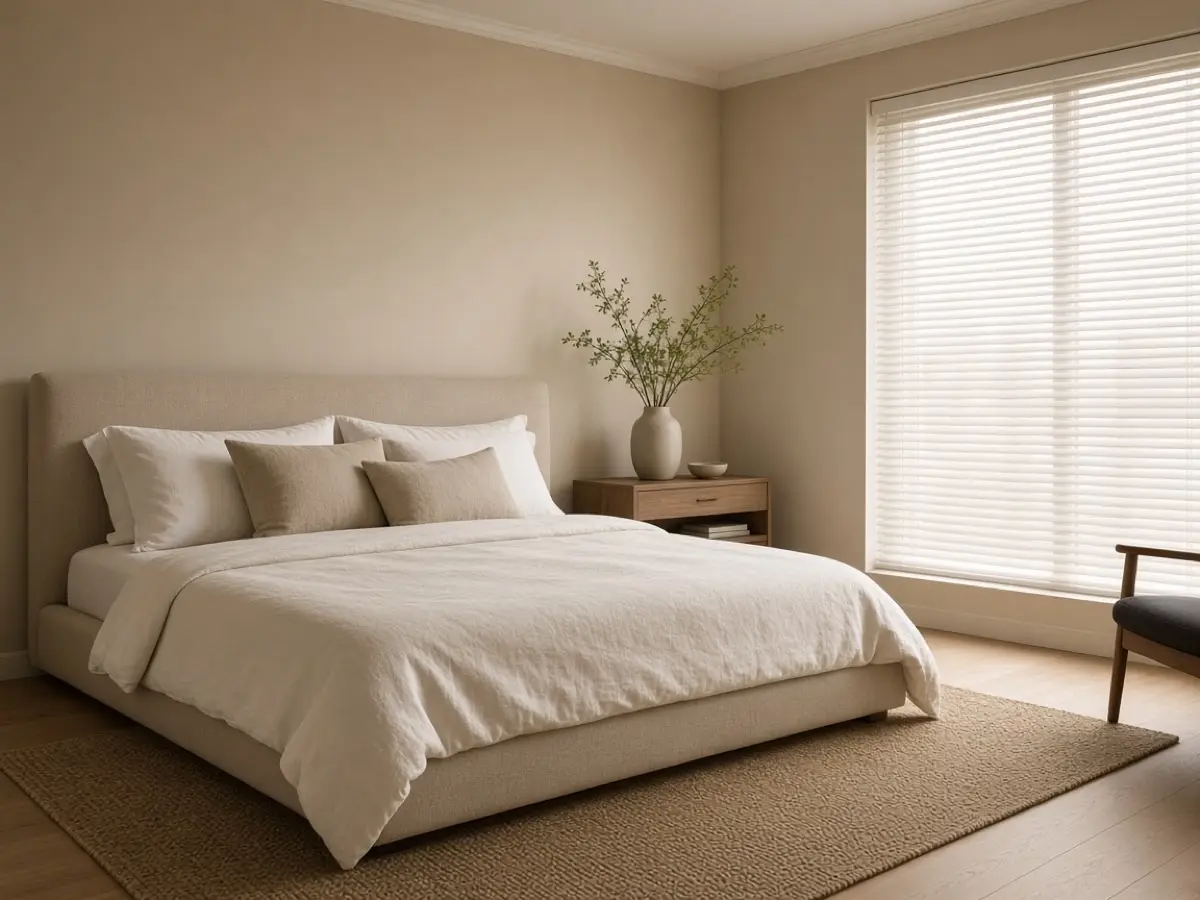
Sand is useful because it is close to the color of cheap rental blinds, but it should not be the same color. If the wall and the blind match, the window disappears and the room feels like a box. Go a half-step warmer or deeper than the blind. You will see the window as a window, which is what you want when you need to know it is morning.
Test with the blind down, because that is the night position on a street. A color that only works with the blind up is a daytime color. You sleep with it down.


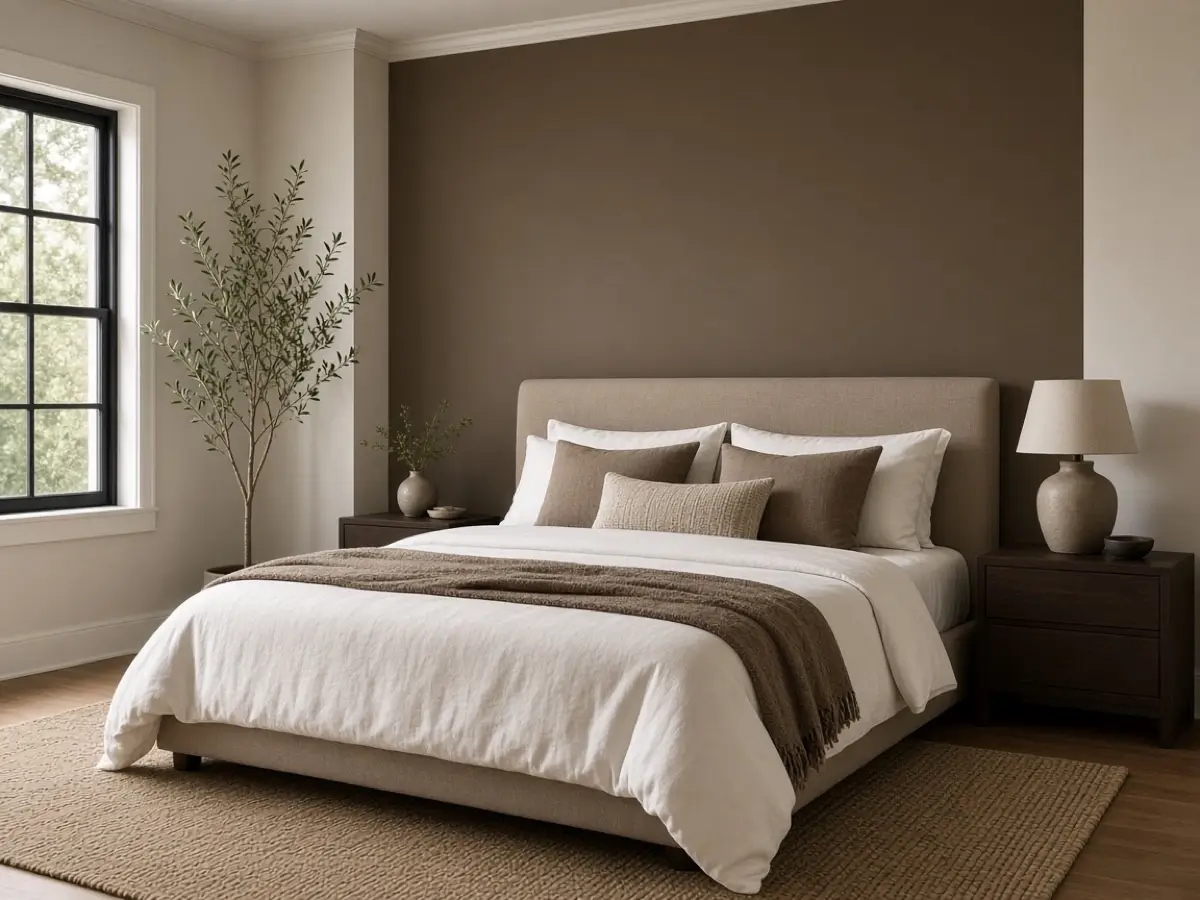
6. Deep taupe on the headboard wall only
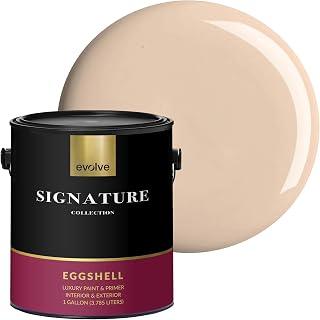
If the room feels flat in one light color, paint only the wall behind the bed a deeper taupe, still warm. The other three walls stay oat or greige. The deep wall should be the one you do not stare at while you fall asleep. You see it when you walk in. You do not see it from the pillow if the bed faces the other way. If you face that wall, keep it light.
The edge where taupe meets the lighter wall needs a clean line, or the street light will show every wobble. Cut in with a brush. Tape helps, and it still needs a finger along the edge. This is one Saturday, not an accent trend on every wall.


7. Trim a step lighter, not paper white
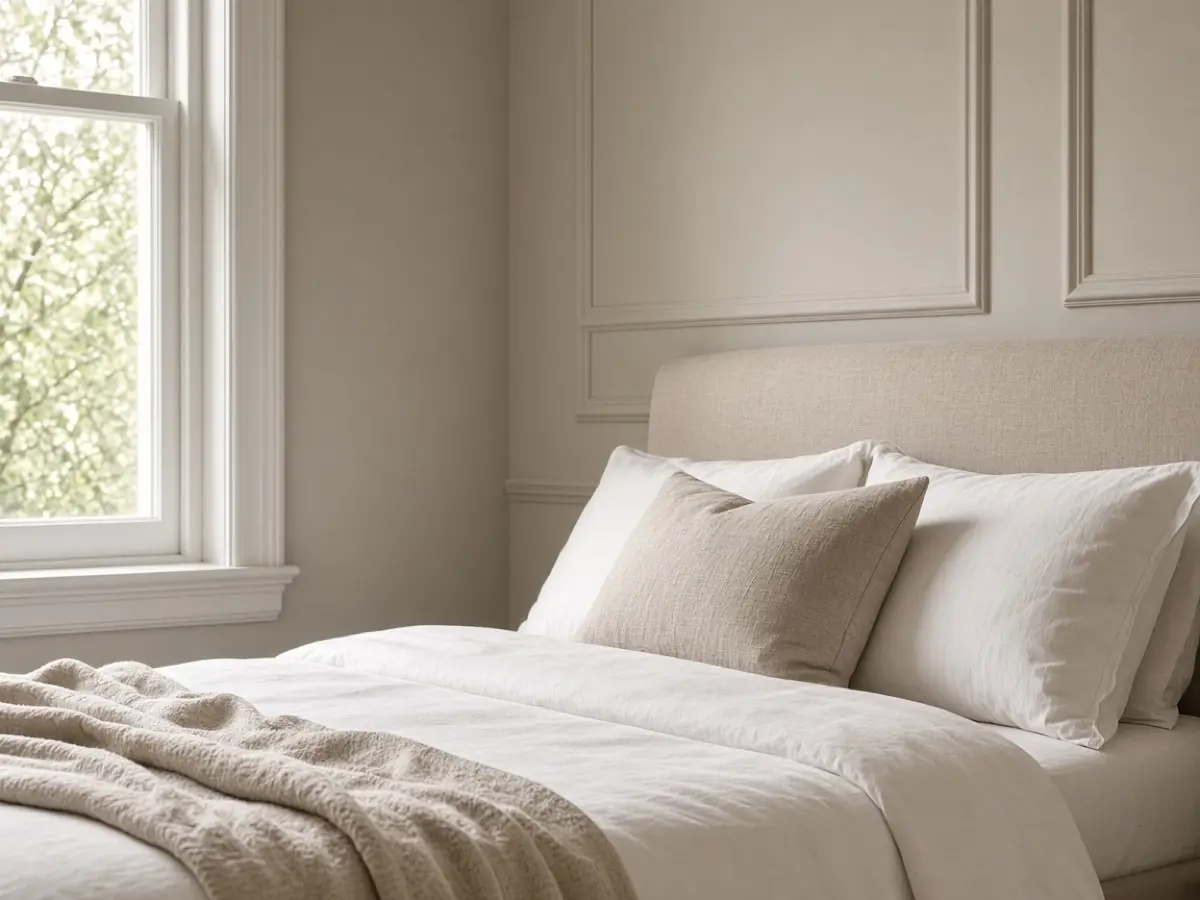
Bright white trim next to a warm wall looks blue at night, and the street makes it worse. Tint the trim toward the wall color, a step lighter, in a satin sheen so it cleans. If the trim is already white and you are not repainting it, pick a wall that can stand next to that white. Oat can. A cool gray cannot.
Paint a short run of trim as a sample if you are unsure. The baseboard by the window is the honest one, because that is where the street hits. A perfect trim in the closet does not count.



8. Ceiling in the wall color, flat
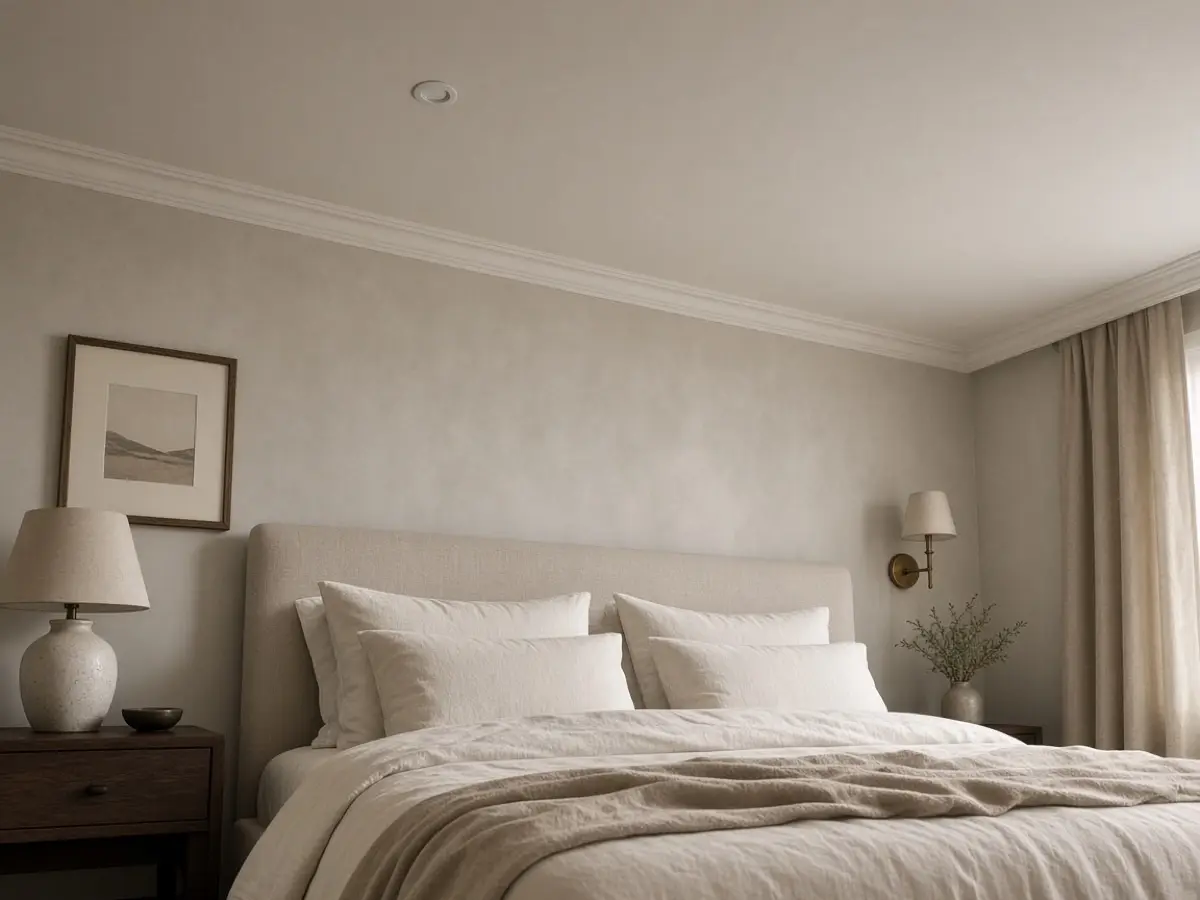
A bright ceiling over a calm wall reads as a lid, and headlights wash it. Paint the ceiling the same color in a flat sheen, or one step lighter if the room is low. Flat keeps the ceiling from shining when a car passes. Eggshell on a ceiling will flash. You will notice it from the pillow, which is the view that matters.
If there is a stain, prime it first. Street-facing rooms sometimes have old leaks at the window head. The wall update habit of priming before the pretty coat applies here. A flashed stain looks like a patch every time a car turns the corner.


9. Skip the colors that flicker in headlights
Pure white, icy blue, and a bright cool gray all flicker when headlights pass. They are not relaxing in a room that faces the street, even if you love them in a bath with no window. Navy can work on one wall, but a whole navy room with curtains closed feels smaller at 11 p.m., and you live with the curtains closed.
If you want contrast, use the taupe wall from idea 6, not a saturated blue. Look at the sample while a car passes if you can. The color should barely change. A color that jumps is the one that will keep you noticing the street.


10. Eggshell, and a nap of the roller in one direction
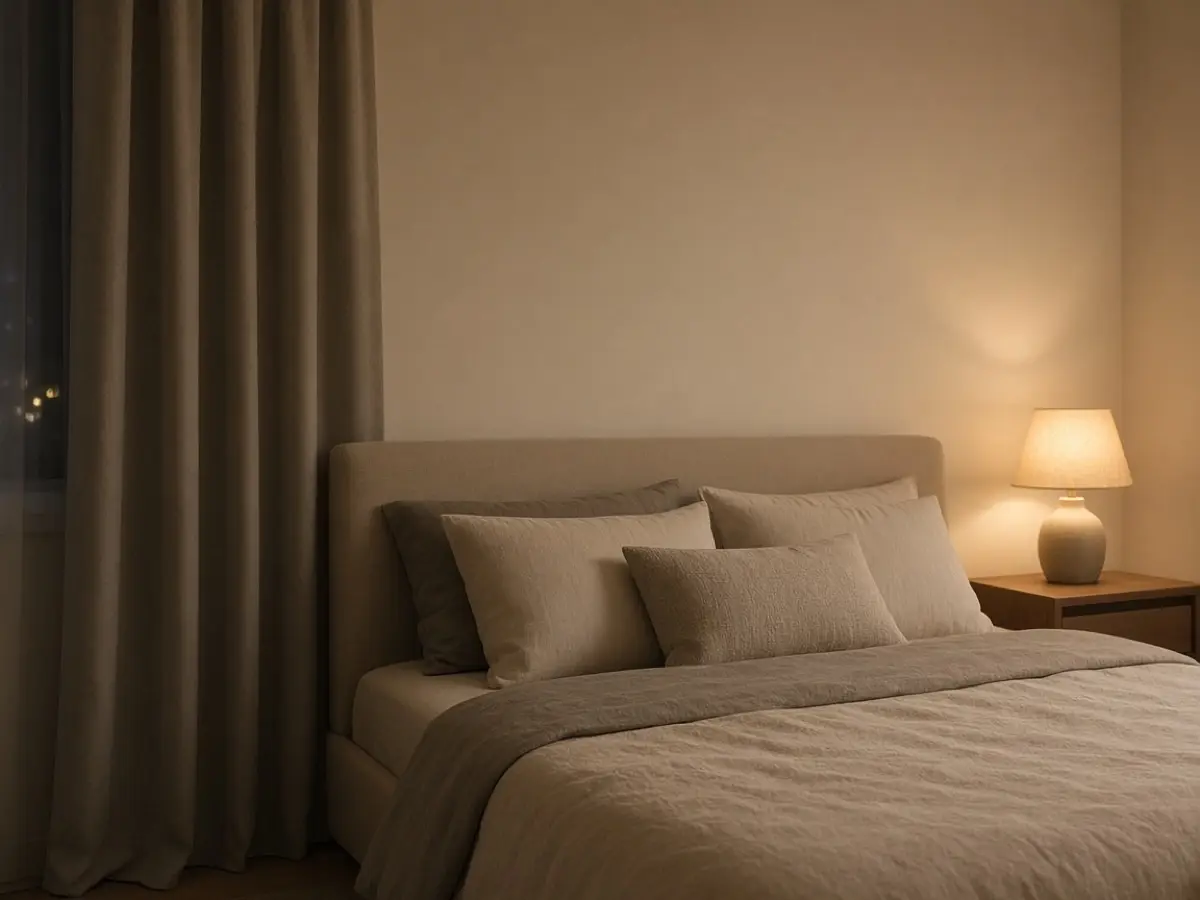
Sheen is part of the color at night. Eggshell on the walls, flat on the ceiling, satin on the trim. Roll in one direction on the last coat so the street light does not show a crosshatch. A sloppy roller pattern is invisible at noon and obvious at night on the wall opposite the window.
Do not spot-paint later with a brush if you can avoid it. A brush patch flashes. Keep a little of the same can, stirred, and roll a small area edge to edge if you must repair. Write the color name on the lid. Future you will not remember which greige it was.


11. Three chips, then one night
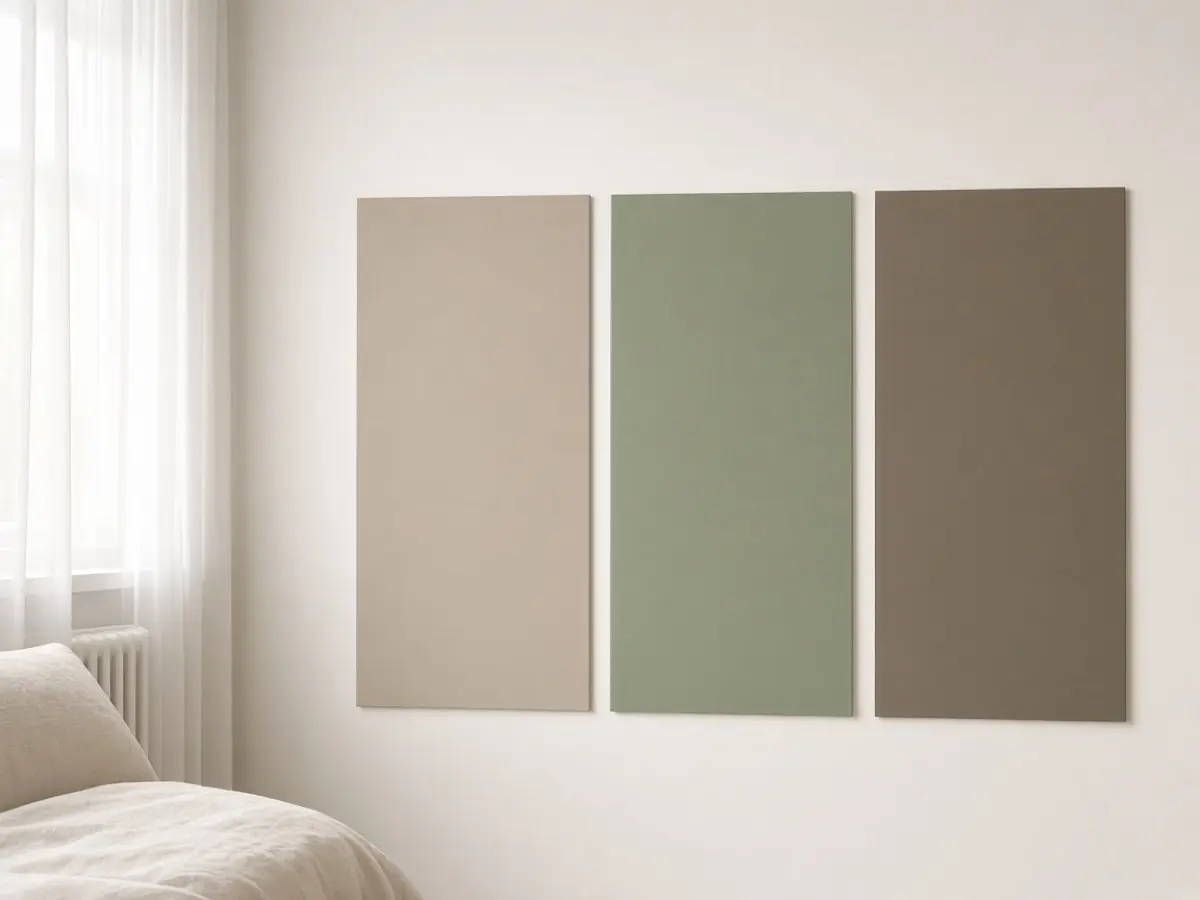
Buy three samples, not ten. Greige, oat, and either clay or sage. Paint them side by side on the street wall, each about two feet wide, and live with them from afternoon through one night with your real bulb. The one that disappears, that you stop looking at, is the color. The one you keep checking is the one that will bother you.
Then stop. A fourth chip is how a bedroom repaint becomes a project you resent. The relaxing color is the one that lets the bed be the thing you notice. When the morning looks the same as the night, in a quieter way, buy the gallon.


Tips Before You Start
- Paint samples on the wall that faces the street, and look at 10 p.m.
- Prefer warm greige, oat, clay, or a dusky sage over blue gray and pure white.
- Use a 2700K bulb in the test, the one you will actually sleep with.
- Keep eggshell on the walls, flat on the ceiling, satin on the trim.
- Make the trim a step lighter than the wall, not paper white.
- One deeper wall behind the bed is enough contrast.
- Three chips, one night, then the gallon.
FAQ
What paint color is most relaxing in a bedroom that faces the street?
A warm greige or a pale oat, checked at night with your real bulb. They move less when headlights pass than white, icy blue, or a blue gray.
Should I paint a street-facing bedroom dark?
Not on every wall. A deeper warm taupe behind the bed can work. A whole dark room with the curtains closed most of the night feels smaller, and those curtains will be closed.
What sheen should bedroom paint be?
Eggshell on the walls, so you can wipe sill dust without a shine that catches every car. Flat on the ceiling. Satin on the trim, tinted a step off pure white.
How do I test bedroom paint at night?
Paint two-foot samples on the street wall. Turn on the 2700K lamp, leave the curtain as you sleep with it, and look again after a car passes. Pick the sample you stop noticing.
A street-facing bedroom wants a color that stays put when the light outside changes. Sample greige, oat, and one warmer option on the real wall, look at 10 p.m., and buy the can you forget about. That forgetfulness is the relax. Check the sample once more tonight after you brush your teeth. If you are still thinking about the wall, it is the wrong chip.