
12 Ways to Make a Narrow Laundry Nook Easier to Use

On this page14 sections
- Measure the clear width first
- Hang the hamper on the door
- Use one shelf above the machines
- Fold on a board that stores flat
- Dry in the line of the wall
- Add a light you can sort by
- Keep supplies in a caddy that leaves
- Leave the floor for your feet
- Give socks one small bin
- Use a mat that can get wet
- Store the iron outside the swing
- Hang the piece that needs another wash
- Tips Before You Start
- FAQ
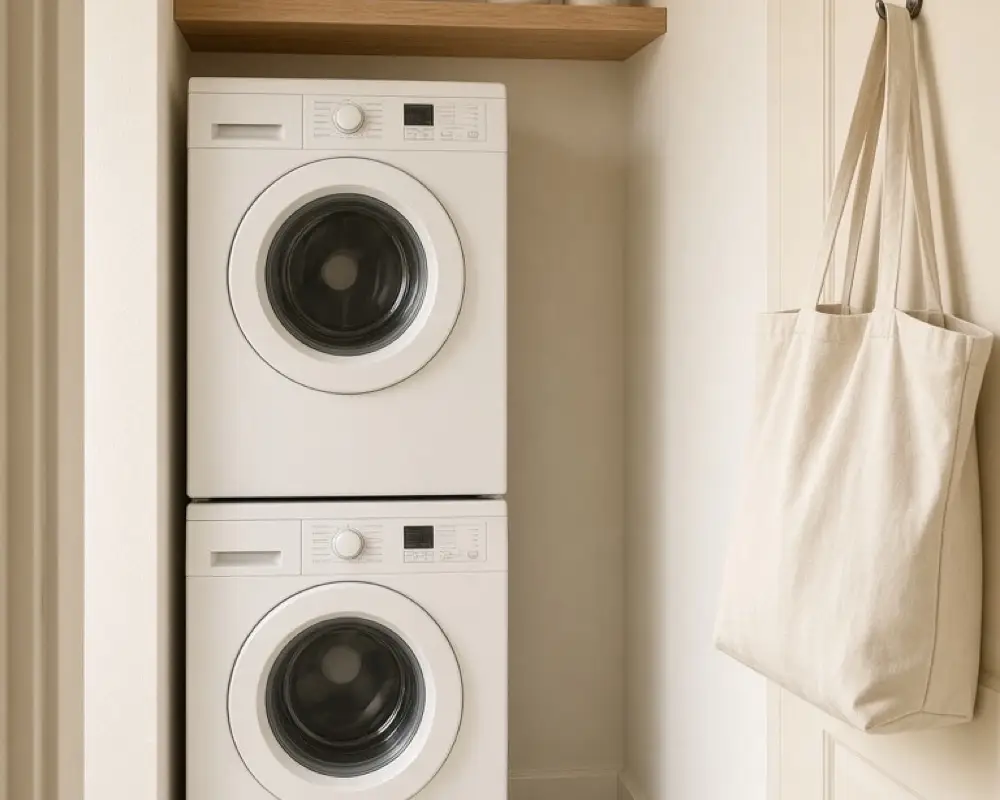
Small laundry room ideas usually start with a Pinterest closet that is five feet wide. The nook we actually have is closer to 36 inches, door swing included, with a stackable washer or a pair of machines that already fill the depth. The work is not more storage. The work is keeping the floor clear enough to stand, load, and turn around.
A narrow nook fails when the hamper, the detergent, and the drying rack all want the same square of floor. We pick one home for each of those, and we measure the door before we buy any of them.
The same edit shows up in a bedroom with one closet: the floor of the storage space stays empty. A laundry nook is that idea with water and a door that must close.
As an Amazon Associate I earn from qualifying purchases.
1. Measure the clear width first
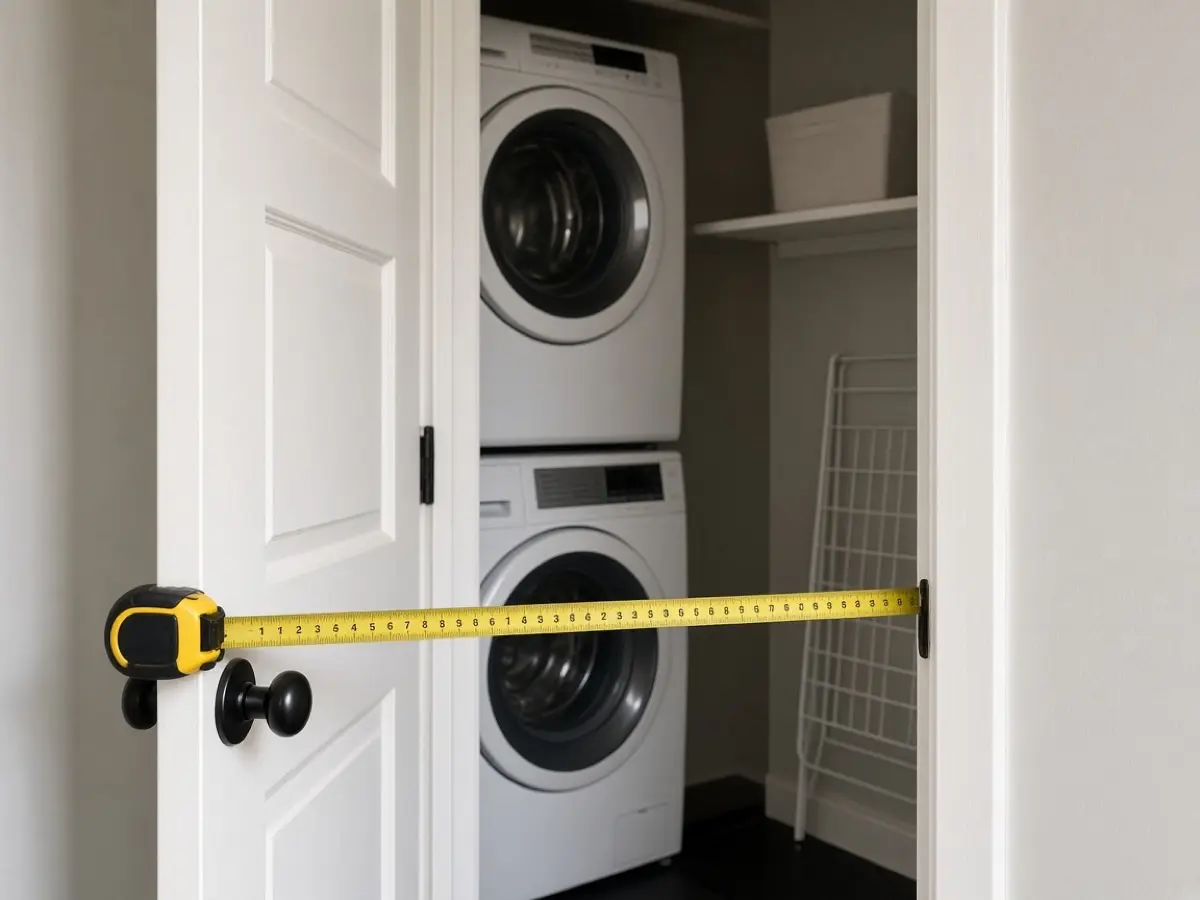
Open the door all the way and measure from the inside of the open door to the opposite wall. That number, not the closet width on the listing, is the room you can use. If it is under 32 inches, a side-by-side pair of machines will not leave you a place to stand. Stack them, or keep the machines and give up the idea of a basket on the floor.
Write down the depth too, from the back wall to the inside of the closed door. A machine that sticks out 2 inches will keep the door from latching. That is the measurement that matters more than the color of the shelf.


2. Hang the hamper on the door
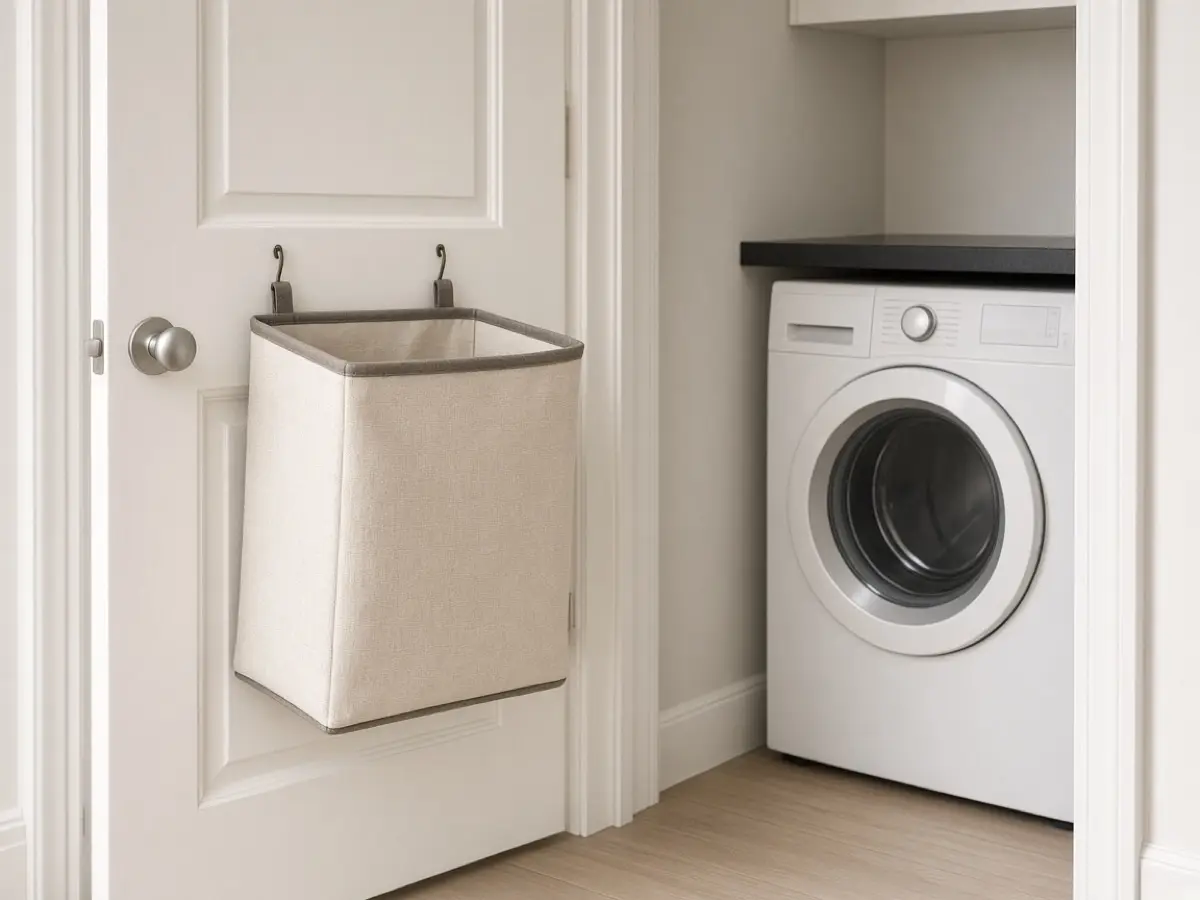
A hamper on the floor of a 36-inch nook is a piece of furniture in the only place your feet go. An over-the-door hamper, or a slim canvas bag on the back of the door, holds a day’s clothes and swings out of the room when you open the door. Check that the bag clears the washer lid. If it hits, hang it lower or switch to a shorter pocket organizer.
Do not hang a hamper so full that the door will not close. If the bag bulges past the door stop, it is too much laundry for this door. Take a load downstairs or run the washer. The door has to shut.
Get the look


3. Use one shelf above the machines
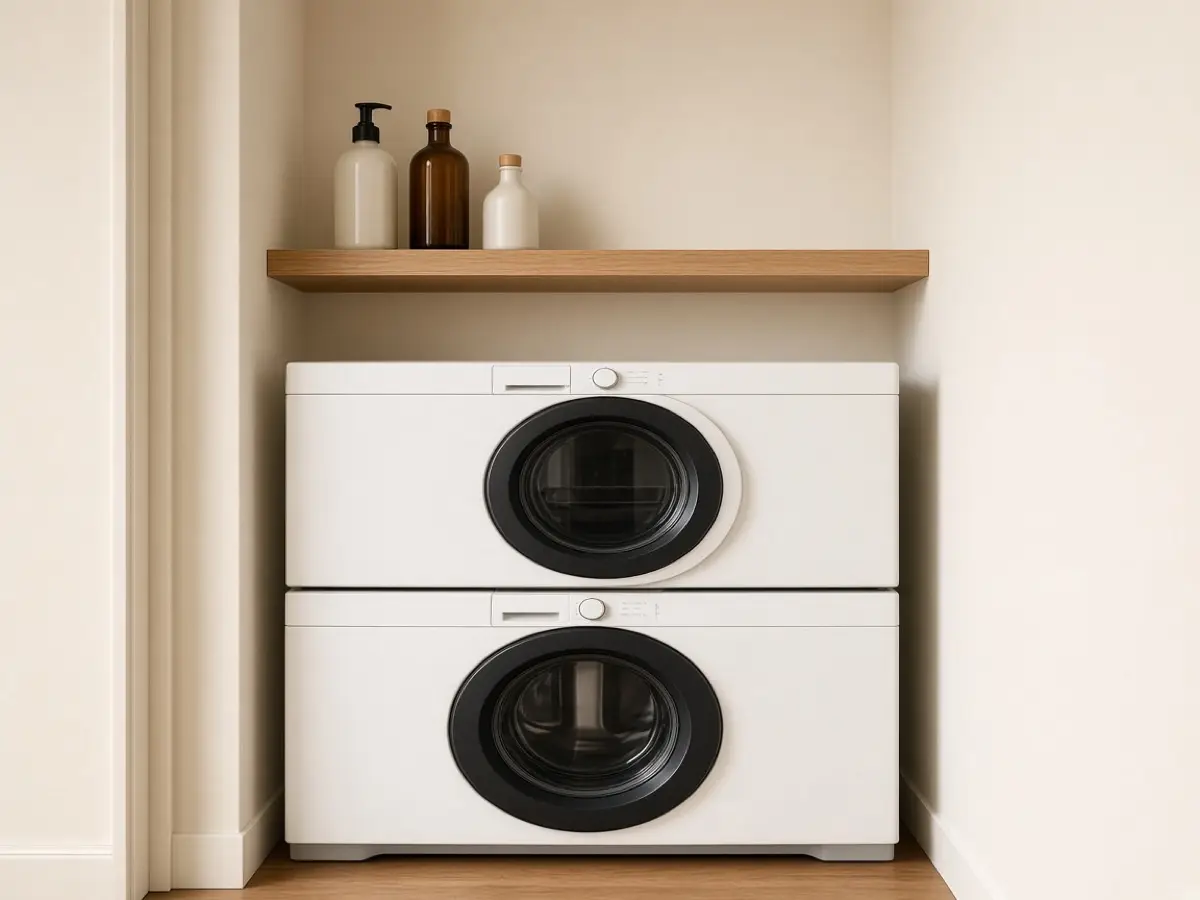
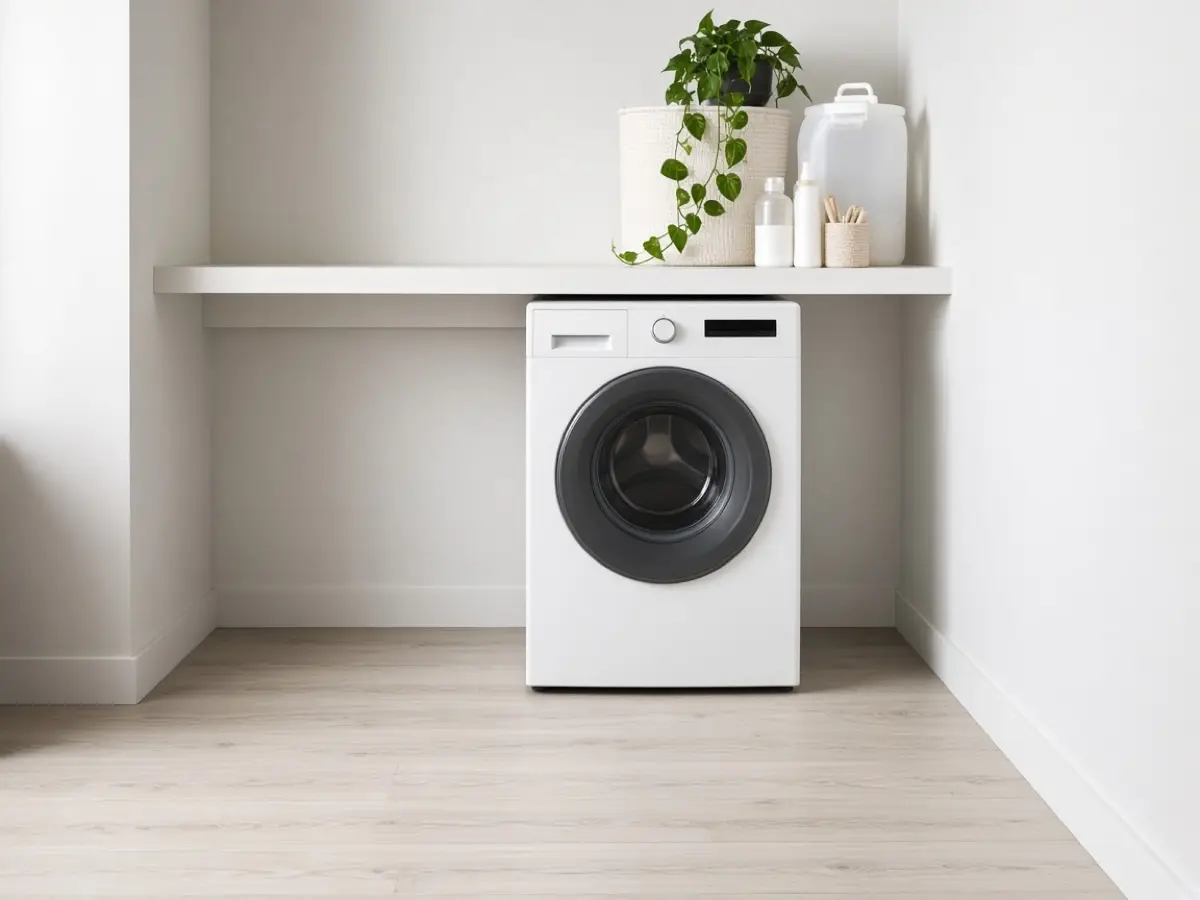
The temptation is a tower of shelves from the dryer to the ceiling. In a narrow nook you will knock the bottom one with the detergent bottle every time you reach. One shelf, set 16 inches above the top of the machines, holds the supplies you use weekly. Everything else lives in a hall closet or under the bathroom sink.
If the machines are stacked, that shelf sits above the dryer and stays shallow, about 8 inches deep, so you are not pulling a heavy jug over your head from the back. A jug you cannot lift down safely does not belong up there. Decant a week’s worth into a smaller bottle at waist height.
Get the look


4. Fold on a board that stores flat
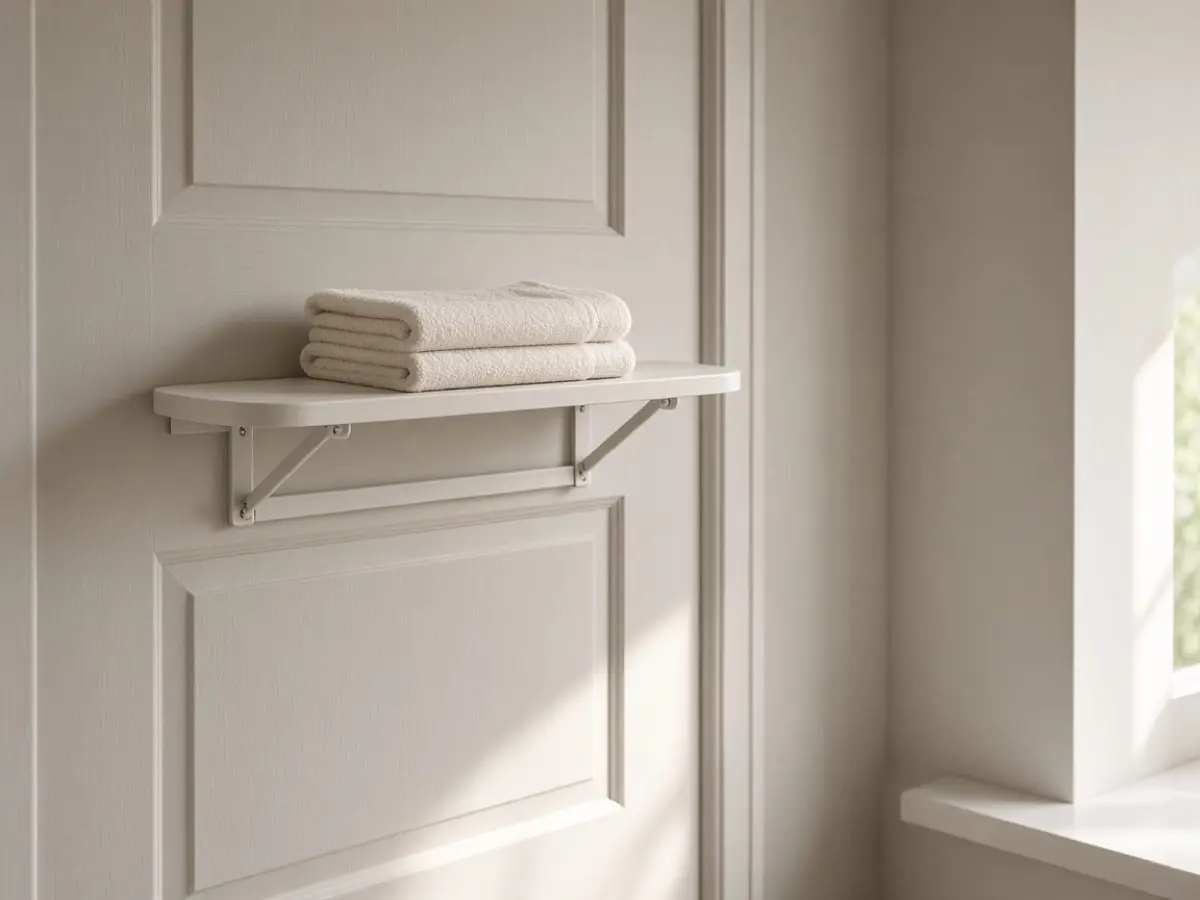
There is no room for a table. A folding board that hooks on the door, or a drop-down leaf on the side wall if the door swing allows, gives you 20 inches of flat surface and then disappears. If a leaf would hit the open washer door, skip it. Use the top of the dryer and a board you store behind the door.
Fold the load you need this week. The rest can go in a basket to the bedroom. A nook is a bad place to fold the entire family’s clothes if you cannot turn around. The bedroom storage post is where the folded stacks should land, not on top of the detergent.
Get the look


5. Dry in the line of the wall
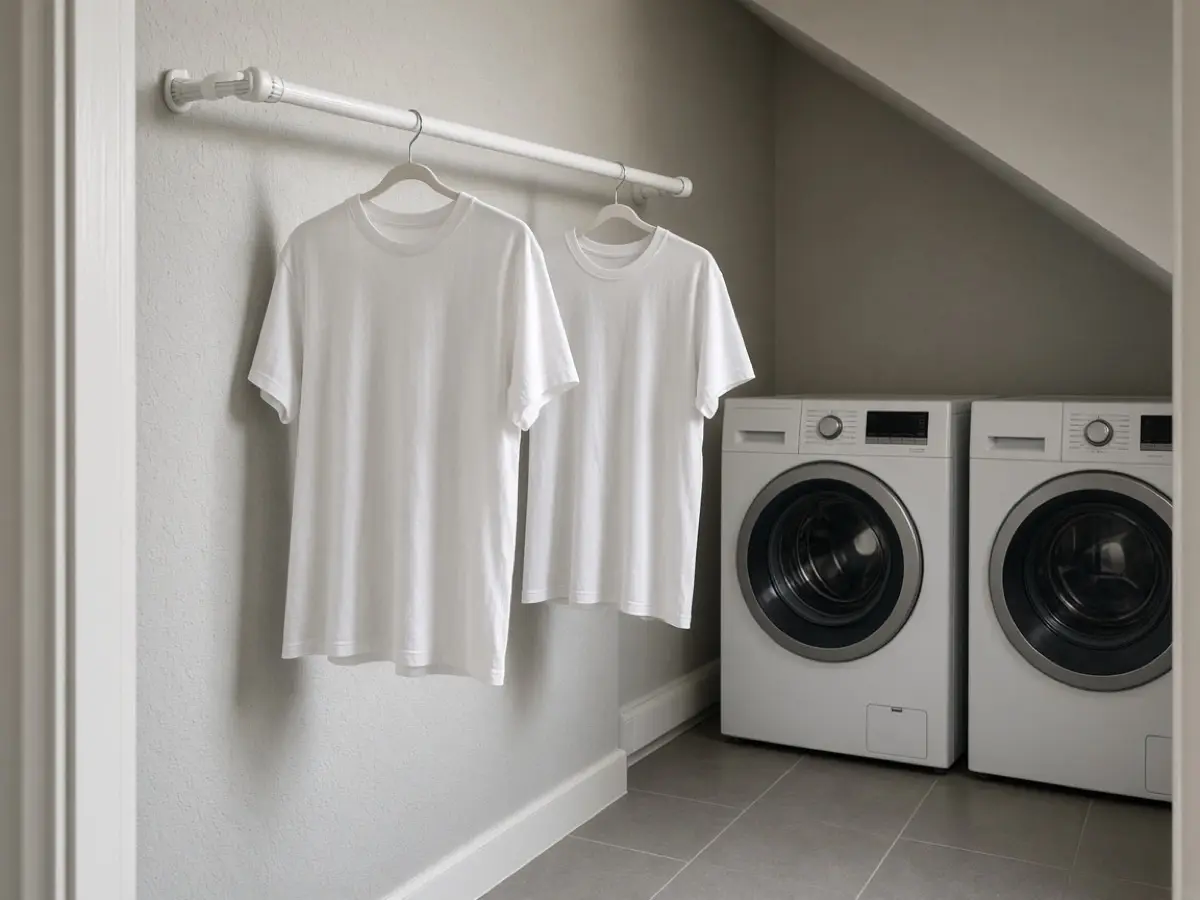
A drying rack opened in the middle of the nook blocks the machines. A tension rod across the back, or a retractable line on the side wall, keeps wet clothes against a surface you are not walking through. Leave 6 inches between the rod and a gas dryer vent. Do not drape clothes over the dryer controls.
If the nook has no ventilation, do not dry a full load in it. One sweater on a hanger is fine. A rack of jeans will make the closet smell and can trip a moisture sensor in a tight room. Take big drying jobs to a shower rod or a balcony.
Get the look


6. Add a light you can sort by
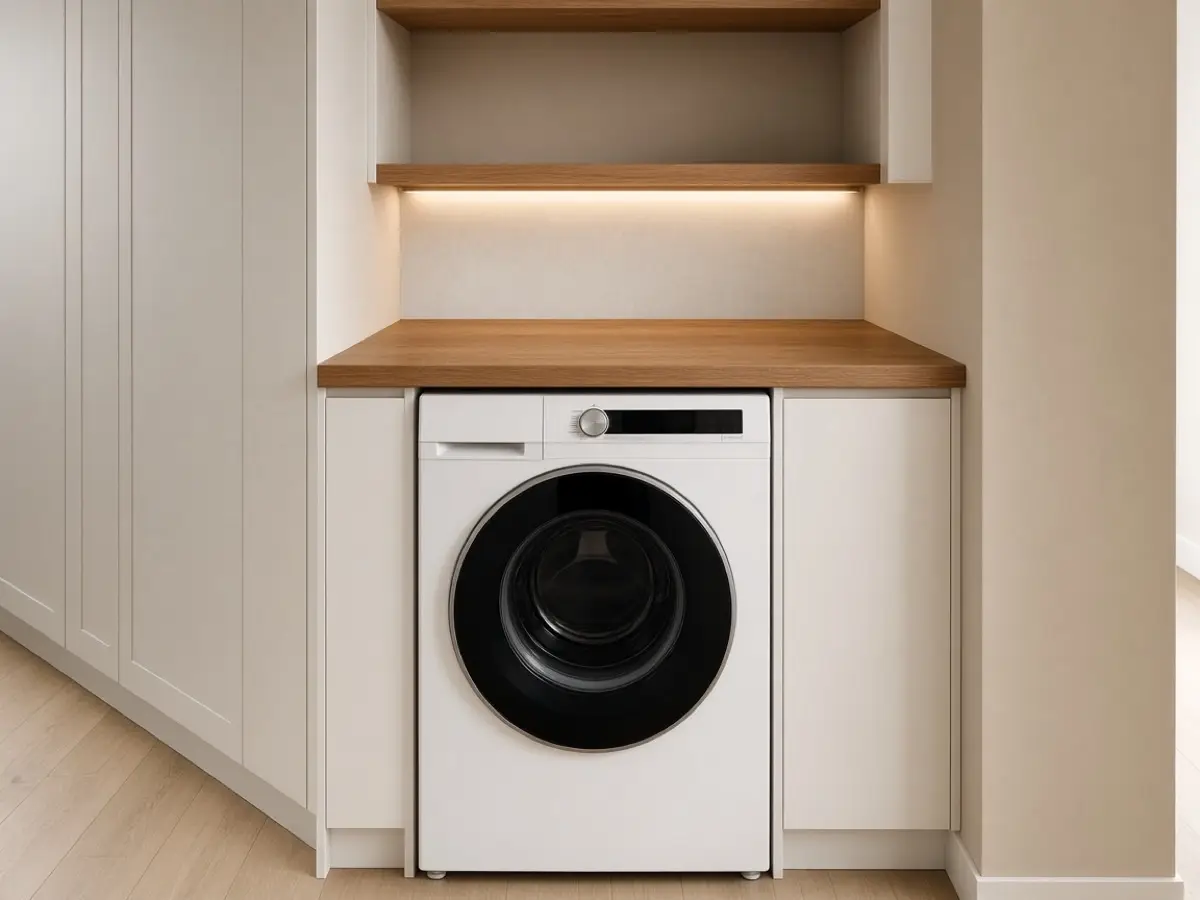
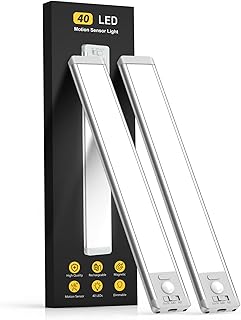
A nook at the end of a hall is often lit by the hall fixture, which leaves the washer drum in shadow. A stick-on LED bar under the shelf, aimed at the machine lids, lets you see a stain before the cycle starts. Choose a warm or neutral bulb, not a blue one that makes every shirt look dirty. Mount the bar toward the front of the shelf so the light falls on the lid, not the back wall.
If you can swap the ceiling bulb, use one you can read a care label by. The same brighter-bulb move is in the small bathroom post. You do not need a new fixture to stop guessing.


7. Keep supplies in a caddy that leaves
Detergent, stain stick, and wool dryer balls do not need to live on a shelf you bump. A caddy on the floor beside the machines, small enough to lift with one hand, comes out when you start a load and goes back when you are done. If the floor gap is under 4 inches, the caddy lives on the shelf instead, and the floor stays empty.
Do not line the machines with a dozen bottles. Two products you actually use, plus a stain stick, is the set. The rest is a store display. Return it to the cabinet outside the nook.


8. Leave the floor for your feet
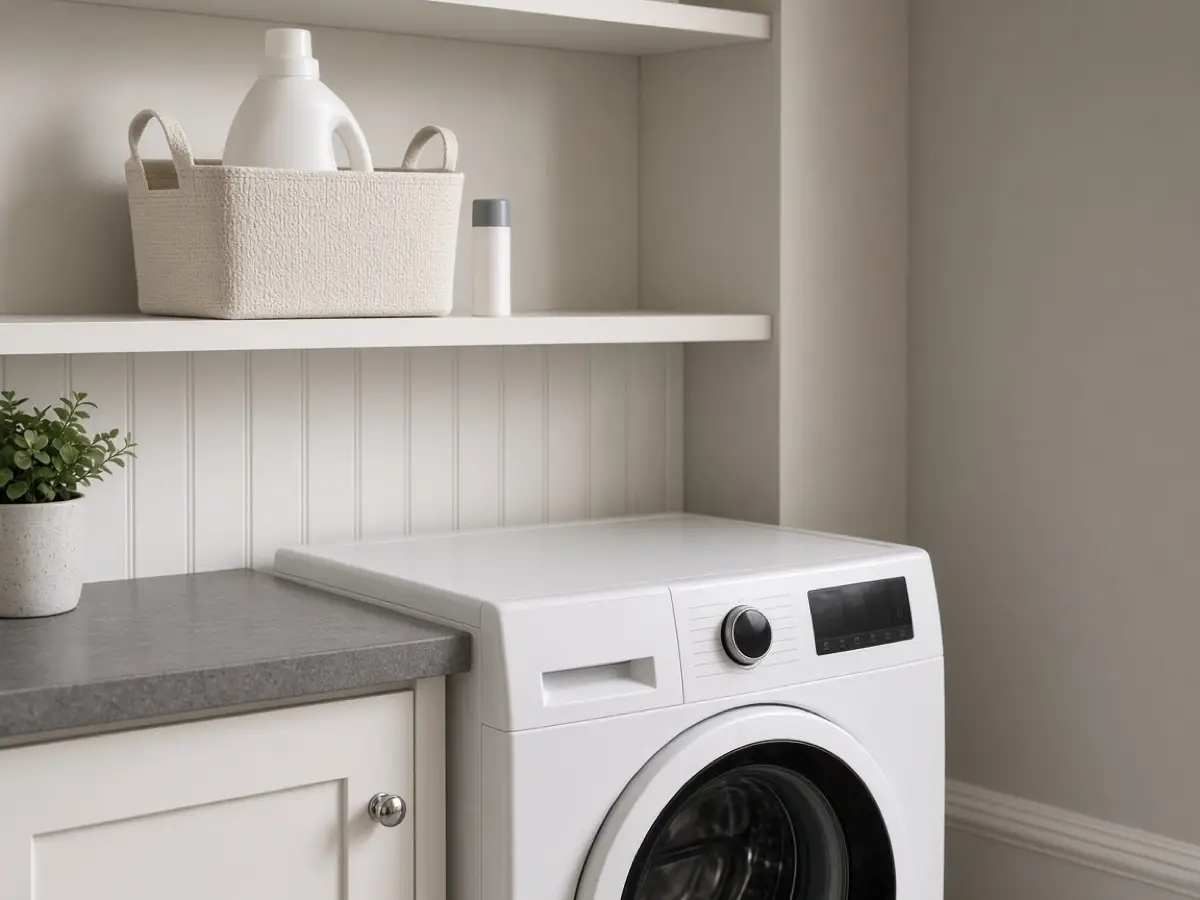
The usable floor in a narrow nook is the rectangle in front of the machines, about 24 by 30 inches. If a basket, a rack, and a jug all sit there, you will load the washer from the hallway and spill. One object on the floor at a time, and only while you are using it. When the cycle starts, the floor is empty and the door can close.
This is the same rule as the coffee tray that slides back before dinner. The working surface has a job. Storage is a guest. If you must park a basket while you switch loads, it goes in the hall, not in the nook.


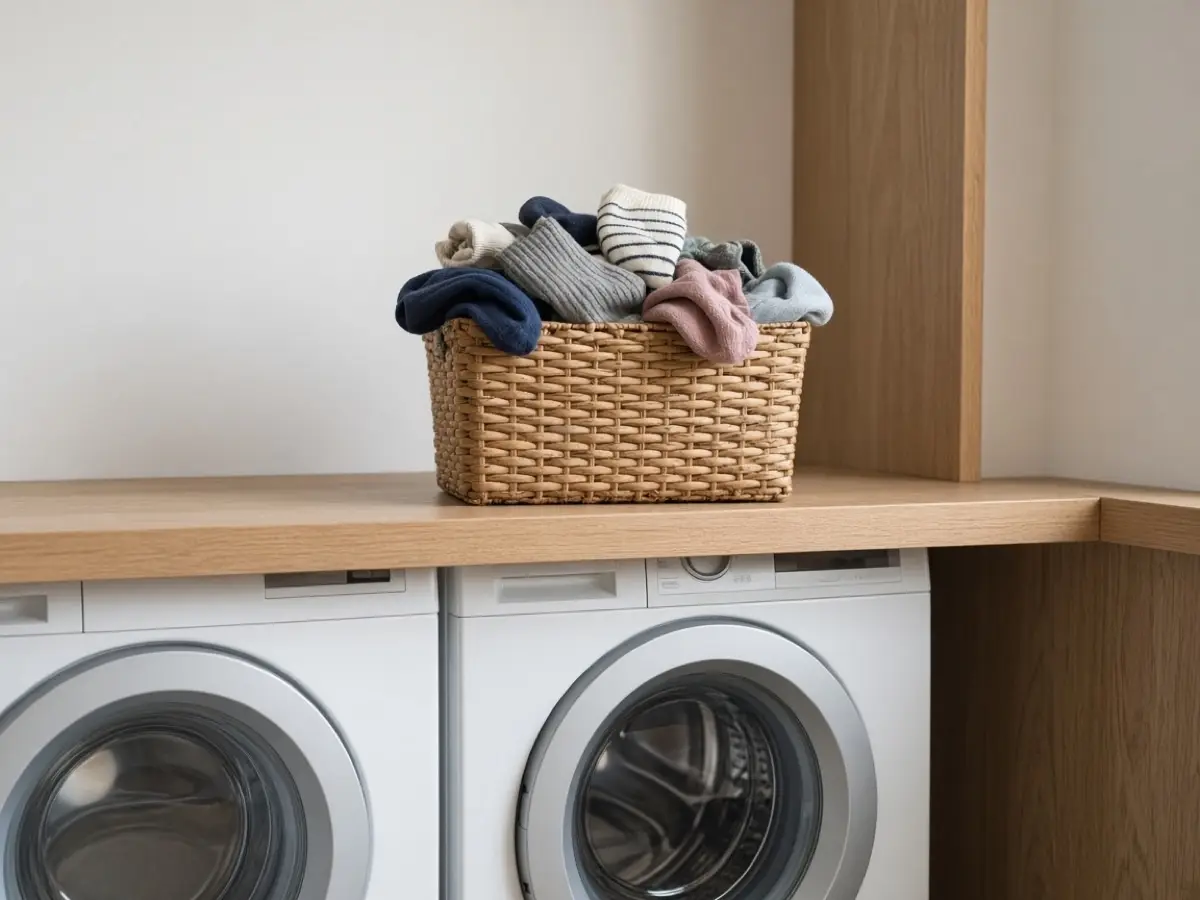
9. Give socks one small bin
A lost-sock basket that grows to a hamper is clutter with a story. Use a bin the size of a shoebox, on the shelf, and when it is full you match what you can and donate or discard the rest. Safety pins for pairs you care about can live in that same bin. Do not start a second bin “just until you sort.”
If the household is large, the bin rule still holds. The overflow is a sign to run a load, not to buy a bigger basket that will not fit the nook. Label the bin if more than one person uses the shelf, so it does not become a junk drawer.


10. Use a mat that can get wet
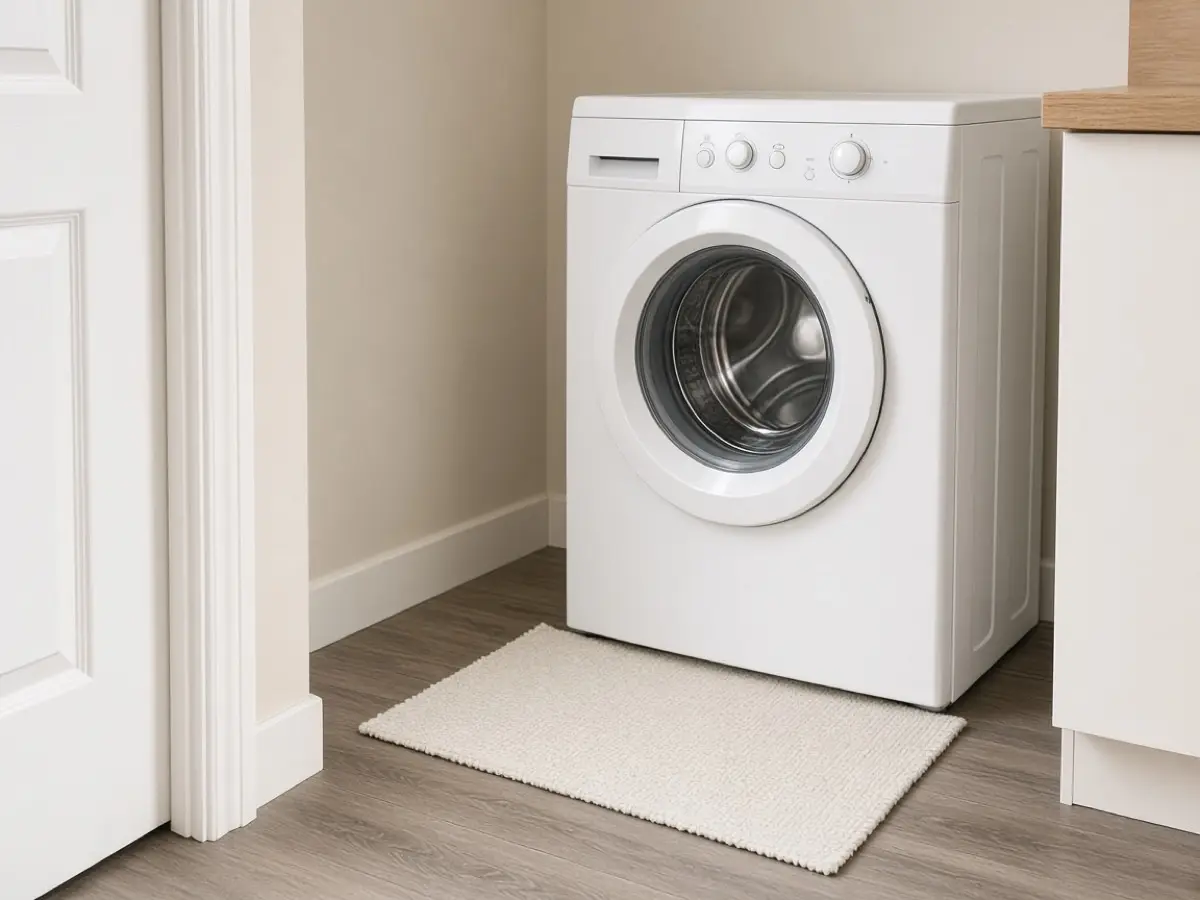
Washers drip. A thick shag rug in a laundry nook stays damp and smells. A low cotton mat, or a rubber mat you can shake outside, sits in front of the machines and comes up when you mop. If the nook is truly tight, skip the mat. Bare floor that you can wipe is better than a mat you trip on.
Check the pan under a stacked washer if the building has one. A mat should not hide a leak. Once a month, pull it up and look at the floor. A mat wider than the nook will curl and catch the door.


11. Store the iron outside the swing
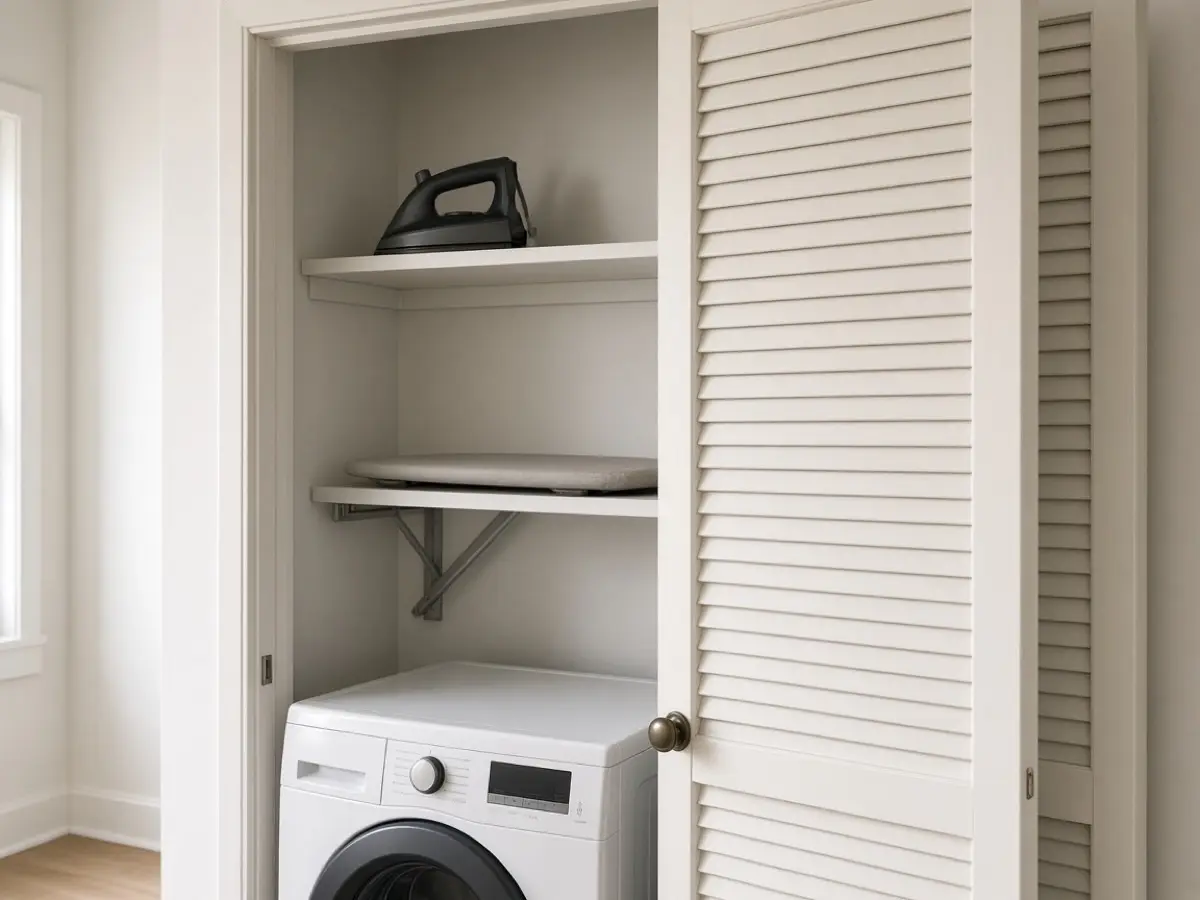
An ironing board in the nook is a pole in a closet. Hang it on a hook in the hall, or slide a tabletop board behind the door only if you have measured the gap. The iron itself cools on a trivet on the dryer, then goes back to a shelf. A hot iron does not live on a pile of clothes, and it does not live on the floor where the door swings.
If you iron once a month, you do not need a full board in this room at all. A towel on the dryer and a tabletop board is the whole setup.


12. Hang the piece that needs another wash
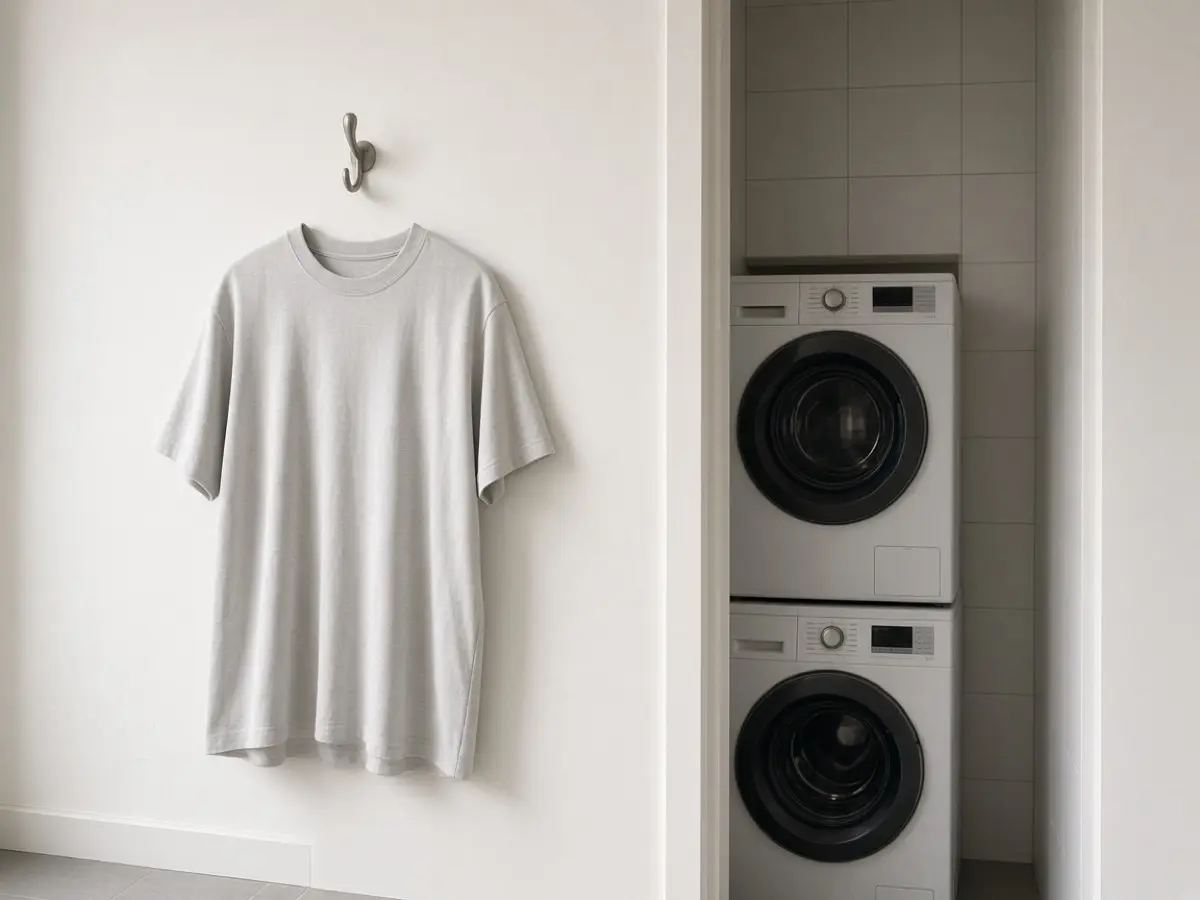
The shirt you meant to rewash will end up on the dryer if you have nowhere else to put it. One hook on the side wall, at shoulder height, is the “not clean yet” spot. One item. If a second item appears, one of them goes back in the hamper. A row of hooks becomes a closet you did not mean to build, and a narrow nook cannot be a closet and a laundry at once.
When the load finishes, the hook is empty. That is the reset, the same way the coffee tray goes back before you cook. The hook is a pause, not a second closet.


Tips Before You Start
- Measure the open door, not the closet listing, before you buy a hamper or a shelf.
- Keep the floor in front of the machines empty while a cycle runs.
- One shelf is enough. Tall towers get knocked in a 36-inch nook.
- Hang the hamper on the door so your feet have a place to stand.
- Dry only a piece or two inside the nook unless the room actually vents.
- Put the iron and the big drying rack where the door does not hit them.
FAQ
How do I organize a very narrow laundry closet?
Measure the clear width with the door open. Stack the machines if you cannot stand beside them. Hang the hamper on the door, use one shelf above the machines, and leave the floor empty.
What should I not store in a small laundry nook?
Skip extra detergent collections, a full-size ironing board, a floor hamper, and a drying rack that opens into the walkway. If you cannot close the door, it does not fit.
Can I fold clothes in a laundry closet?
Yes, on the dryer or on a board that hangs on the door and stores flat. Fold what you need this week and carry the rest to the bedroom. The nook is a poor place for a full folding session.
How wide does a laundry nook need to be?
You want about 32 inches of clear floor in front of the controls so you can stand and turn. Less than that means stacking the machines and keeping every basket off the floor.
A narrow laundry nook works when the door closes, the floor is empty, and each supply has one small home. Measure first, hang the hamper, and stop at a single shelf.