
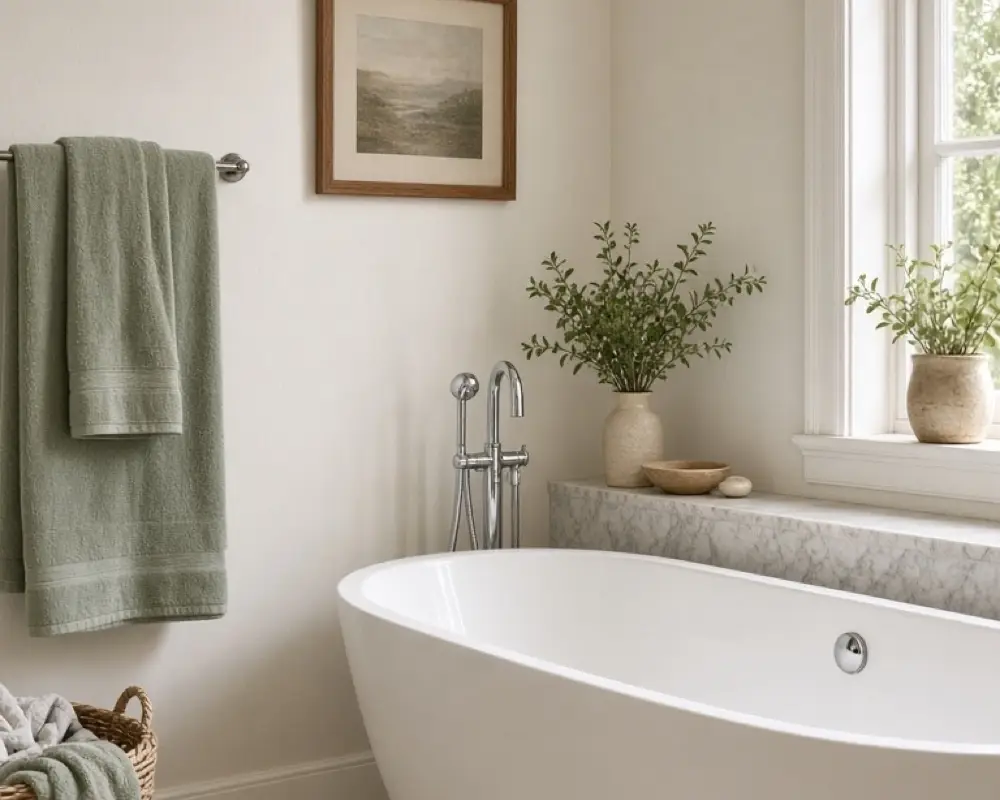
12 Bathroom Color Schemes That Work With White Fixtures

On this page14 sections
- Use a warm white, not fixture white
- Try sage so the white stays crisp
- Choose sand, not a yellow that stains the eye
- Use pale blue only with a warm bulb
- Put the deep color where you do not stare
- Let a wood vanity set the brown
- Use black as a line, not a field
- Keep towels off fixture white
- Drop the floor a step darker
- Paint the ceiling the wall color
- Skip the colors that date the china
- Test beside the fixture, then stop
- Tips Before You Start
- FAQ
Bathroom color schemes fail when the paint tries to match the toilet exactly. Fixture white is a cool, slightly blue white from the factory. Wall paint in that same chip looks dirty next to it, or the toilet looks dingy next to the paint. The schemes that work let the fixtures stay white and give the walls a different job: warmer, softer, or clearly deeper.
We are not moving the toilet. The light changes still matter, because a good color under a blue bulb looks like a mistake. Paint after the bulb is warm, and test the sample against the actual sink, not against a card in the store.
As an Amazon Associate I earn from qualifying purchases.
1. Use a warm white, not fixture white
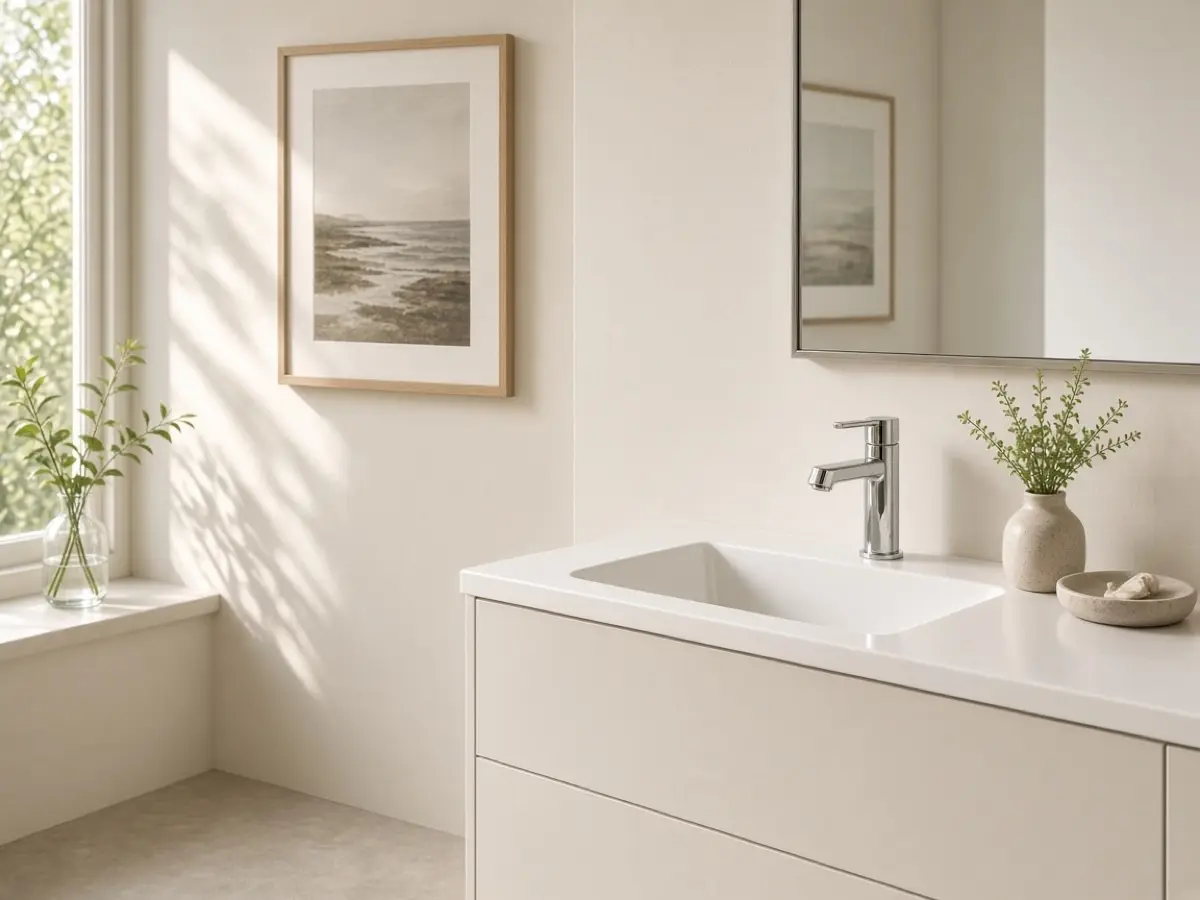
Pick a white with a little yellow or cream in it, in eggshell, and put it on the walls. The toilet and sink stay brighter and cleaner by comparison. A pure match makes both surfaces look slightly off, and you will keep repainting to chase a match you cannot win. Ask for a white the staff would use in a kitchen, not a “fixture match.”
Paint a poster-sized sample beside the sink and look at it in the morning and at night. If the sample looks pink or gray, it is the wrong white. One quart is enough for a small bath if you are only doing walls. Ceilings can stay the white you have until you know the walls are right.


2. Try sage so the white stays crisp
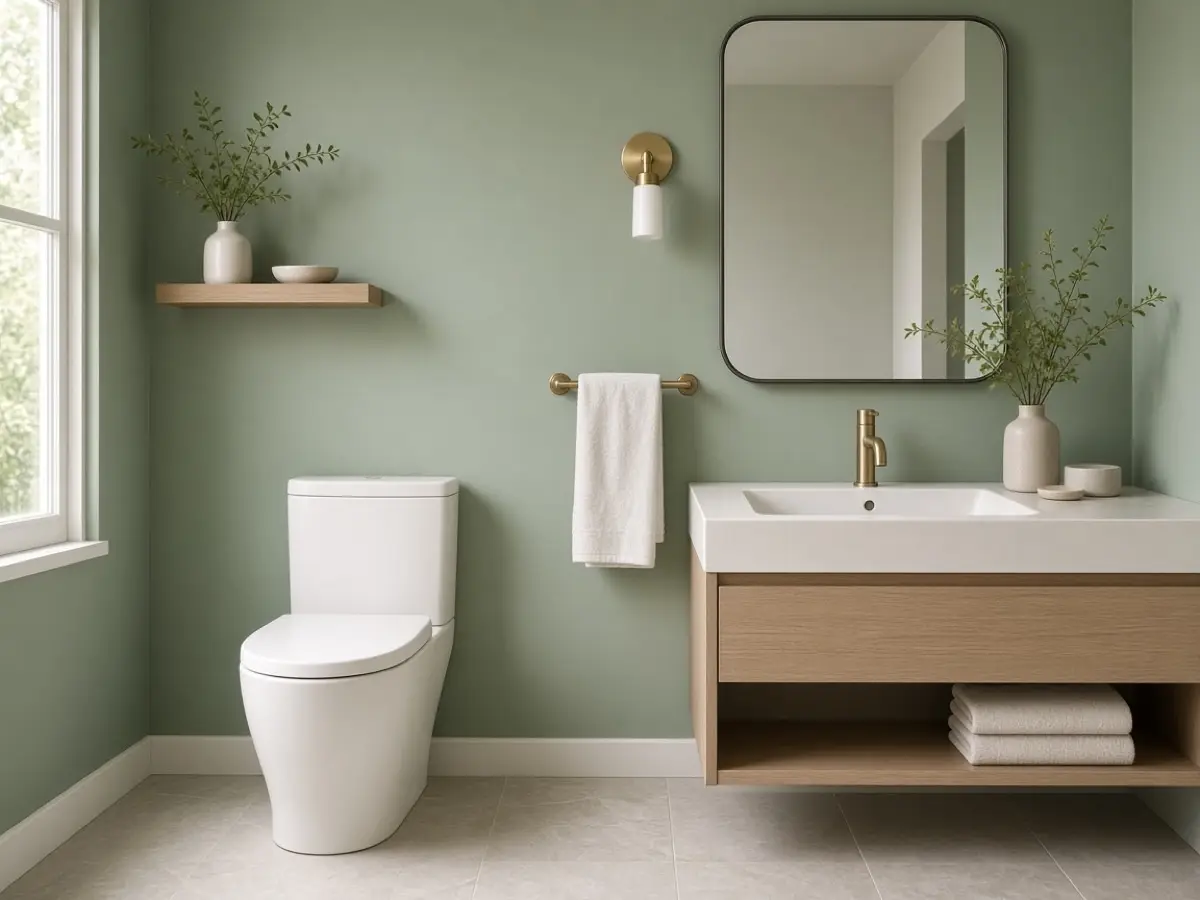
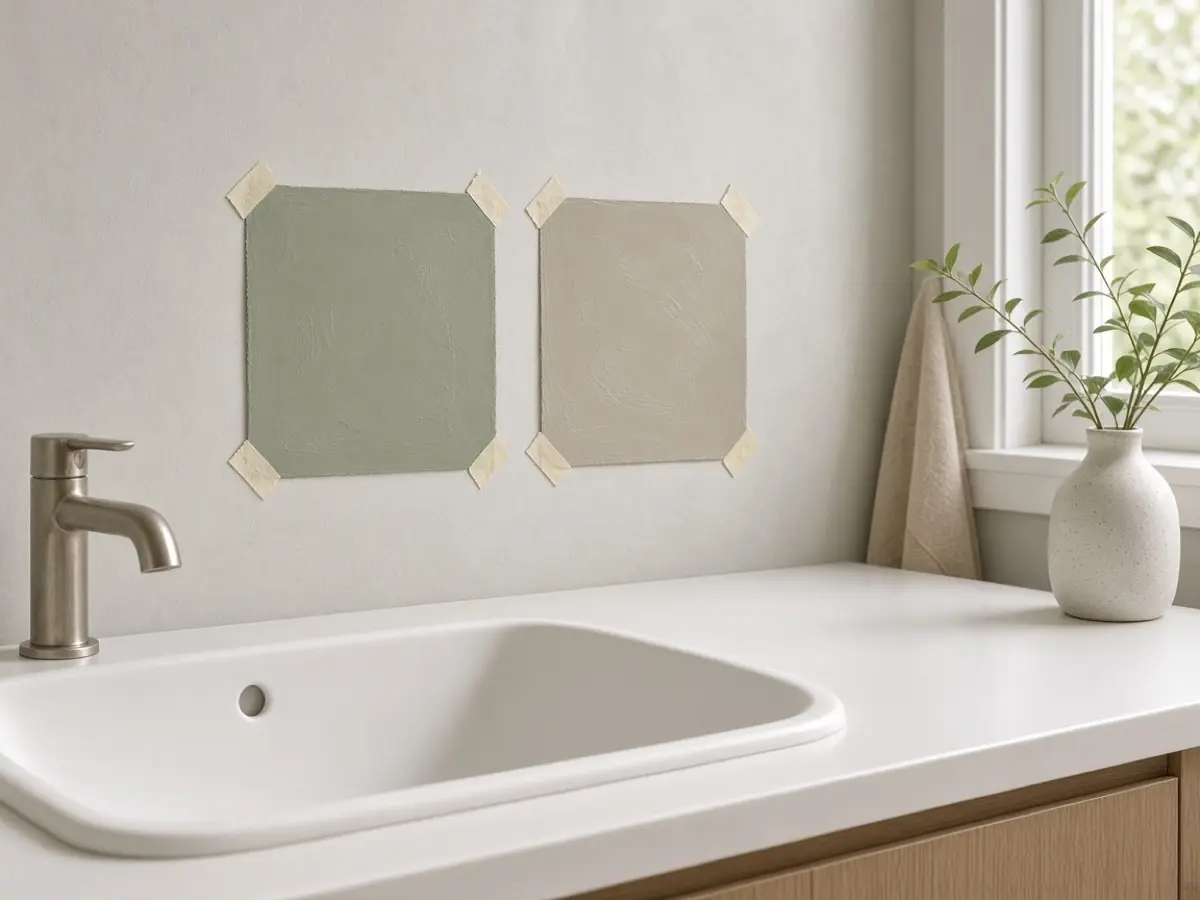
A soft sage, more gray-green than lawn, makes white fixtures look intentional instead of leftover. Use it on all the walls or on the wall you see when you walk in, and keep the trim the warm white from the first idea. A strong emerald is a different room and will fight a small bath. You want the color of a washed linen, not a jewel.
Hold the chip next to a white towel. If the green makes the towel look blue, the sage is too cool. Shift warmer. The same test saves you from a color that photographs well and feels clinical at 7 a.m. Sage also hides a bit of steam haze that pure white shows.


3. Choose sand, not a yellow that stains the eye
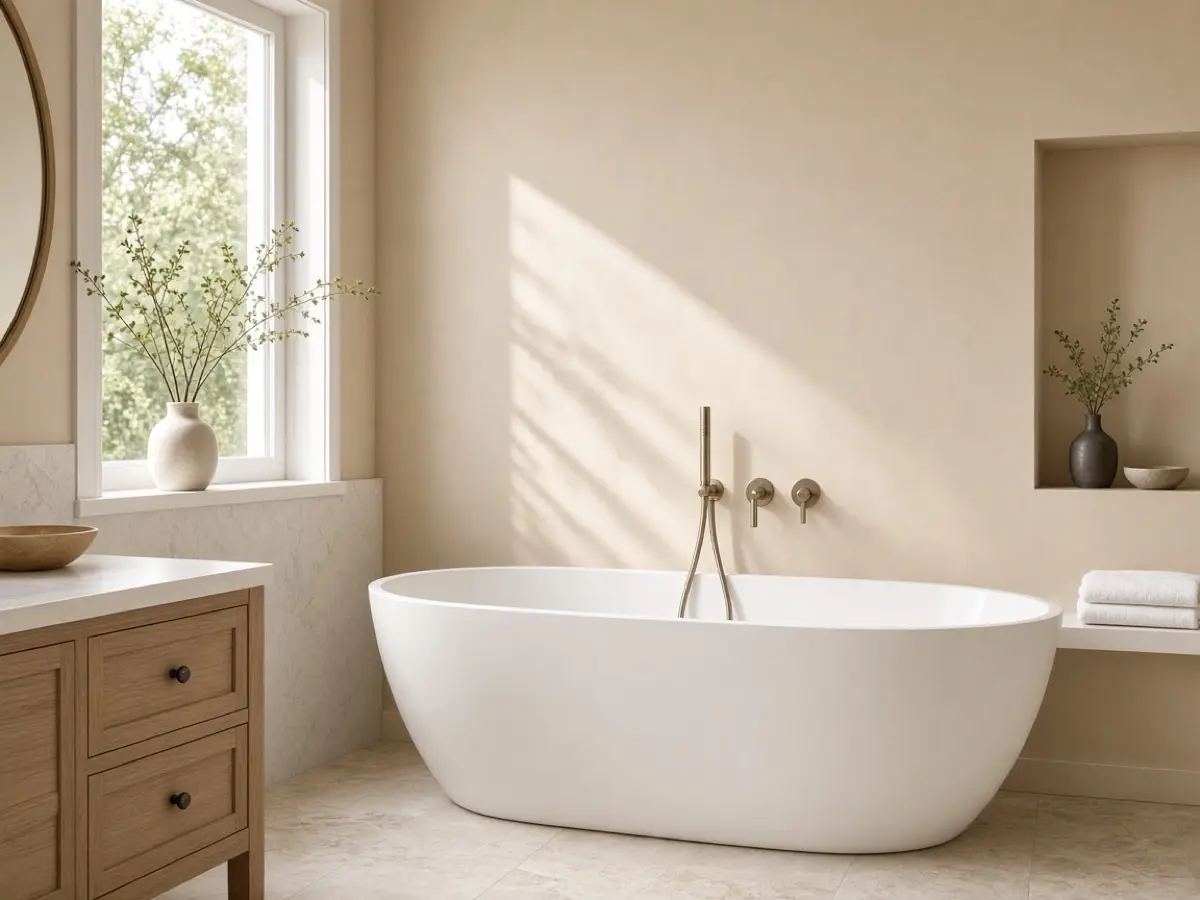
A sand or greige-beige with a red undertone can warm a white bath without turning the toilet cream. The danger is a beige that is too yellow. Next to a white tub it reads as nicotine, even when the room is clean. Sample it on the wall beside the tub, which is the largest white object, and look before you commit.
Keep the sand light. A deep tan in a small bath with no window makes the white fixtures pop in a harsh way, like they were installed in the wrong room. Light sand, white fixtures, and a wood stool or a linen shade is enough. You do not also need beige tile unless you are already replacing it.


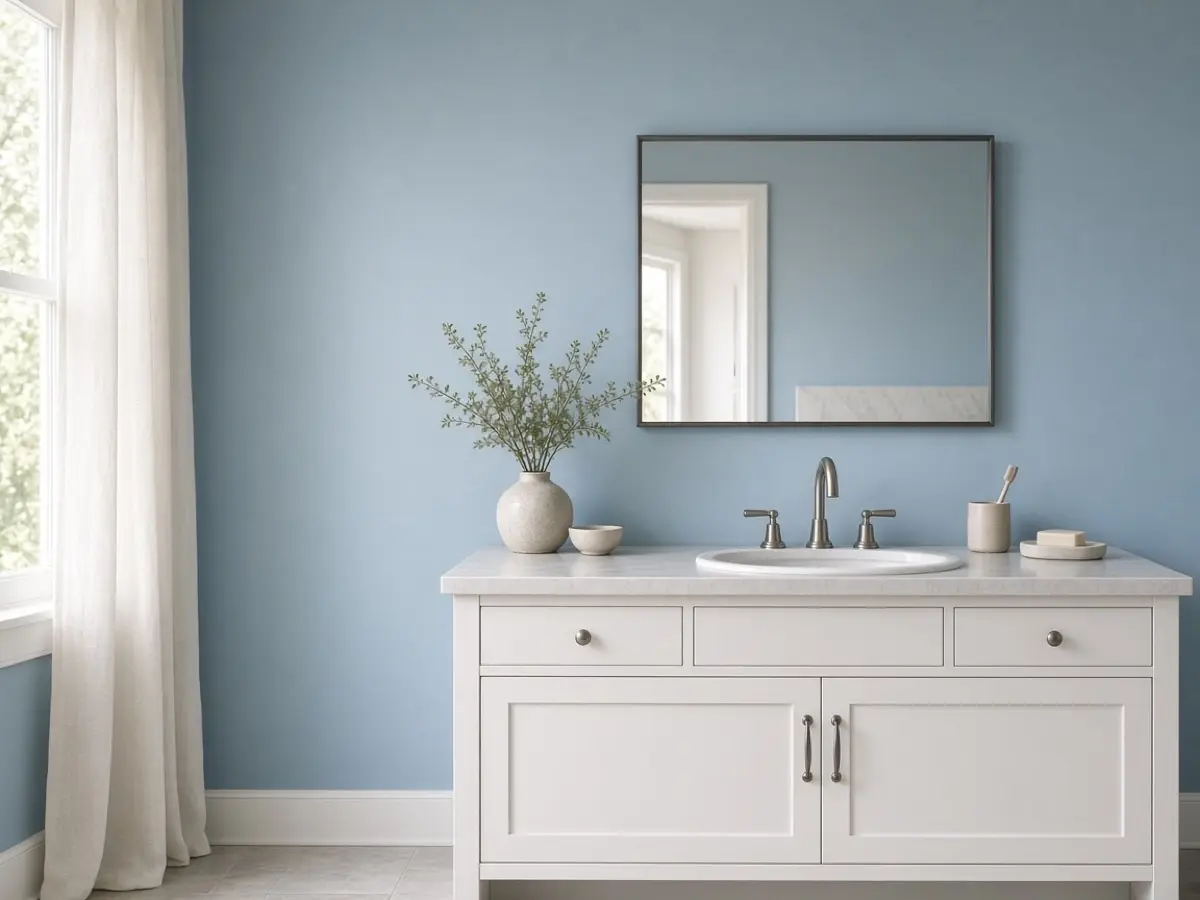
4. Use pale blue only with a warm bulb
Pale blue can look fresh with white fixtures in daylight and like a clinic at night if the bulb is 4000K or higher. If you want blue, keep it dusty rather than baby blue, and put a 2700K bulb in the fixture you already fixed in the light post. Look at the sample after dark before you buy the gallon.
One wall of blue, usually the wall opposite the mirror, is safer than a full wrap. The mirror bounces the color, and a small bath wrapped in blue can feel colder than you meant. White fixtures do the bright work. The blue should be a quiet wall, not a theme.


5. Put the deep color where you do not stare
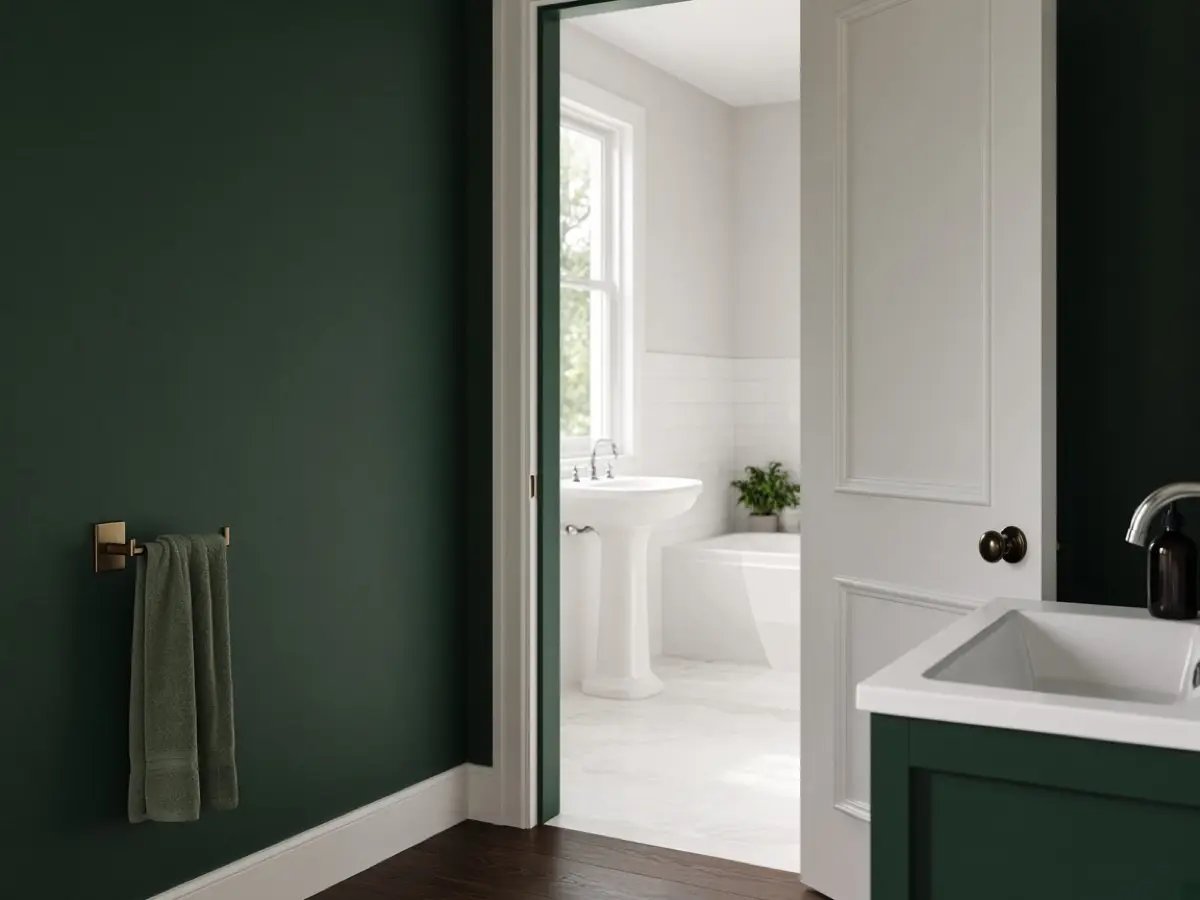
A navy, charcoal, or deep green on the wall behind the door, or on a short wall beside the shower, gives the white fixtures a frame without painting the room dark. The wall you face while brushing your teeth should stay light. You spend minutes there. The deep wall is the one you pass.
If the bath has no window, skip the deep wall. Light matters more than drama, and the light post already made that case. In a bath with a window, the deep color can sit on the wall the window does not hit, so the white tub still gets the day.


6. Let a wood vanity set the brown
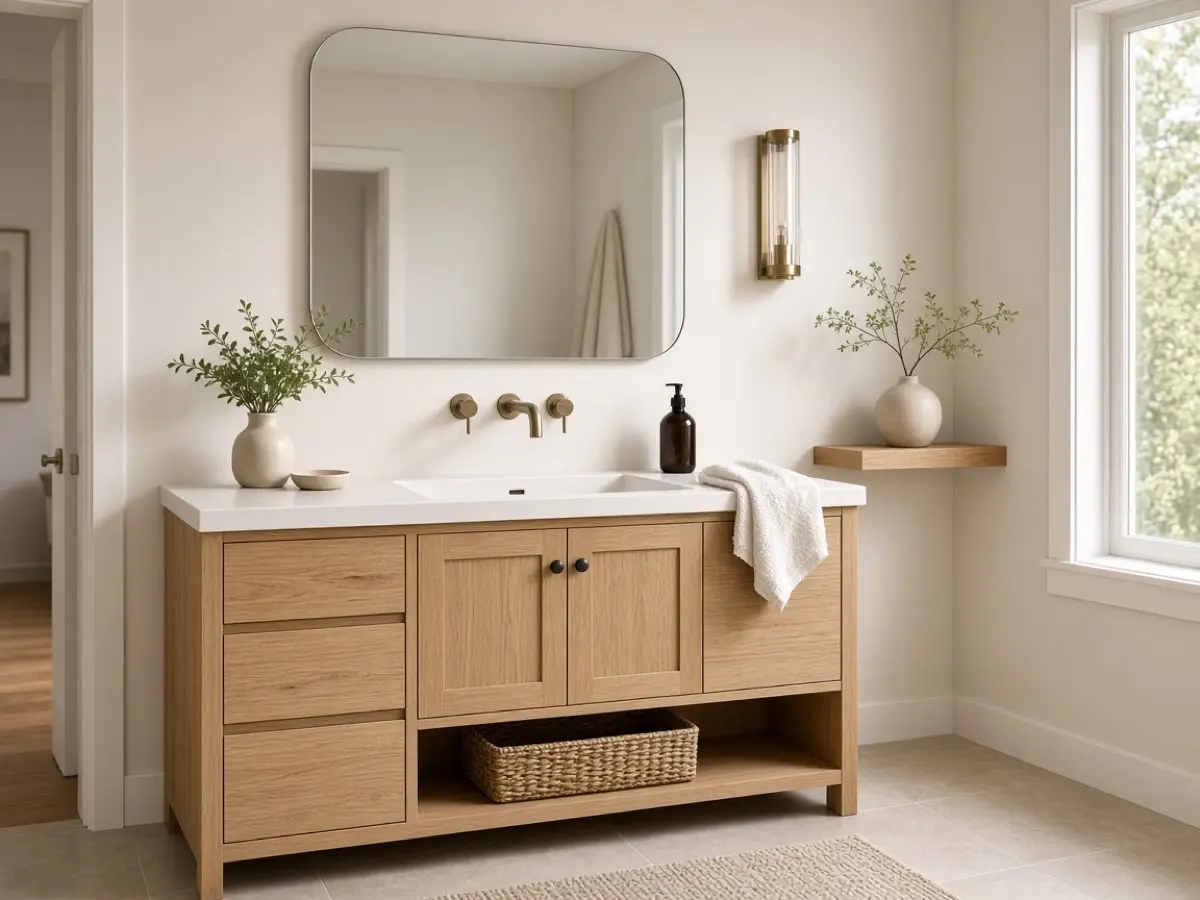
White china on a white vanity on white walls is a blizzard. A wood vanity, even a light oak, gives the white fixtures something to sit against. If you cannot replace the vanity, a wood shelf, a teak stool, or a frame around the mirror does a smaller version of the same job. One wood tone. Not oak plus walnut plus a dark stool.
Match the metal to what is already on the faucet if you can. A chrome faucet and a brass mirror frame can work if you do not add a third metal. The color scheme is the paint plus one warm material. More than that and the white starts to look like the leftover, not the anchor.


7. Use black as a line, not a field
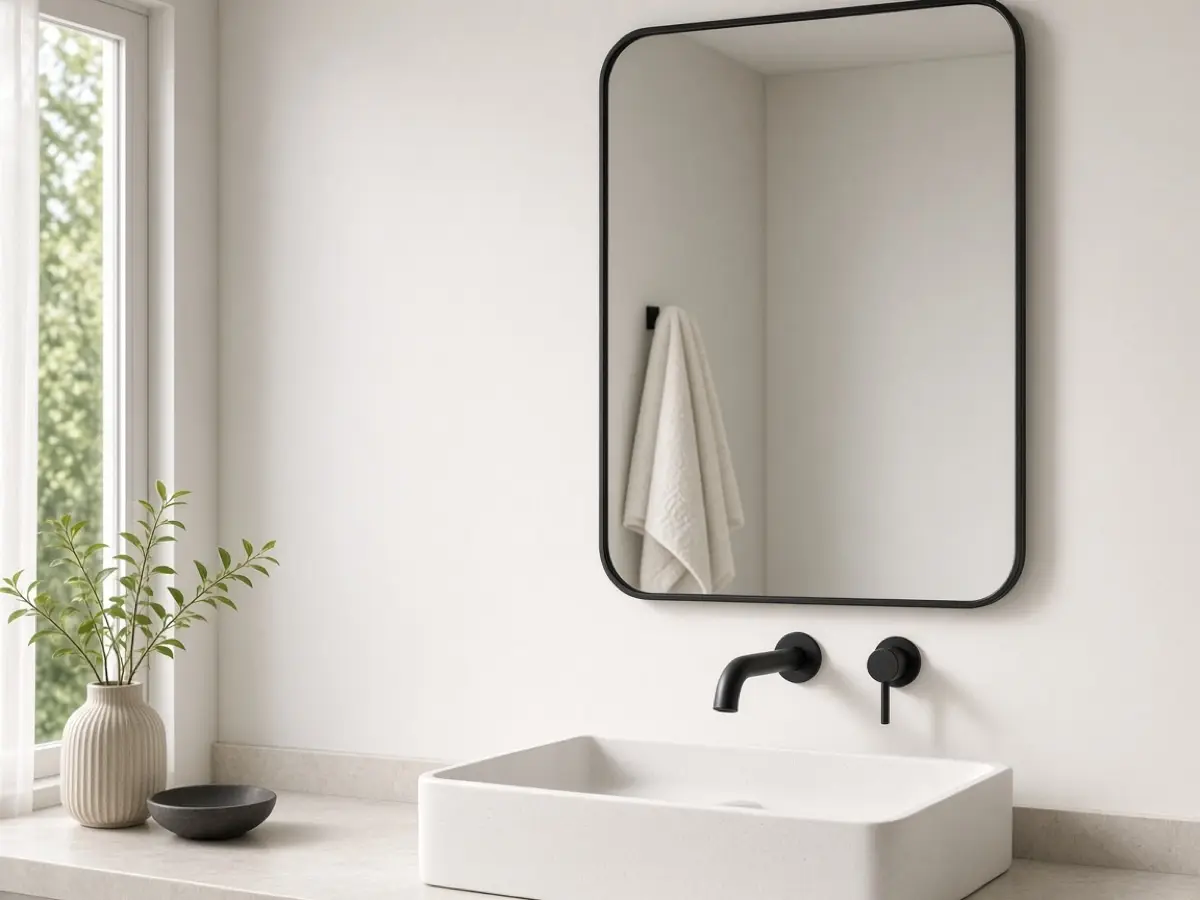
Black hardware, a black frame on the mirror, or a thin black towel bar draws a line the eye can use. Black tile on every wall next to white fixtures is a high-contrast box that shows every water spot. If you want black, keep it to the metal and one textile. The walls stay in the sage, sand, or warm white.
Matte black shows fingerprints less than gloss. Check that the finish is rated for a wet room. A living-room pull transferred to a shower door will spot. Buy the bath version. Two finishes of black, one glossy and one brown-black, look like a mistake beside a clean white sink.


8. Keep towels off fixture white
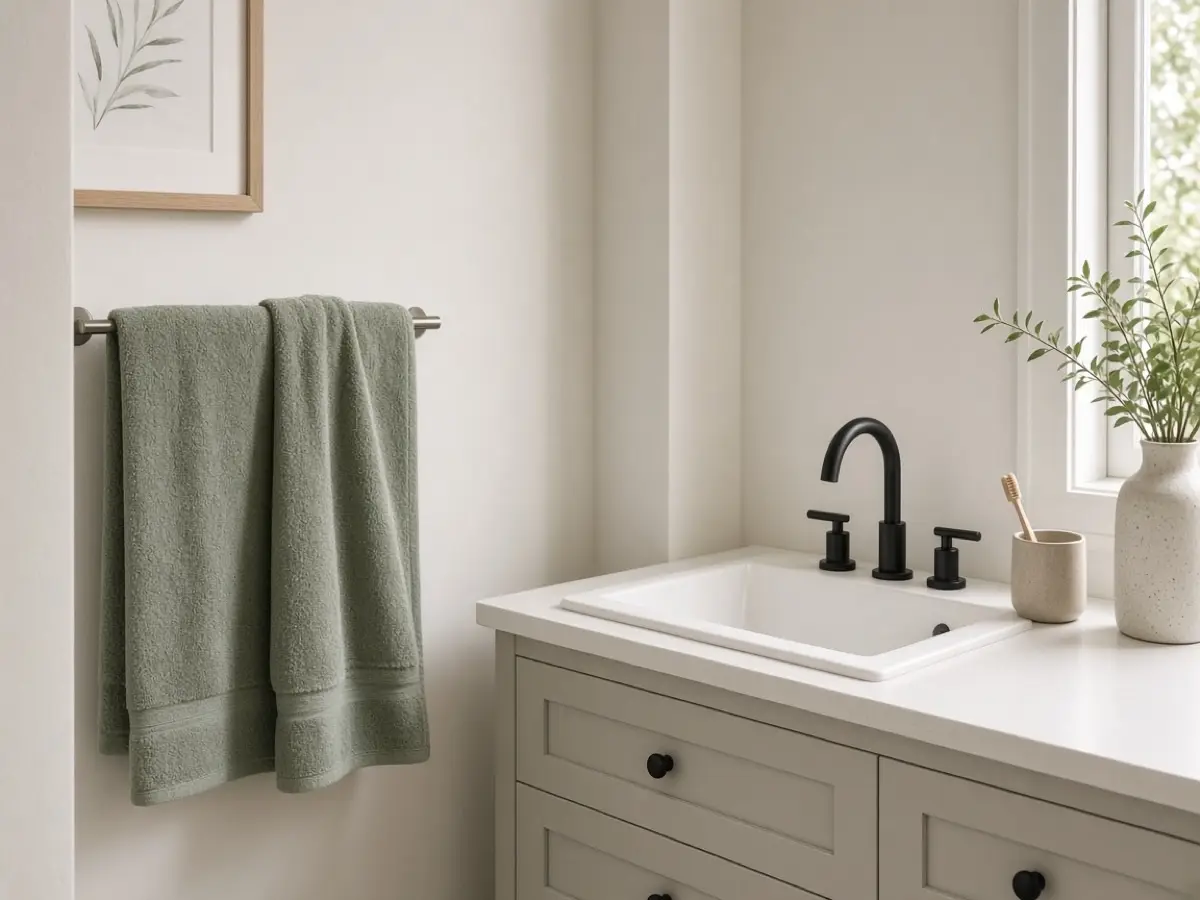
White towels on white fixtures disappear, and they show every shadow as a stain. Pick one towel color that relates to the wall: sage towels on sage or warm white walls, sand towels on sand, a deep navy only if you painted that deep wall. Two towel colors look like a hotel that lost its system. Fold two and hang two. The rest live in the cabinet.
Wash them before the first guest if this bath is the one in the guest bedroom plan. A new towel with a factory crease looks like a prop. A washed one looks like the room is used, which is what you want.


9. Drop the floor a step darker
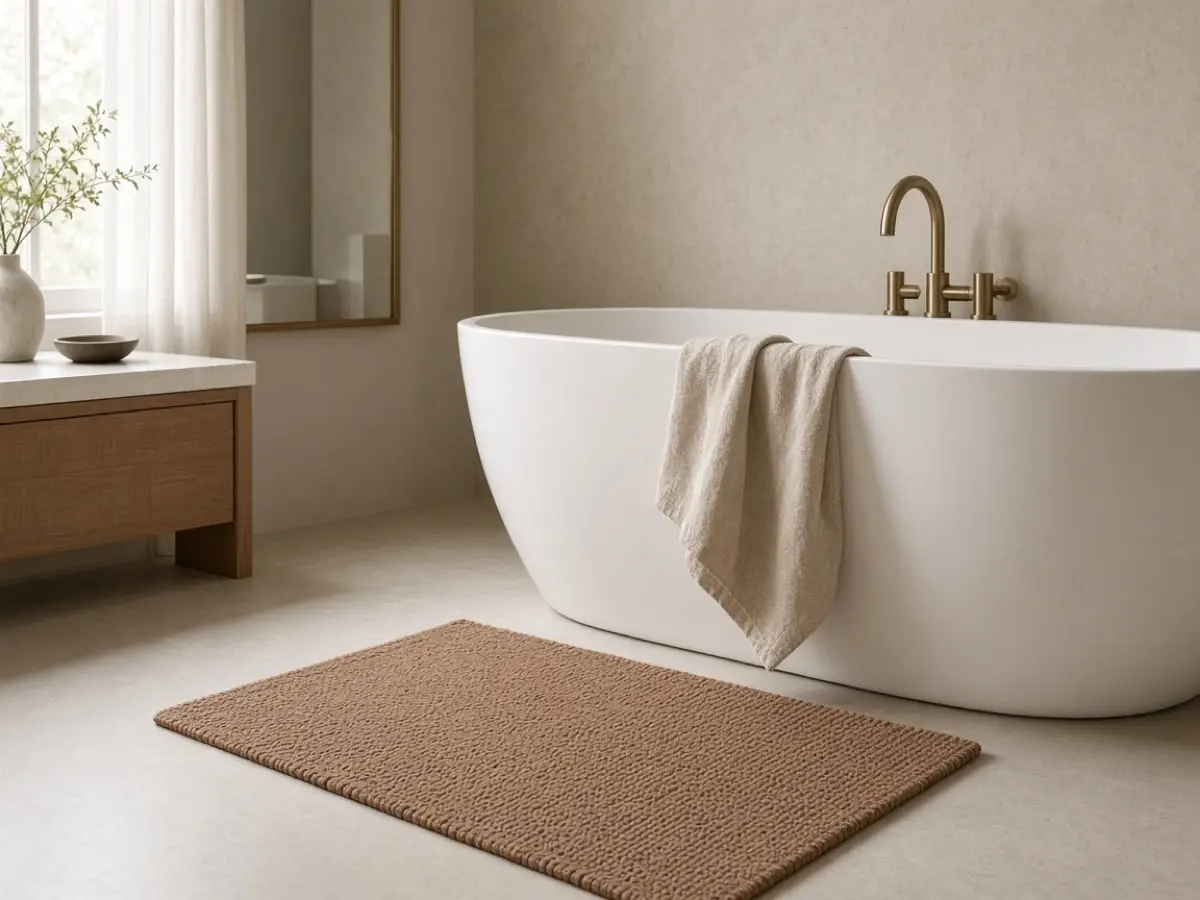
A white tub on a white floor has no edge. A floor one or two steps darker than the fixtures, in a warm gray or a soft clay, makes the tub and toilet look placed. If you are not replacing the floor, a cotton rug in that darker tone does the job in the place you stand. Skip a rug the same white as the tub. It looks like a patch.
The rug should be able to wash. A bath floor gets wet. A dark rug that cannot be washed will look worse than the white floor you were trying to fix. Measure so the rug does not block the door. A pretty edge under a door is a trip.


10. Paint the ceiling the wall color
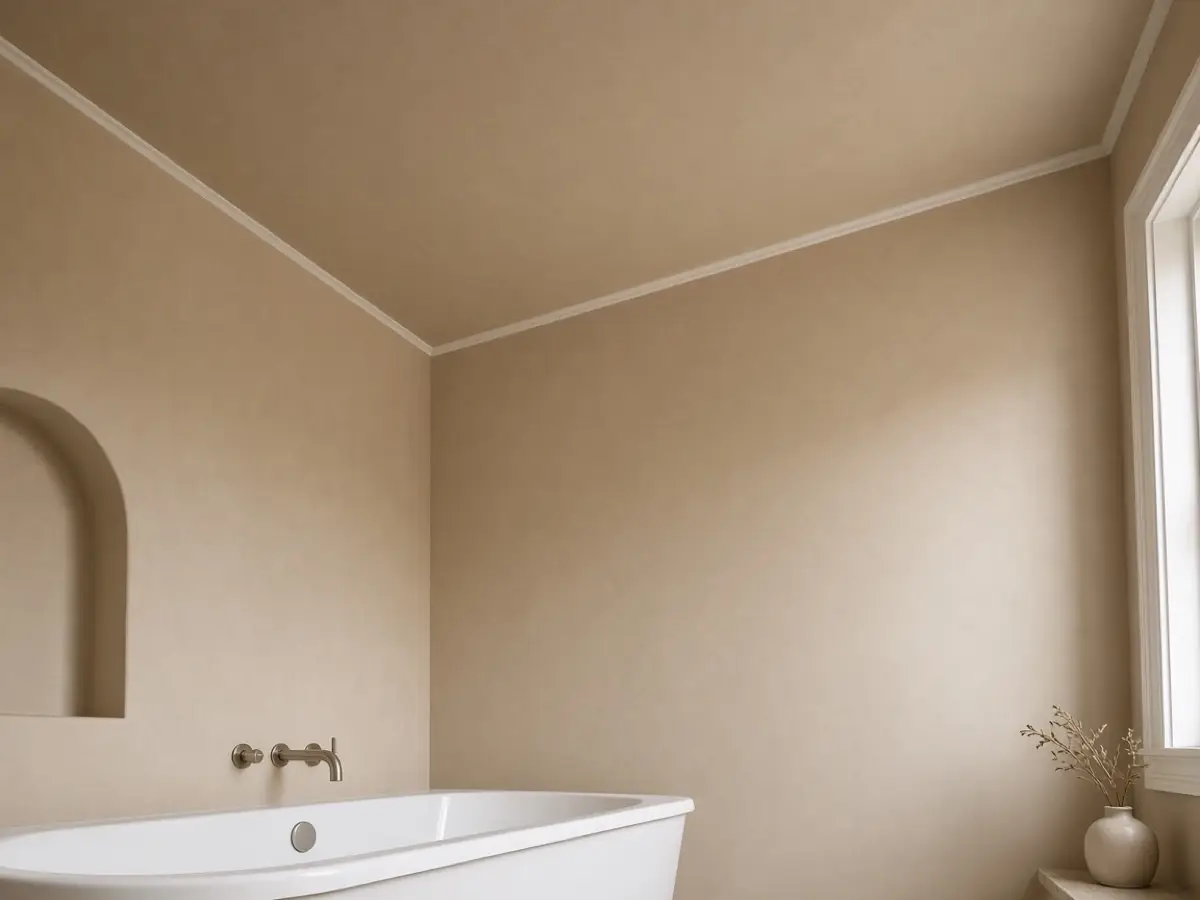
A bright white ceiling over a sand or sage wall draws a hard line and makes the white tub feel boxed in by stripes of white. Paint the ceiling the same color as the walls, in a flat sheen so it does not glare. In a small bath the ceiling is low enough that you see it every time you look up from the sink.
If the ceiling has stains, prime first or the color will flash. One coat is rarely enough over a patch. This is still cheaper than a new fixture, and it makes the scheme feel finished instead of stopped at the picture rail you do not have.


11. Skip the colors that date the china
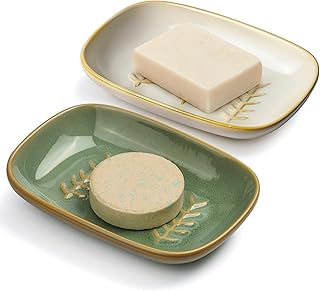
Mint, peach, and a strong lilac make white fixtures look older, not softer. They were built for a different decade of bath, and they photograph as a costume. If you love a hint of those hues, take them into a towel or a soap dish you can remove, not into a gallon of paint. The wall should still pass the test beside the toilet in daylight.
The same goes for a busy patterned wallpaper behind the toilet. A small repeat in the sand or sage family can work on one wall. A large floral will fight the white and the mirror. When you are unsure, paint. You can paper later. You cannot un-paper as easily on a Sunday.

12. Test beside the fixture, then stop
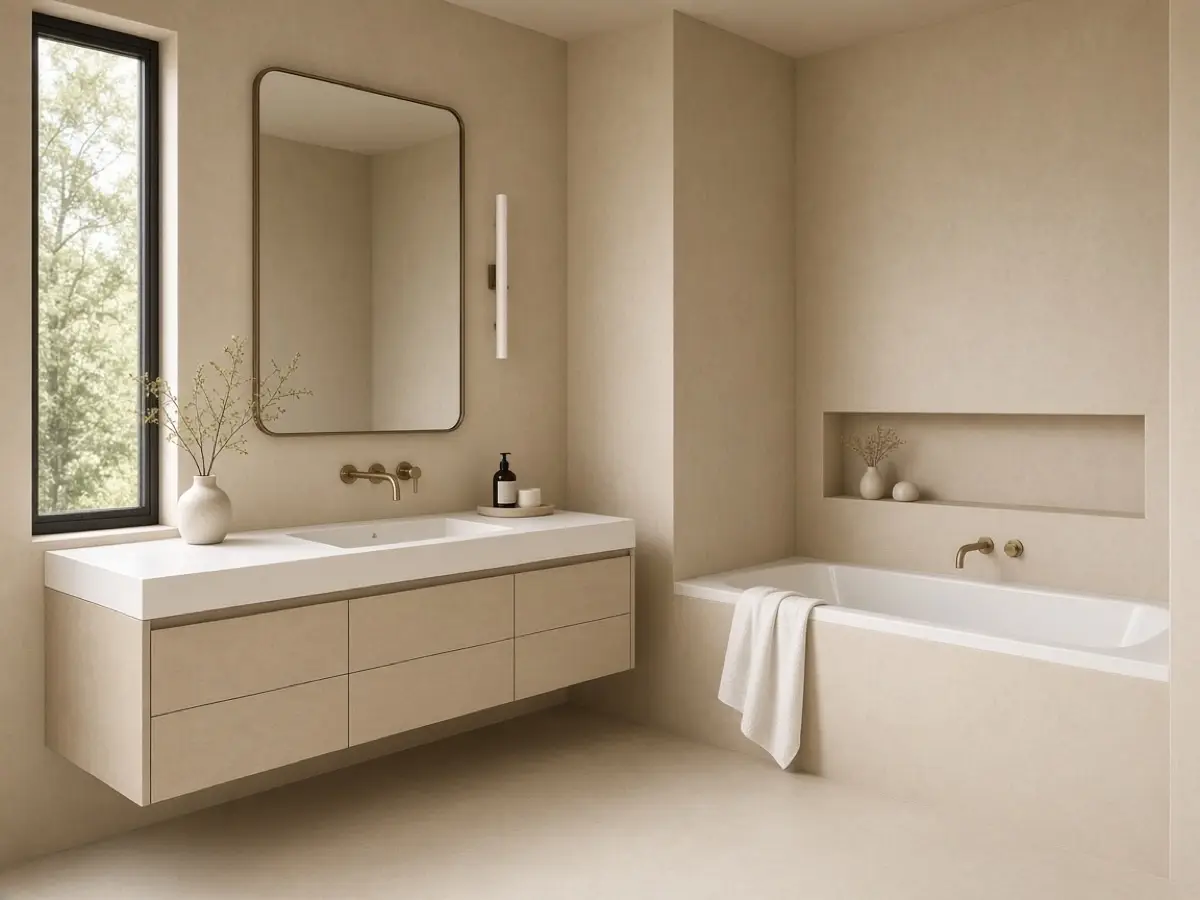
Tape the sample so it touches the edge of the sink or the side of the tub. Look at 8 a.m. and at 9 p.m. If the fixture still looks white and the wall looks like a decision, buy the paint. If you are still comparing three chips, you do not have a scheme yet. Pick the one that makes the sink look cleanest and paint that.
Then stop adding colors. One wall color, one towel color, one wood or one black line. A bath this size cannot hold a palette the way a brown and beige living room can. The fixtures are already the brightest objects. Let them be.

Tips Before You Start
- Do not try to match fixture white. Use a warmer white or a real color.
- Change the bulb to 2700K before you judge any sample.
- Test paint where it touches the sink or the tub, morning and night.
- One deep wall is enough. The wall at the mirror stays light.
- Towels and the floor should be a step away from fixture white.
- Stop at one wall color, one textile color, and one metal or wood.
FAQ
What wall color looks best with a white toilet and sink?
A warm white, a soft sage, or a light sand. Each lets the fixtures stay the brightest white in the room. A paint matched to the china usually makes both look slightly wrong.
Can I use gray in a white bathroom?
A warm light gray can work if the bulb is warm. A cool blue-gray under a cool bulb makes the fixtures look stark. Sample it at night before you paint the whole room.
Should bathroom towels match the white fixtures?
No. White towels disappear and show every shadow. Choose a towel in the wall color, a step deeper, and keep to one color.
Do I need to replace white fixtures to change the look?
No. Paint, a wood shelf or vanity tone, darker towels, and a floor or rug a step darker will change the room around the fixtures you have.
White fixtures want a wall that is not trying to be them. Pick a warm white, a sage, or a sand, test it against the sink, and leave the toilet where it is.