
12 Brown and Beige Living Rooms That Stay Warm After Dark

On this page14 sections
- Put the brown on the sofa
- Pick a beige with yellow in it
- Use wood that still looks brown
- Choose beige shades, not white ones
- Go one step darker on the rug
- Keep the metal warm
- Light the room from two heights
- Line the curtains
- Add one darker pillow
- Turn the ceiling light off
- Catch the light on a low surface
- Judge it at eight in the evening
- Tips Before You Start
- FAQ
A brown and beige living room can look calm at noon and gray at eight. Beige without yellow in it turns muddy under a cool bulb. Brown without a lamp on it turns into a hole in the corner. We plan this palette for the hour you actually sit in the room, not for the photo taken at 11 a.m.
Start with the sofa and the two lamps. Paint and pillows come after you have seen those at night. The free moves in living room edits still help. This list is about color and light, which those edits do not settle.
As an Amazon Associate I earn from qualifying purchases.
1. Put the brown on the sofa
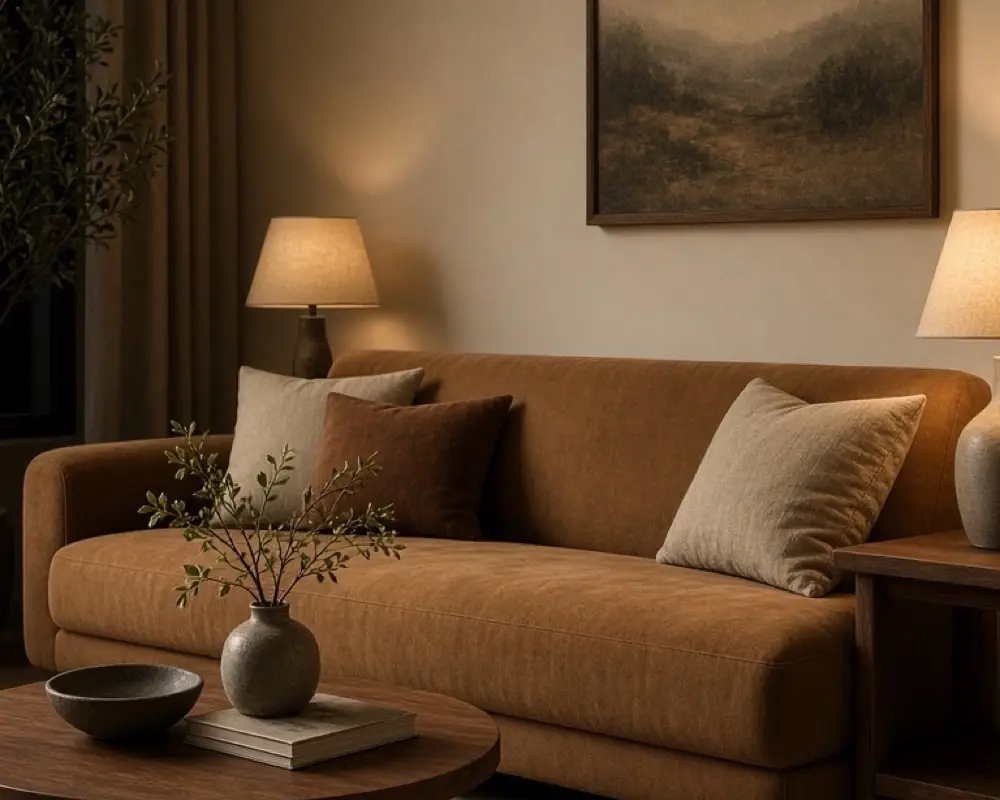
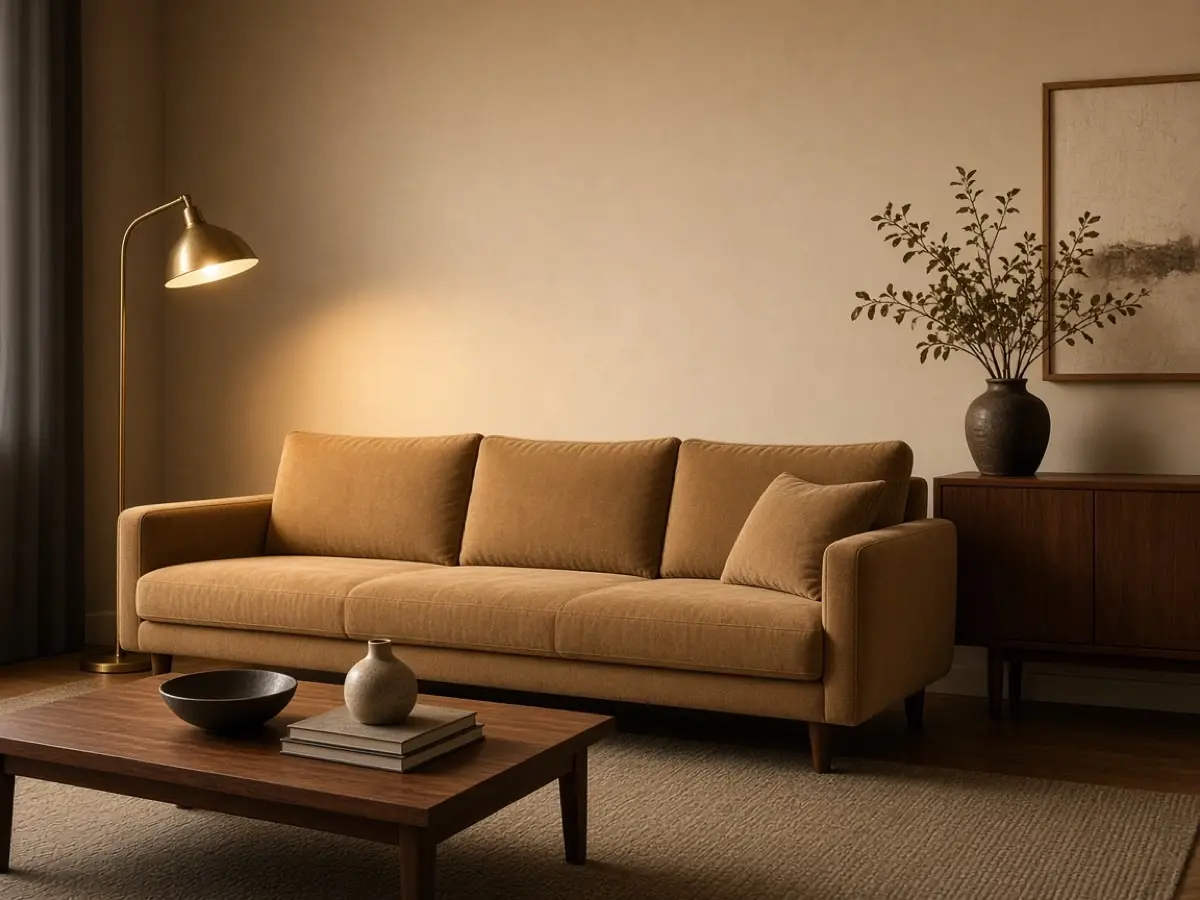
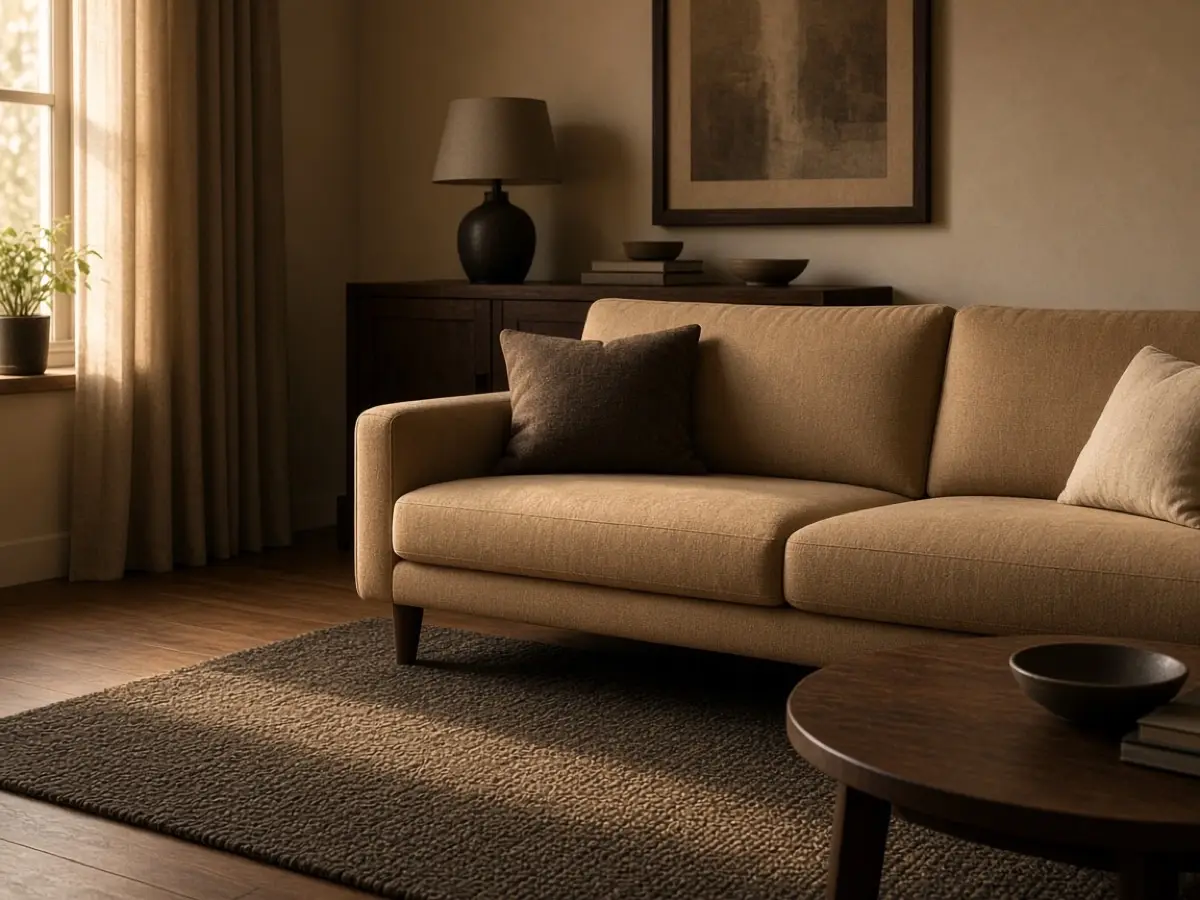
A beige sofa against a brown wall disappears after dark, because both go flat and the seating has no edge. A brown or camel sofa against a light beige wall keeps its shape when the lamps are on. You can see where to sit. If you already own a beige sofa, do not buy a new one for this. Add a brown throw and a darker pillow, and let the sofa stay. The wall can carry the lighter color.
Leather, linen, and a tight weave all work. A shiny brown reads as a different room than a matte one. Pick matte if the rest of the house is quiet. Sit on it at night before you decide the wall is the problem. Often the sofa was simply unlit.


2. Pick a beige with yellow in it
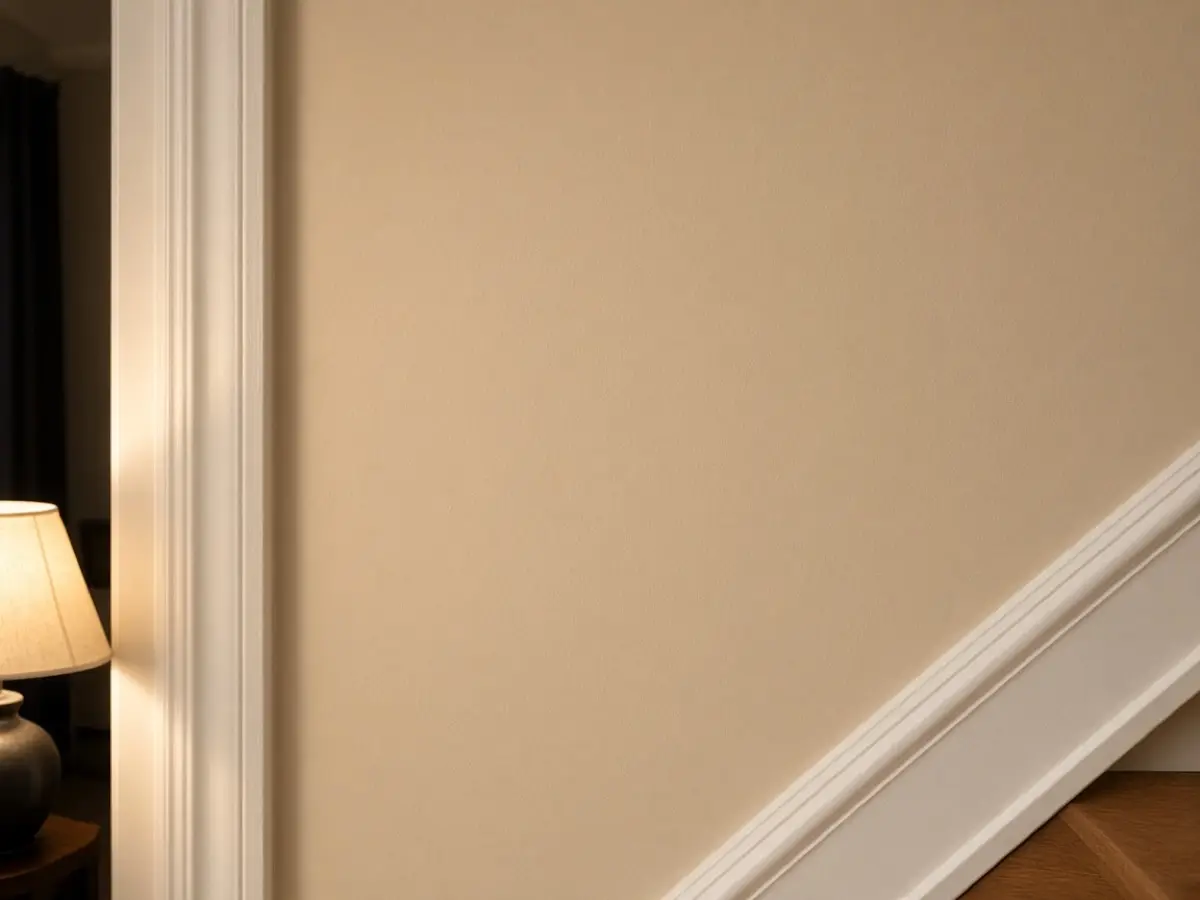
Hold the paint chip next to a piece of white paper. If the beige looks gray beside the paper, it will look grayer at night. You want a beige that leans straw, sand, or cream. Ask for a color with a yellow or red undertone, and skip the ones described as greige. Paint a sample the size of a poster on the wall you see from the sofa, and look at it at 8 p.m. with your real lamps on.
Daylight lies. A chip that looked warm in the store can go cold on a north wall. If the sample fails, it failed cheaply. The door-painting budget is the right size of experiment. Do not commit a whole room to a gallon until the night test passes.


3. Use wood that still looks brown
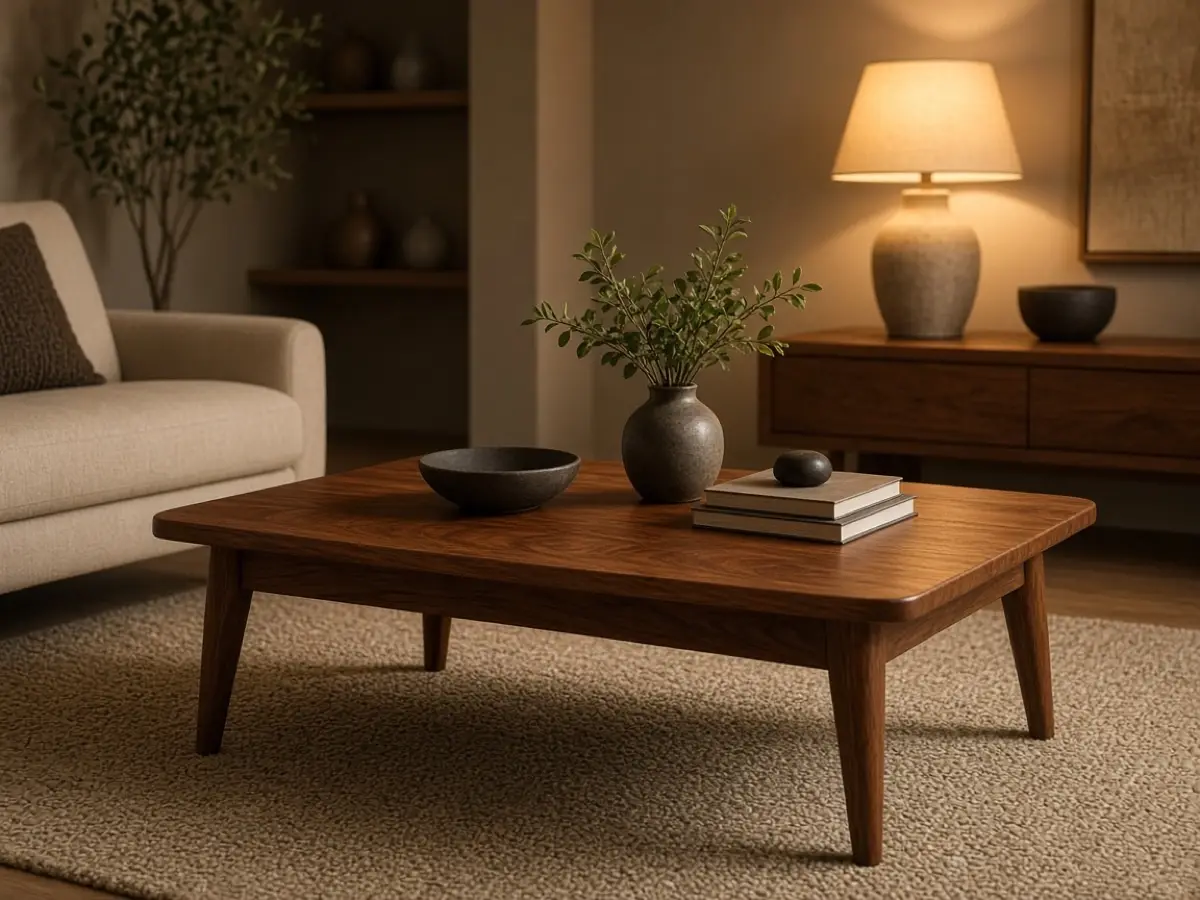
Gray-washed oak goes blue under LEDs. A coffee table in walnut, oak with a clear finish, or a worn brown you already own stays brown when the lamp hits it. If the table you have is gray, a wood tray in a warmer tone on top does more than refinishing the whole piece this month. The tray is what the light catches.
Keep one wood family in the room. A walnut table, a pine shelf, and a black metal cart are three stories. Two woods is plenty. The fall branch can sit on that tray later. The wood itself should work in every month.


4. Choose beige shades, not white ones
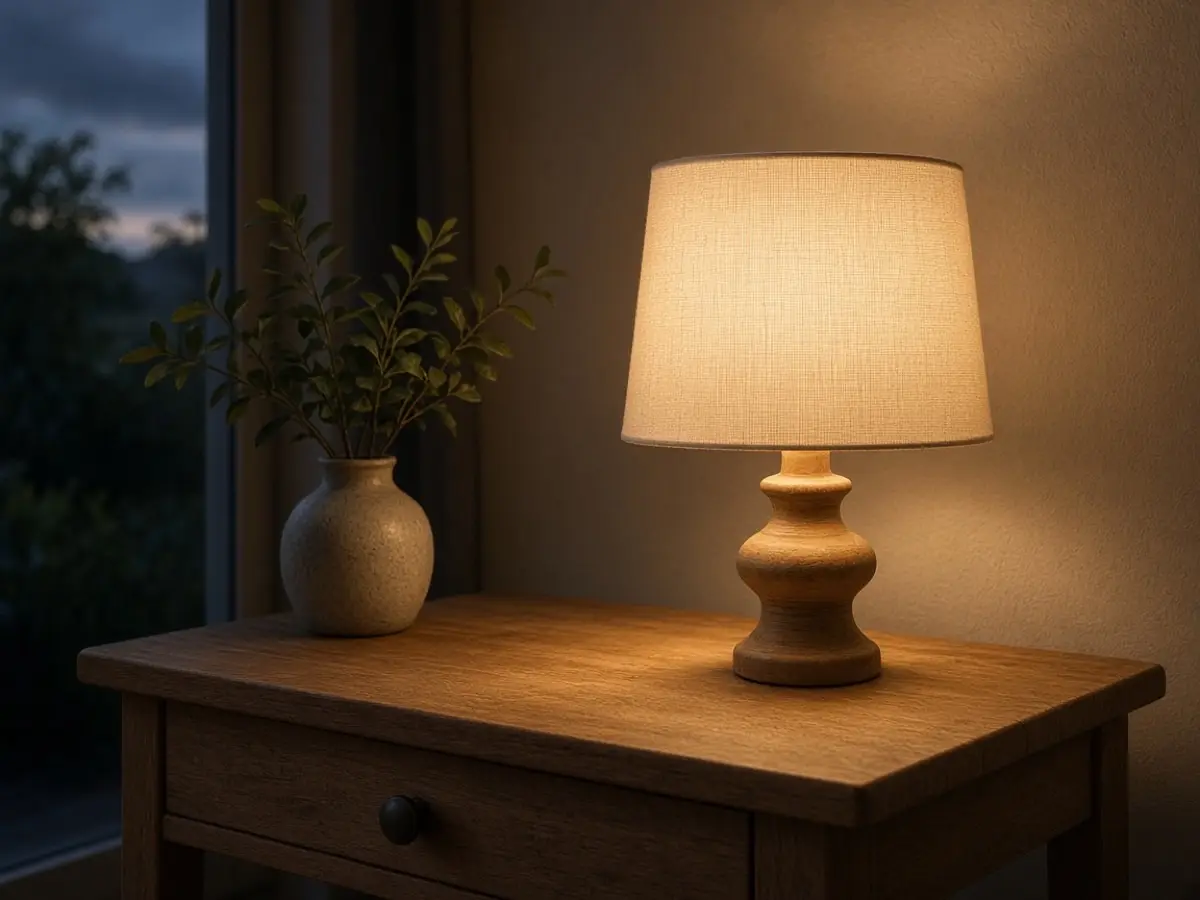
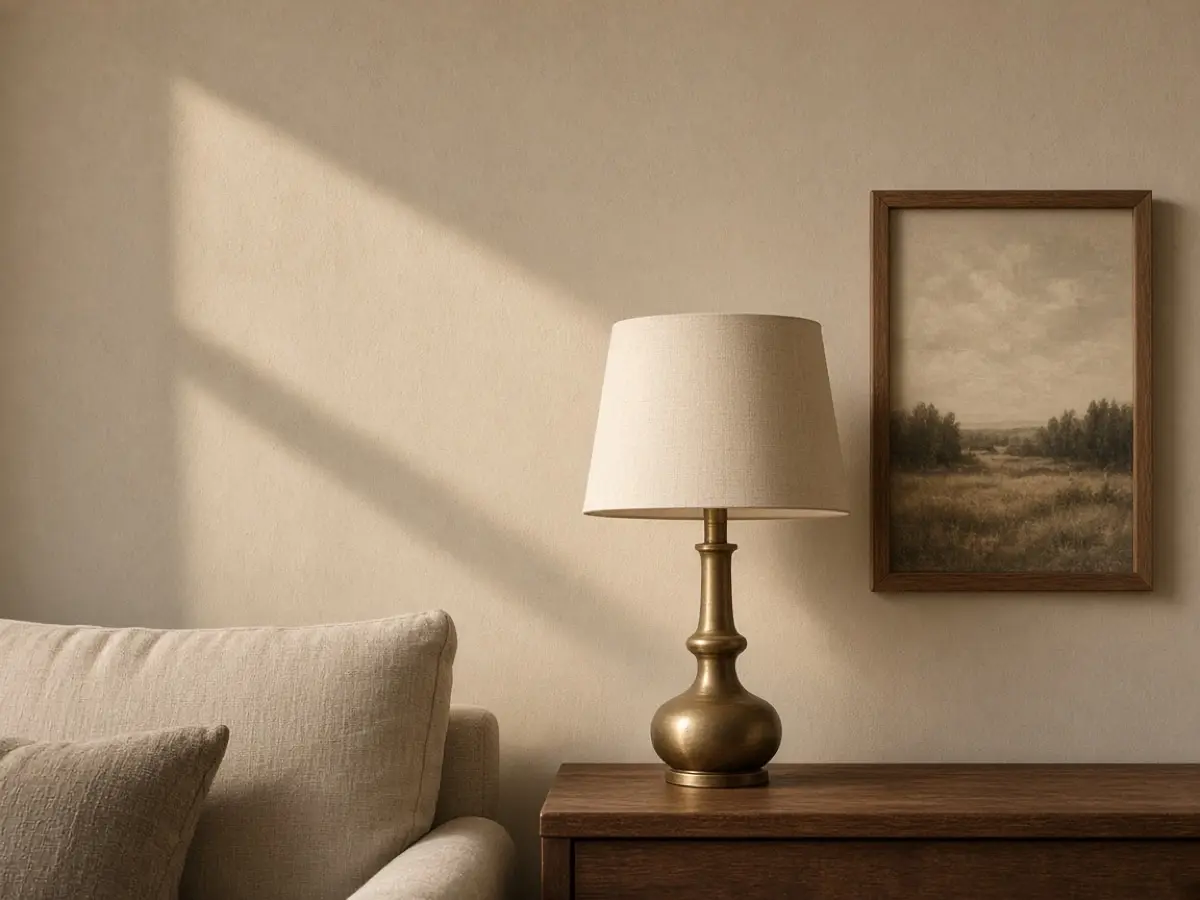
A white drum shade in a brown room looks like a paper lantern that does not belong. A beige or tan shade warms the bulb again on the way out and matches the wall instead of punching a white hole in it. If the shade is stained, replace the shade before you replace the lamp. Measure the harp and the bottom width so the new one sits at the same height.
Look at the shade with the bulb on, not in the aisle. Some “beige” shades are almost pink. Hold it near the sofa fabric. If it clashes there, it will clash at home. One matching pair of shades beats a mix of white and tan in the same sightline.


5. Go one step darker on the rug
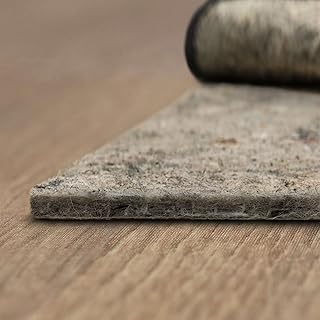
A rug the same color as the floor vanishes, and then the brown sofa looks like it is floating. Choose a rug one or two steps darker than the floor, still in the brown family: a camel floor gets a darker oak rug, not a charcoal one. Charcoal introduces gray, and gray is what makes this palette fail at night.
The front legs of the sofa should sit on it, the same placement as in the living-room edit. If the budget is the hundred-dollar plan, do not buy the rug yet. A darker runner in front of the sofa is a smaller test. Live with it for a week of evenings before you order a room-sized one.


6. Keep the metal warm
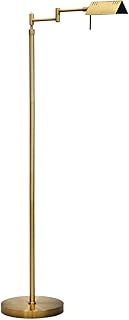
Chrome and nickel flash cool next to beige and make the brown look dirty. Brass, bronze, or an aged gold on the lamp, the rod, and the table legs stays in the same temperature as the wood. You do not need every piece to match. You need them not to fight. If the curtain rod is chrome and the lamp is brass, the rod is the one to change, because you see it against the window every night.
One new brass lamp does more than a set of gold picture frames. Put the money where the light is. The frames can stay wood. Metal is for the things that turn on.


7. Light the room from two heights
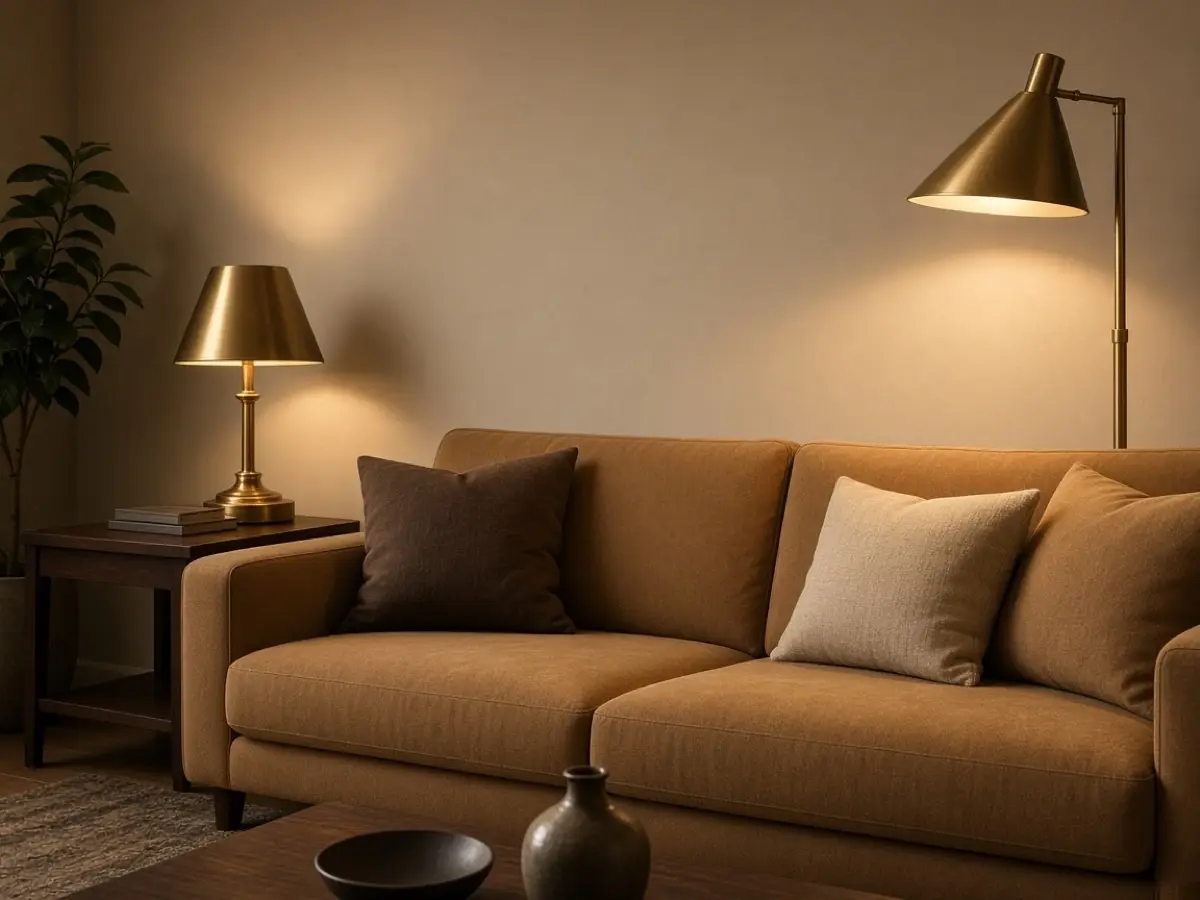
One overhead light flattens beige and drops a shadow under the sofa. A table lamp at sitting height and a floor lamp behind the reading chair give you two pools. The ceiling can stay off. If you only own one lamp, the second can be a bulb in a fixture you moved, which is cheaper than a new shade story. Place them on a diagonal so the light crosses the room instead of pooling in one corner.
Use 2700K in both. A warm lamp and a cool lamp make the beige look like two different paints. The budget bulb swap is the right first purchase if the shades are already beige.


8. Line the curtains
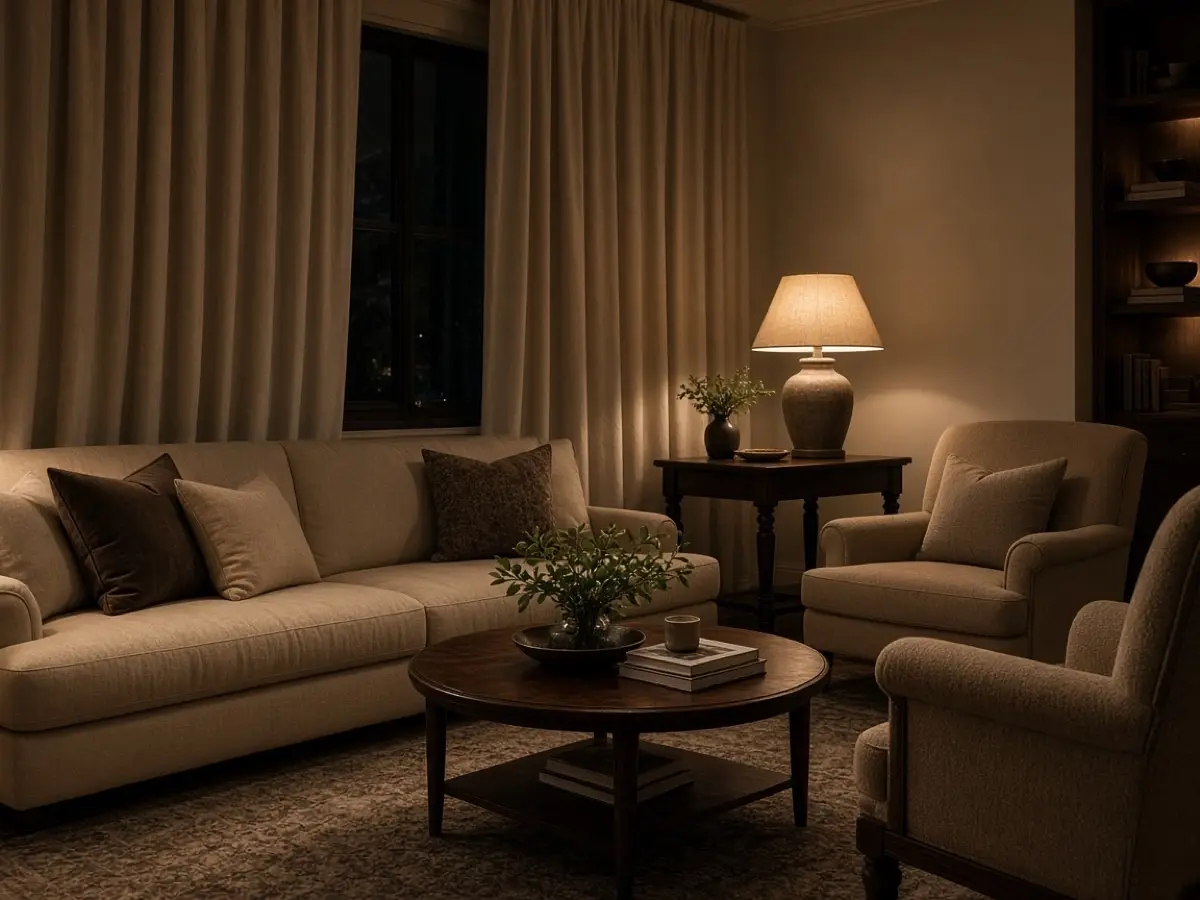
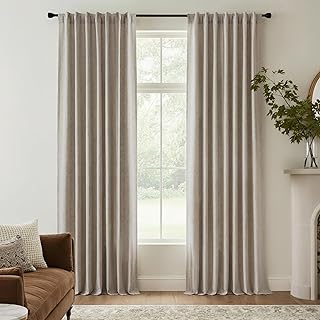
Bare glass at night is a black mirror, and beige walls look colder beside it. Curtains in a warm beige or a soft brown, lined so the street does not show through, turn the window into another wall of the palette. Hang them wide and high if the rod move from the budget post is still undone. Unlined white sheers are for daytime privacy, not for this hour.
If you close them at dusk, the room stops competing with the dark outside. Open them in the morning. The color is for the evening. It should not block the noon light you also live in.


9. Add one darker pillow
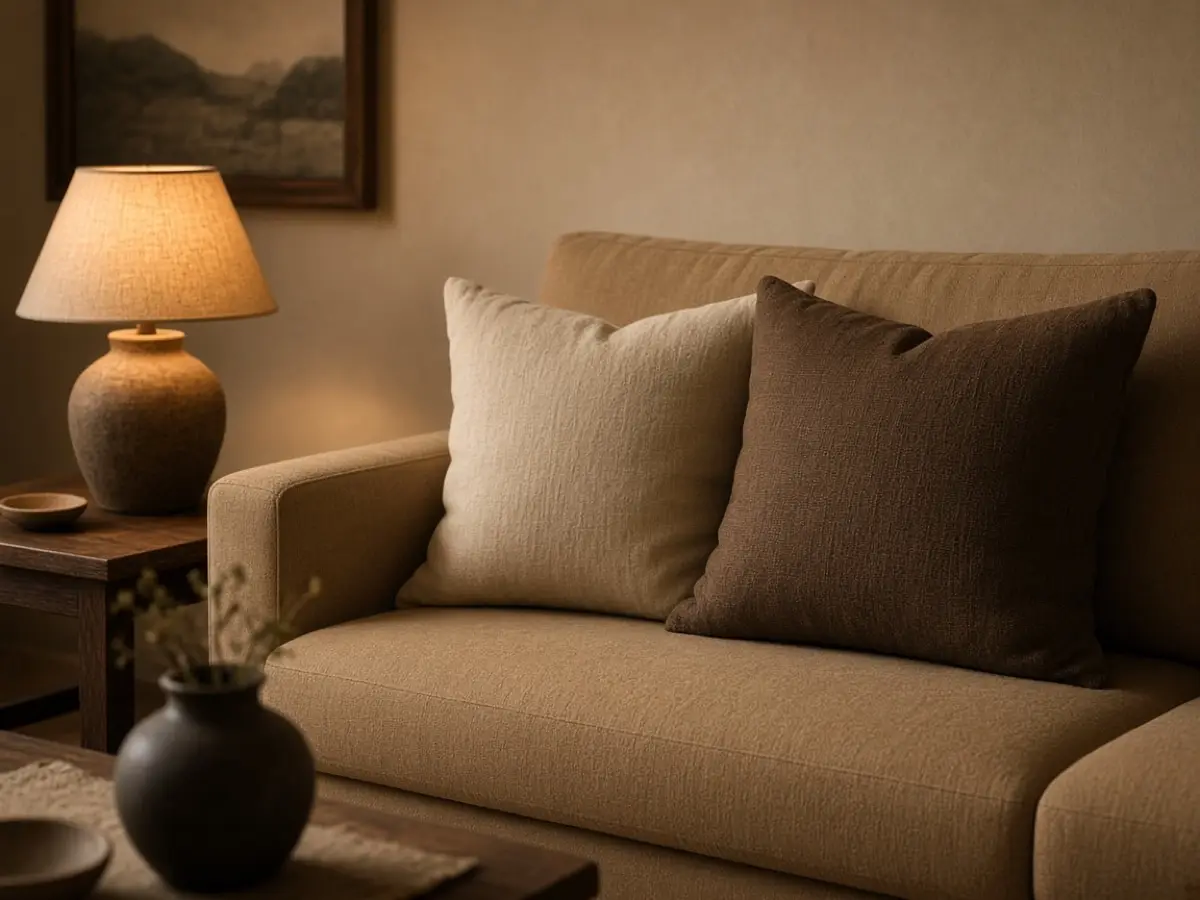
A beige sofa with only beige pillows has no place for the eye to rest after dark. One pillow in a deeper brown, or in the camel of the throw, is enough. Skip slate, navy, and black unless the rest of the room already has them. Those colors are a different palette with a beige guest.
Put the pillow where you lean, not in a styled row you remove every time you sit. If it slides, the insert is too small for the cover. A 20-inch insert in a 20-inch cover looks thin. Size the insert an inch up. One good pillow beats a set that introduces a fourth color.


10. Turn the ceiling light off
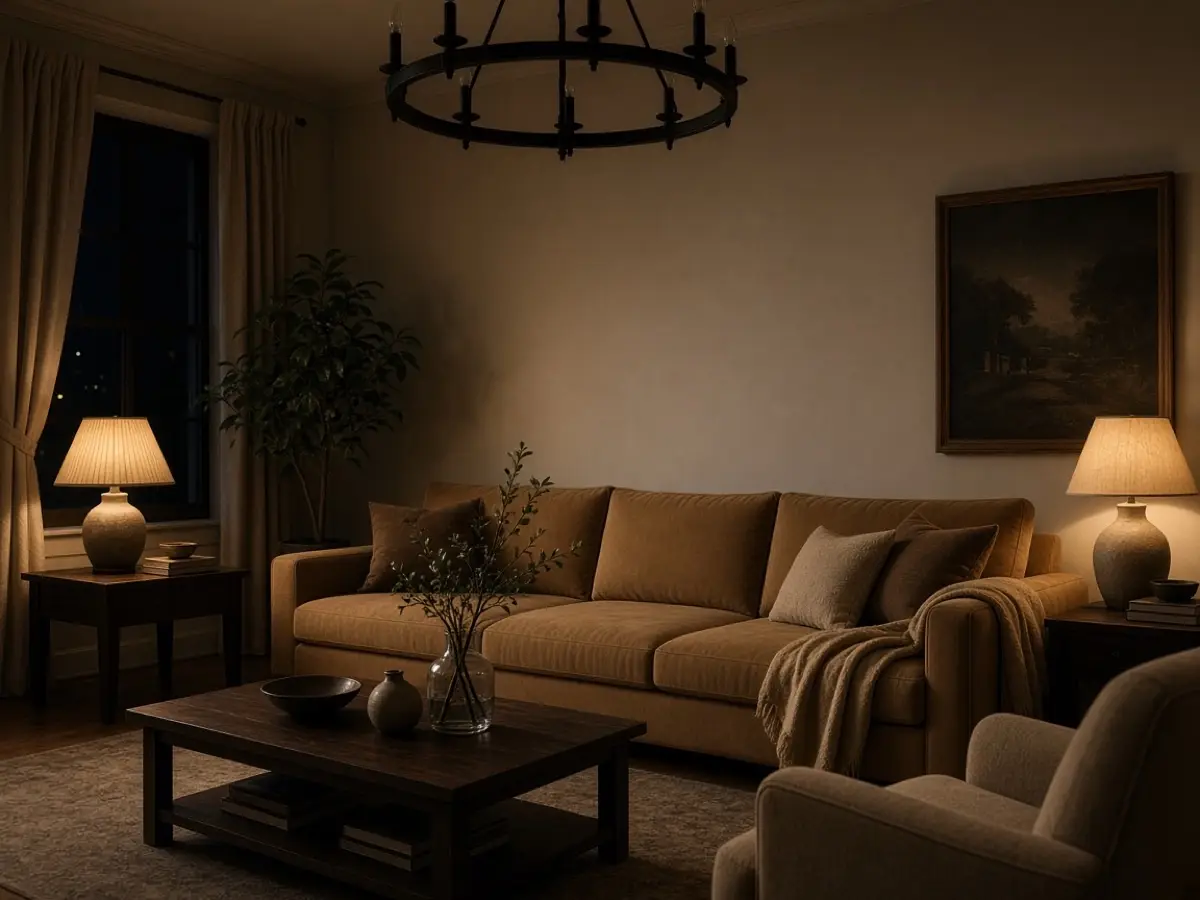
The ceiling fixture is often the coolest bulb in the room, and it is the one that makes beige look like a rental hallway. Use it for cleaning. For the evening, lamps only. If you need a dim overhead for guests, put it on a dimmer and keep it low enough that the lamps still do the work. A full-bright ceiling plus lamps is two moods at once, and the cool one wins.
This costs nothing if the lamps already work. If they do not, fix the lamps before you buy art. A brown and beige room with a single overhead is why people decide they hate beige. They hated the bulb.


11. Catch the light on a low surface
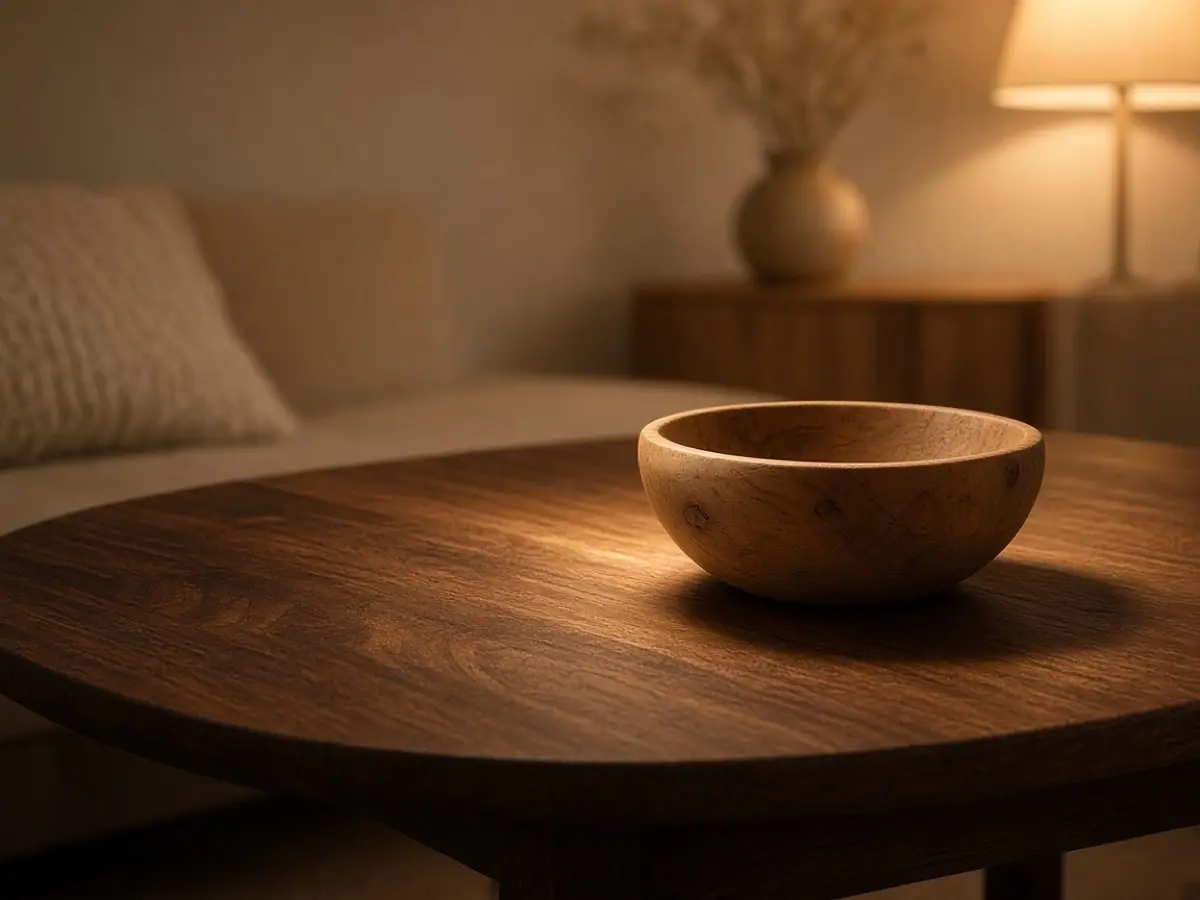
A matte beige room absorbs light. A wood bowl, a brass tray, or the walnut table from earlier gives the lamp something to land on. Keep that object low, under the shade line, so you are not staring at a reflection. Glass tops throw the bulb back in your eyes. If the coffee table is glass, the tray should be wood or linen, not a mirror.
Clear the rest. One reflective or warm surface is a highlight. Five of them is a showroom. The living-room edit that removes extra objects is the partner to this one. You are making a place for light, not a collection.


12. Judge it at eight in the evening
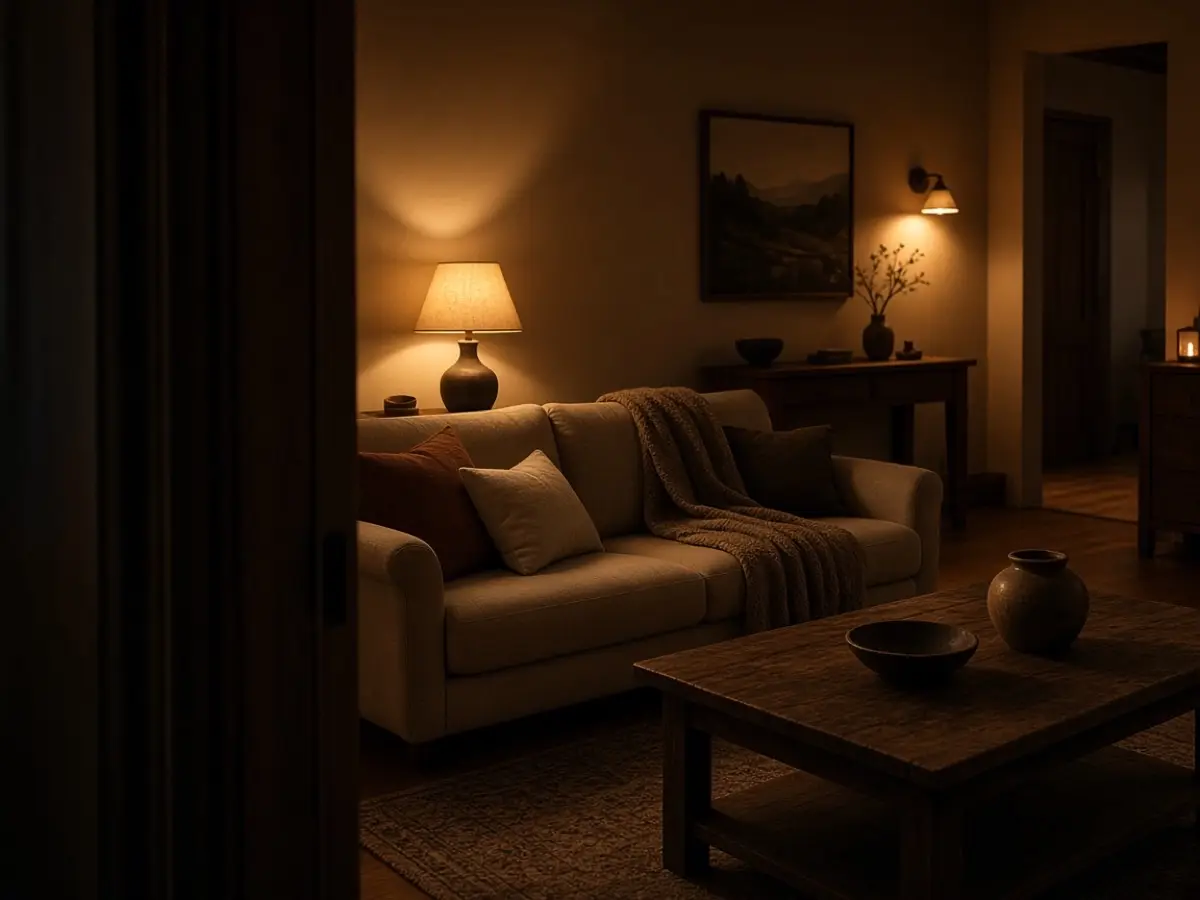
Stand in the doorway at the hour you use the room. If the sofa has an edge, the walls look sand instead of gray, and you can read a paperback by the lamp, the palette is working. If the corners are caves, add a lamp before you add a pillow. If the walls look dirty, the beige is too gray or the bulb is too cool. Fix that before you buy a rug.
Take the photo then, not at noon. Noon will always flatter this room. Eight o’clock is the test you have to pass. When it passes, stop. Another brown object will not make it warmer. The light already did.



Tips Before You Start
- Look at paint and fabric at 8 p.m., with the bulbs you really use.
- Put the darker brown on the sofa or the throw, and keep the walls light.
- Skip greige and gray-washed wood. They go cold after dark.
- Use beige shades and 2700K bulbs, and leave the ceiling light off.
- One darker pillow and one darker rug are enough contrast.
- Brass and walnut stay in the palette. Chrome and charcoal do not.
FAQ
How do I keep a beige living room from looking gray at night?
Choose a beige with a yellow or red undertone, and light it with 2700K lamps in beige shades. A greige paint under a cool ceiling bulb is what makes the room look gray.
What brown works with beige?
Camel, walnut, and a matte chocolate all work if the beige is warm. Put the darker value on the sofa or the rug so the seating still has an edge after dark. Skip gray-brown.
Should a brown and beige room have black accents?
Not as the first move. Black and chrome read as a different scheme and cool the beige down. Use brass, bronze, and a deeper brown pillow before you add black.
Do I need new furniture for this look?
Often no. A brown throw, beige shades, and warmer bulbs change the room you have. Buy a rug or a sofa only after the night test shows the color is the actual problem.
Brown and beige stay warm when the beige has yellow in it, the sofa is the darker shape, and the lamps are doing the work the ceiling light cannot.