
12 Beige Living Rooms With One Deep Accent

On this page14 sections
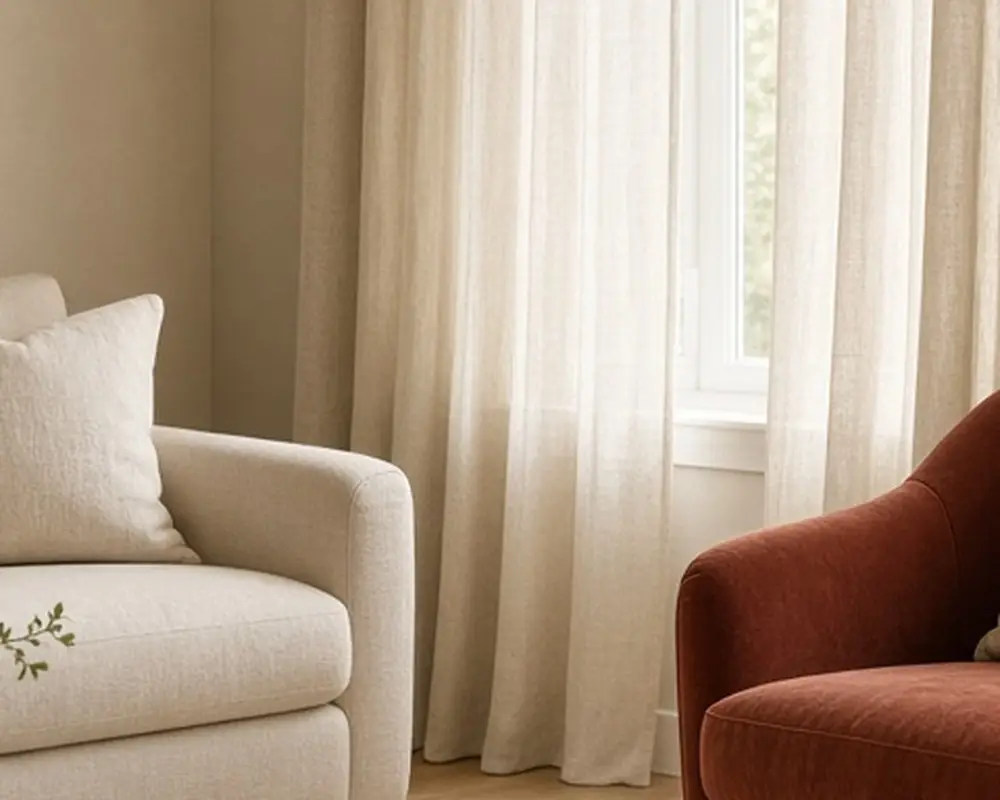
A beige living room is restful, but it can also be forgettable. Most people try to fix that by adding a little of everything: a blue pillow, a green vase, a yellow print. The room ends up busy and still somehow flat. A better fix is to pick one deep color and give it the whole job.
One accent, repeated a few times, makes a neutral room look decided. Below are twelve deep accents that sit well on warm beige, with notes on where to put each one. For the paint itself, the brown and beige living room post covers which beiges stay warm.
As an Amazon Associate I earn from qualifying purchases.
1. Chocolate brown
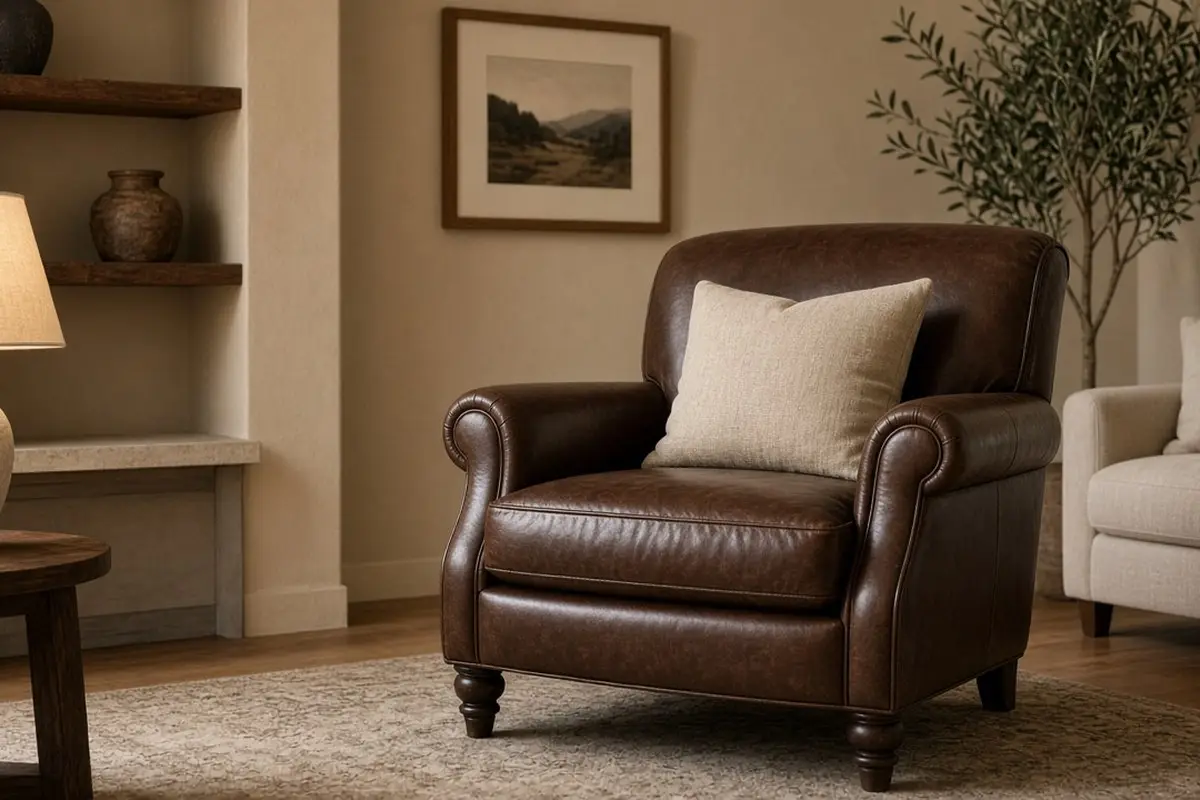
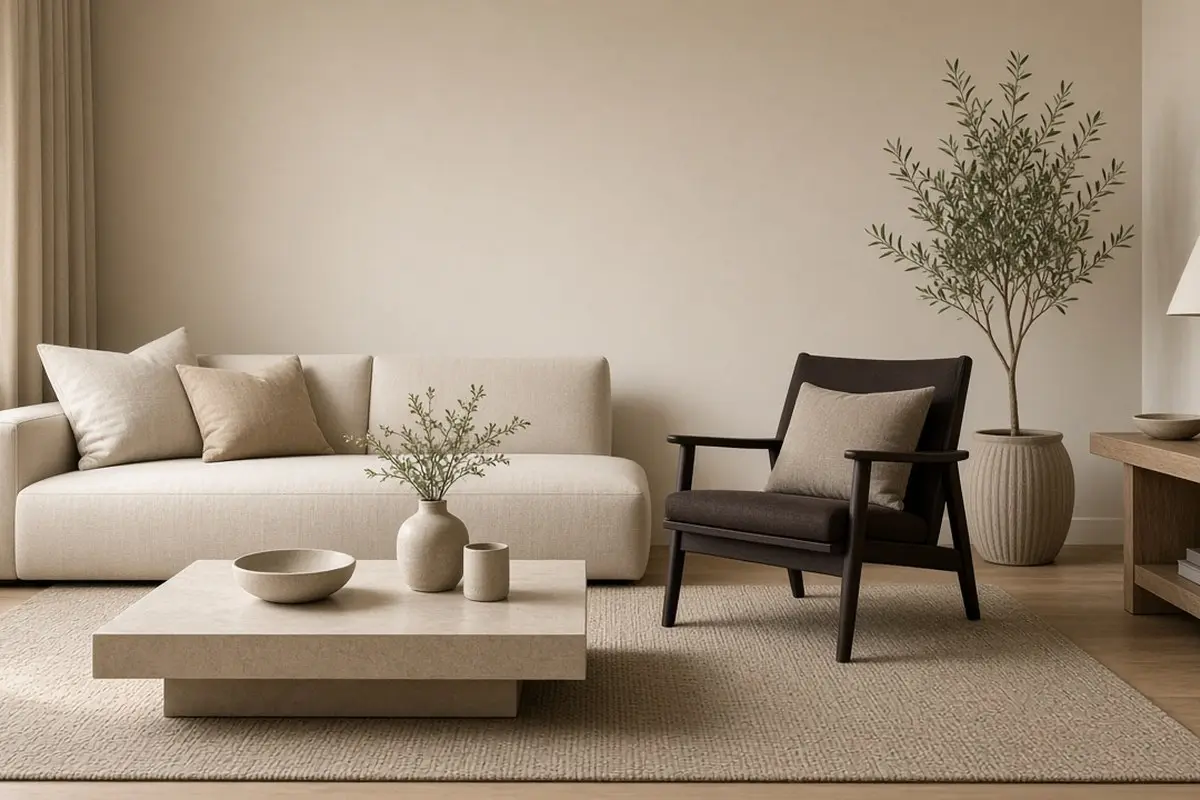
Brown is the most natural partner for beige because it is beige’s darker relative. A chocolate brown accent pillow, a brown leather chair, or a dark wood bowl reads as deliberate without introducing a new color family. It is the safest first step for anyone nervous about color.
Use it on the largest accent you have, such as an armchair, then echo it twice on smaller pieces across the room.
Get the look
2. Rust
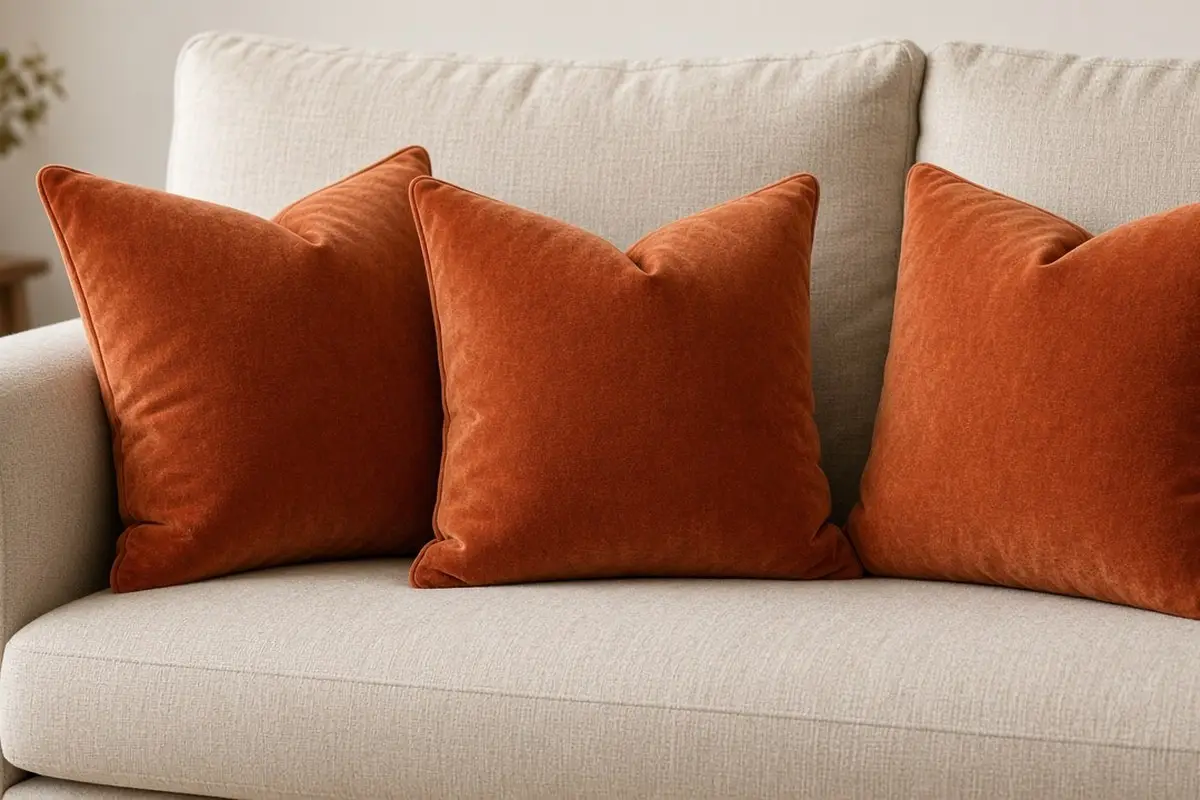
Rust is brown with a little fire. It wakes up a beige room in autumn and still looks good in spring. Velvet rust pillows catch the lamp light. A rust throw over the back of the sofa adds a band of color at eye level, which is where an accent counts most.
Keep rust away from bright orange. The two look similar on a screen and very different in a room.
Get the look
3. Olive green
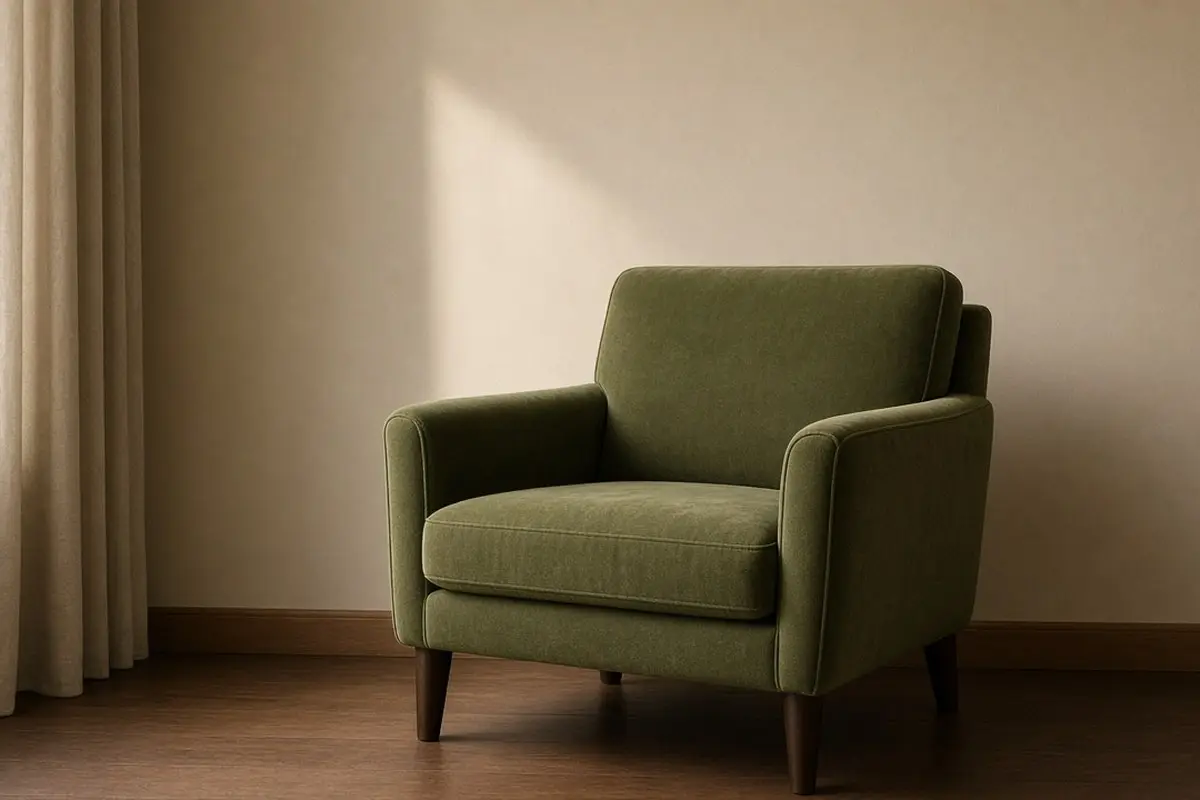
Olive is the green that beige likes most. It has enough yellow to feel warm and enough gray to stay calm. Try it on a single armchair, a pair of curtains, or a large plant pot. Olive also hides wear well, which makes it a good choice for a family room.
If you add a real plant too, keep the pot olive or cream rather than another color.
Get the look
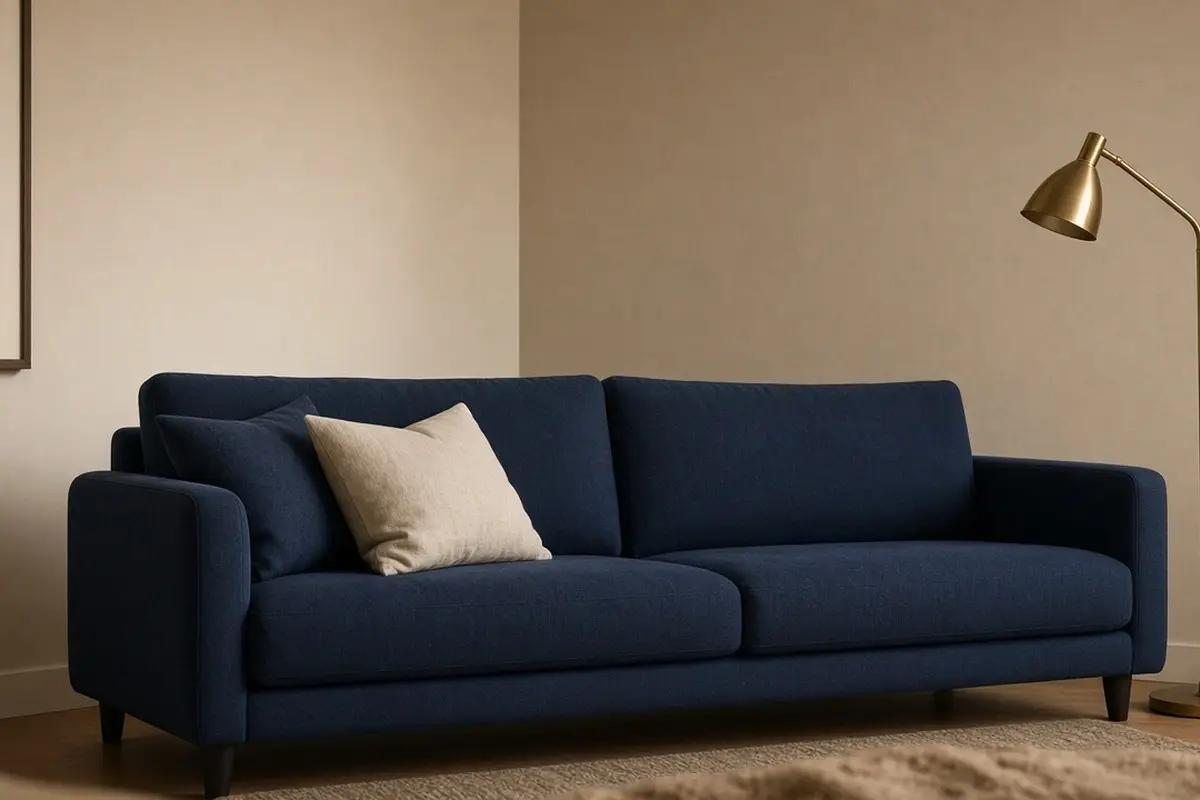
4. Ink blue
Ink blue is navy with more black in it. On beige it looks crisp and grown up. Use it on a large rug or a sofa, then pick it up in a small print on the wall. Because it is so dark, a little ink blue goes a long way.
Pair it with brass or wood, never chrome. Chrome makes ink blue feel like a uniform.

5. Oxblood
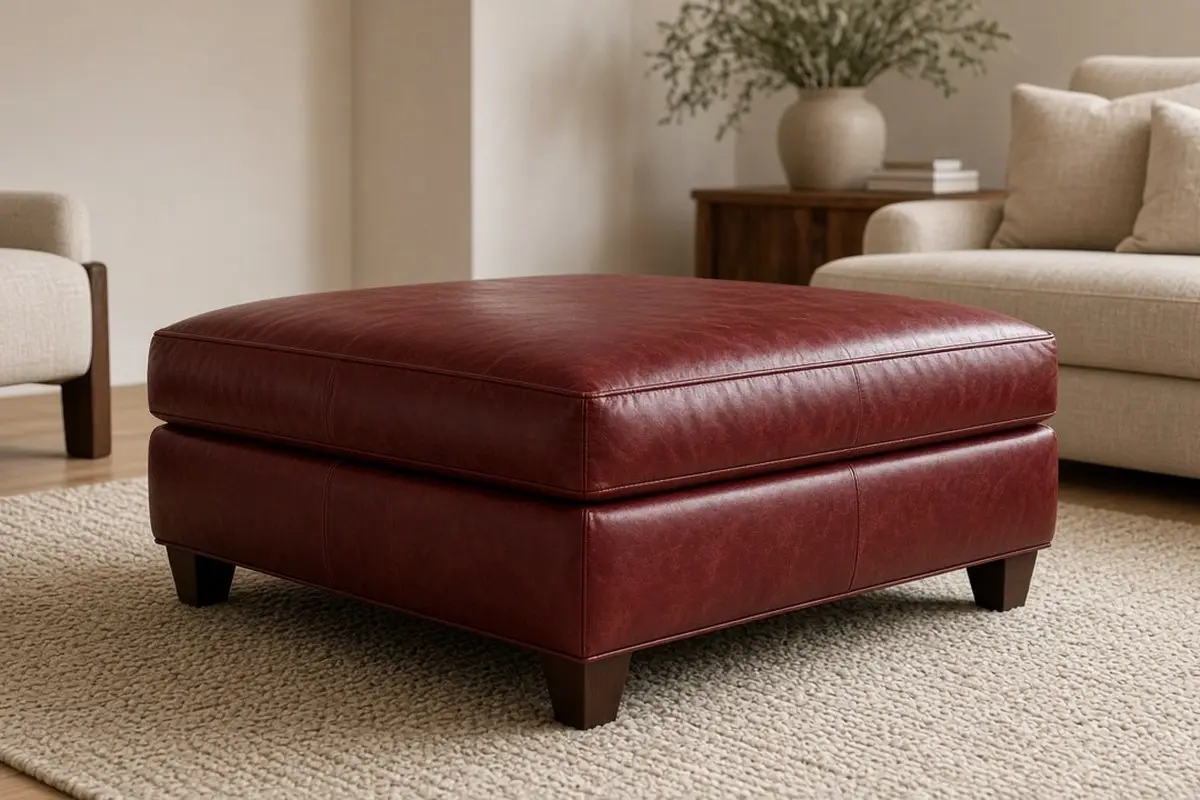
Oxblood is a dark, brown red. It feels rich and a little traditional, which is why it suits a beige room with older furniture or wood floors. A small oxblood ottoman or a striped oxblood throw is enough. Too much and the room starts to feel like a library in a film.
6. Charcoal
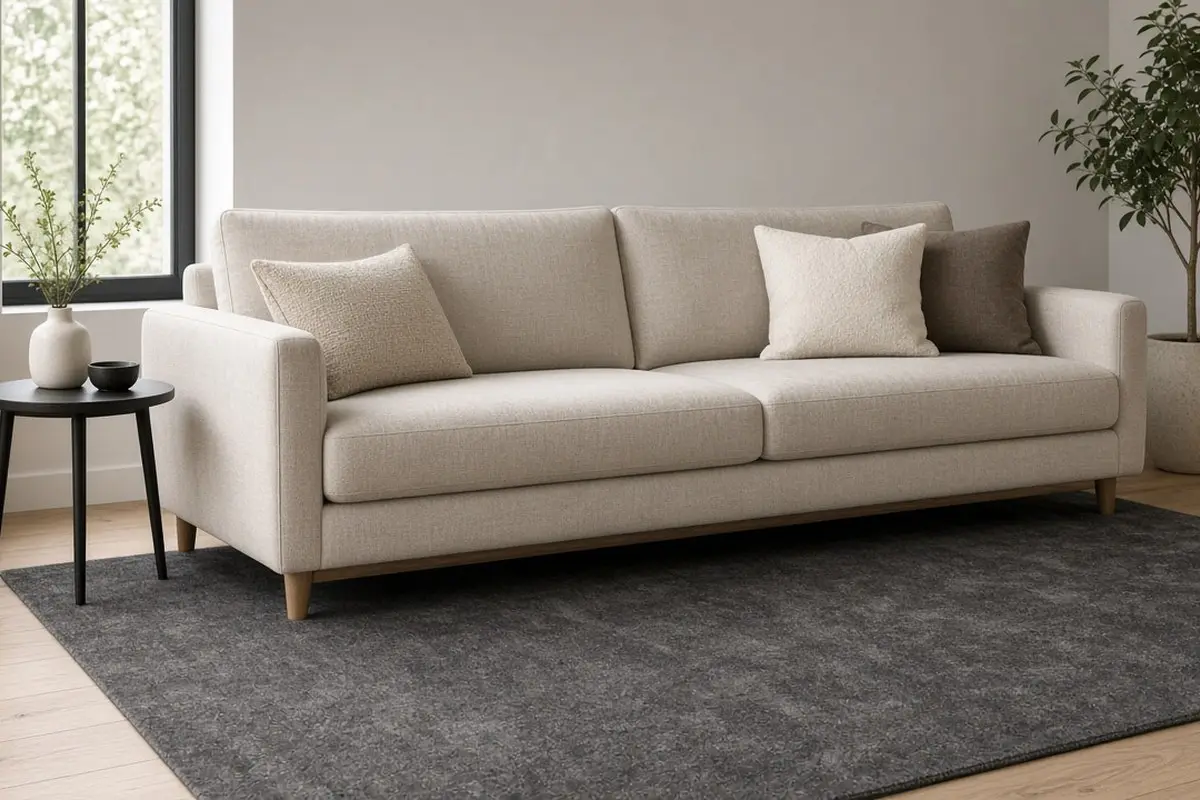
Charcoal is the softer option for anyone who likes black but finds it harsh. A charcoal sofa or rug gives beige a firm base. Unlike black, it does not show every bit of lint, and it reads as warm in lamplight.
Use charcoal low in the room, in the sofa or rug, so the walls stay light.
Get the look
7. Deep teal
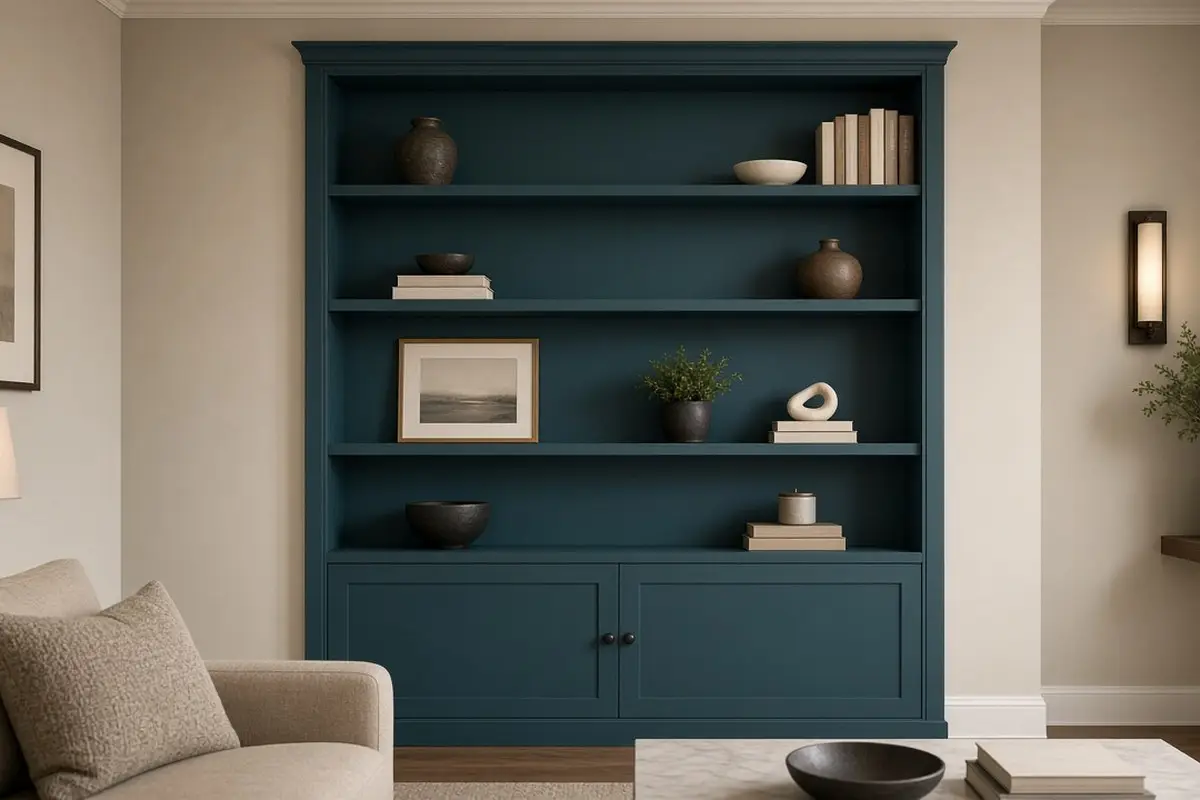
Teal is the most daring choice in this list, but in its deep, dusty form it is surprisingly calm on beige. It works best with natural wood and cream. Put it on a single chair or on the inside of a bookcase, so you see it in a small, framed area.
Get the look
8. Mustard, kept dark
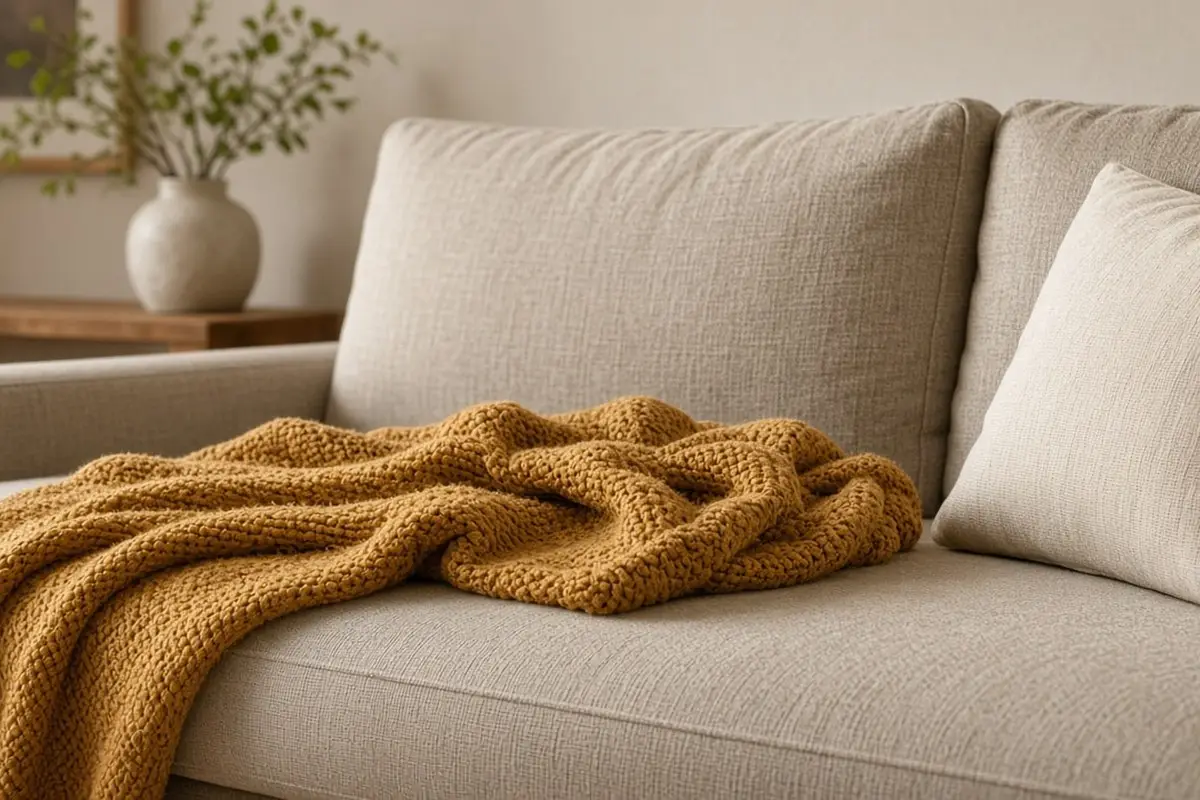
A dark, earthy mustard brings sunshine to a north-facing beige room. Keep it toward ochre, not lemon. A mustard throw on the sofa and a mustard print in a frame is a light way to try it.
Mustard can be tiring in big doses. Keep it to the size of a throw, a pillow, or a small stool.
Get the look
9. Aubergine
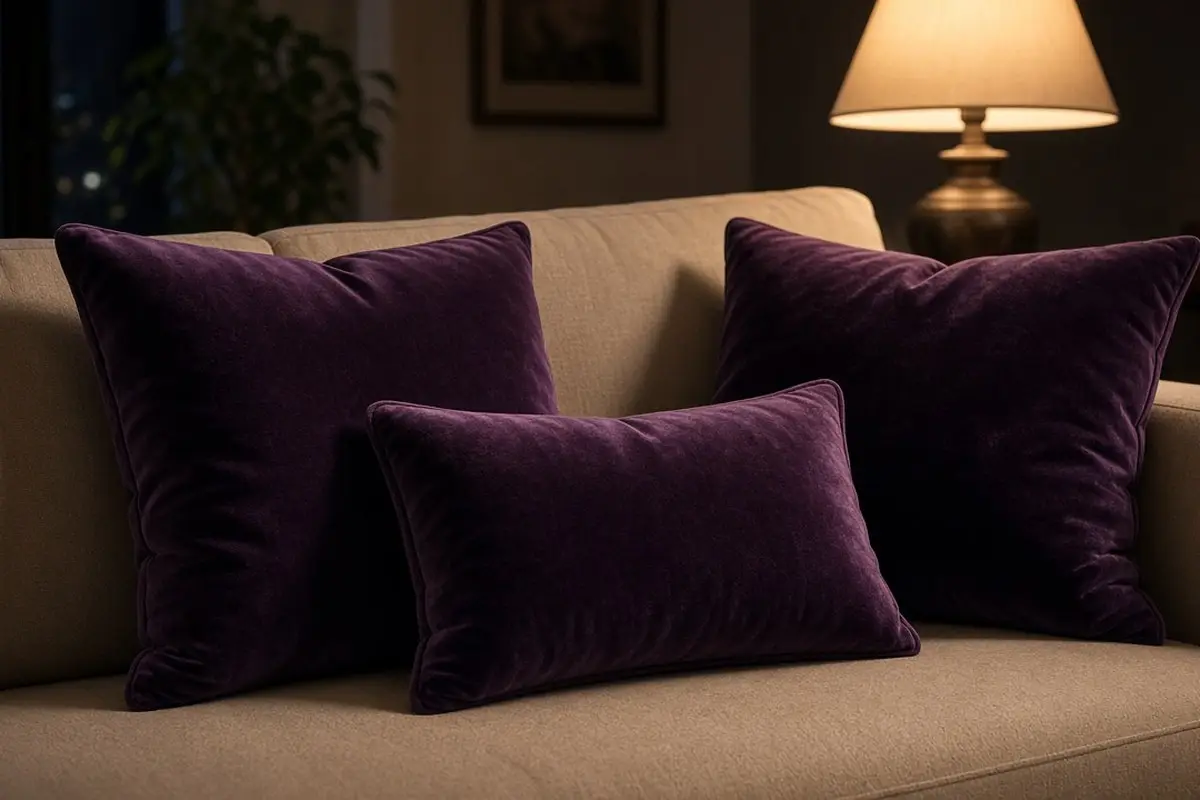
Aubergine is a deep plum that turns almost brown at night. In a beige room it looks quietly expensive. Use it in velvet or wool, where the depth of the fabric shows. A pair of aubergine pillows and one small print is plenty.
Get the look
10. Forest green
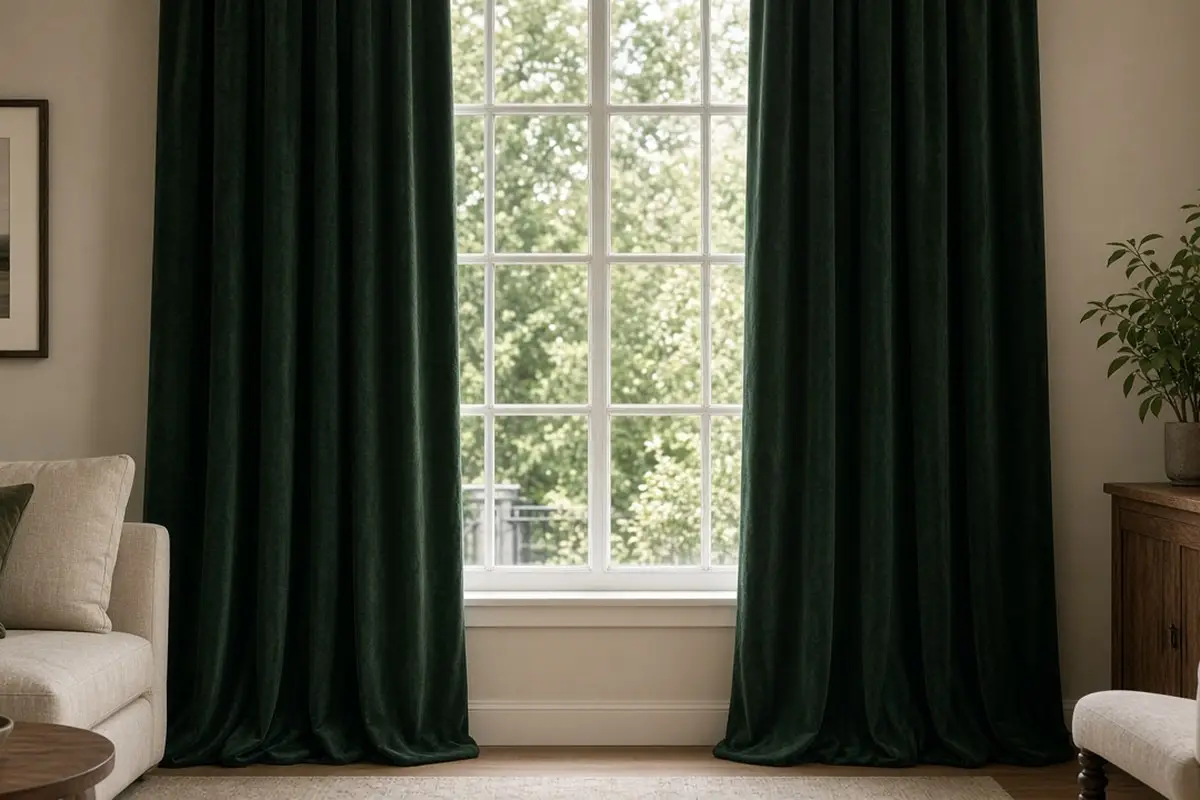
Forest green is deeper and cooler than olive. It brings a little drama to a room with good natural light. A forest green sofa on a cream rug is a strong, simple look. If that feels too big, use it on the curtains so it frames the window.
Get the look
11. Repeat the accent three times
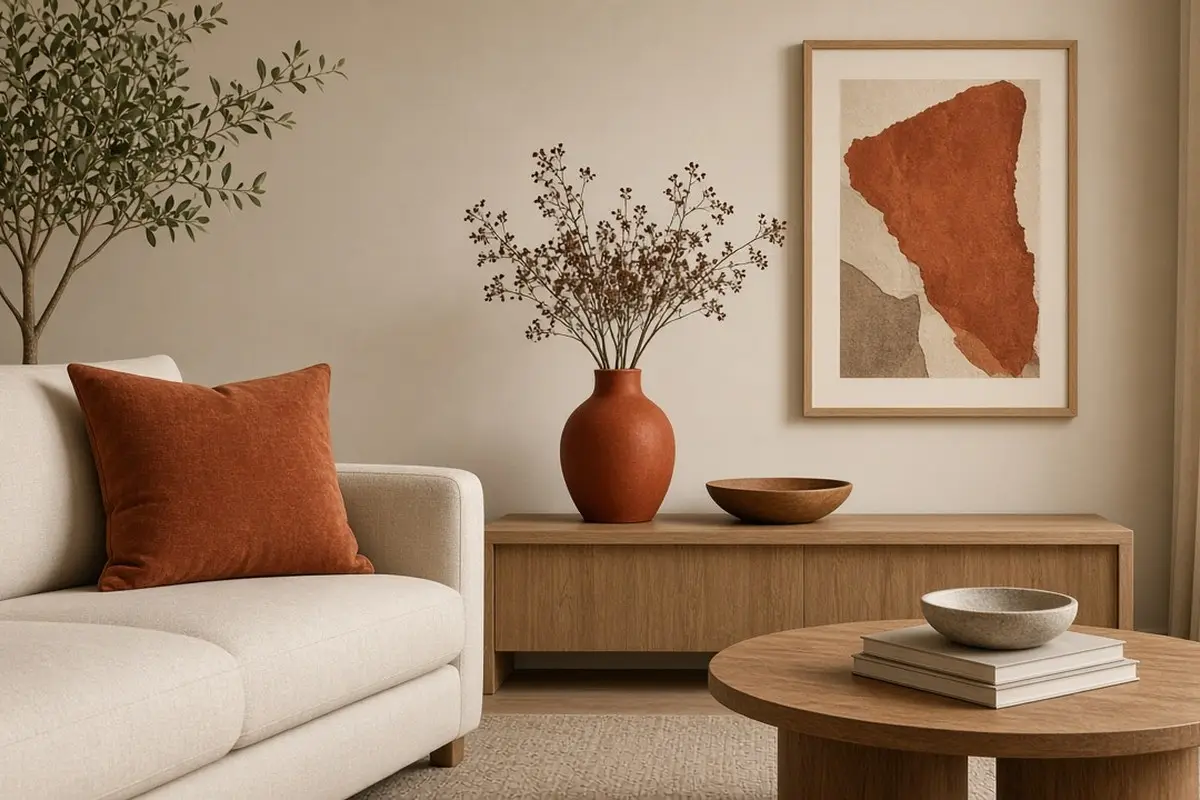
Whichever accent you choose, repeat it three times around the room. One large piece, such as a chair or rug, and two small ones, such as a pillow and a print. The repetition is what makes one color feel like a plan rather than an accident.
Stand in the doorway and point to each one. If you can find all three in a few seconds, the accent is working.

12. Keep everything else neutral
The accent only works if it is alone. Remove any other colored pieces, or move them to a different room. Leave beige, cream, white, wood, and one metal. It feels strict at first, but after a day the room will look calmer and more finished than it did with five colors.
Tips Before You Start
- Choose your accent by holding fabric samples against your actual wall.
- Put the accent on one large piece and two small ones.
- Move every other colored item out of the room for a week.
- Use velvet or wool for the deepest colors so they glow in lamp light.
- Pair cool accents with wood and brass.
FAQ
What is the best accent color for a beige living room?
Brown or rust are the easiest. Olive and ink blue are the next step. All four suit warm beige walls. If you are unsure, borrow from the living room edits you already own and try a color you already have in a throw or book spine.
Can I have two accent colors?
You can, but the room becomes less calm. If you must, make one deep and one pale, and keep the pale one very small.
Should the accent match my wood floor?
It does not need to. It just should not fight it. Test the fabric on the floor before you buy.
How do I change the accent by season?
Keep the large piece neutral and swap the two small ones. Rust pillows in autumn, olive in spring.
A beige room with one deep accent is the opposite of boring. It looks like someone made a choice and stood by it. For a fast, low-budget version of this change, the hundred dollar room refresh is a good place to start.