
10 Ottoman Jobs Besides a Footrest

On this page12 sections
An ottoman is usually bought as a footrest and then quietly does five other jobs. It holds the tray with the remote. It becomes a seat when your sister visits. It swallows the throw blankets. It saves a toddler from a hard table corner. Most people only notice how hard it works when it is gone.
If you plan for those jobs from the start, you can choose an ottoman that does them well, and you might skip buying two or three other pieces. Here are ten useful roles for one soft, sturdy piece of furniture, with what to look for in each case. If your living room is short on floor space, the L-shaped sofa layouts post shows where an ottoman fits around a corner sofa.
As an Amazon Associate I earn from qualifying purchases.
1. Coffee table ottoman
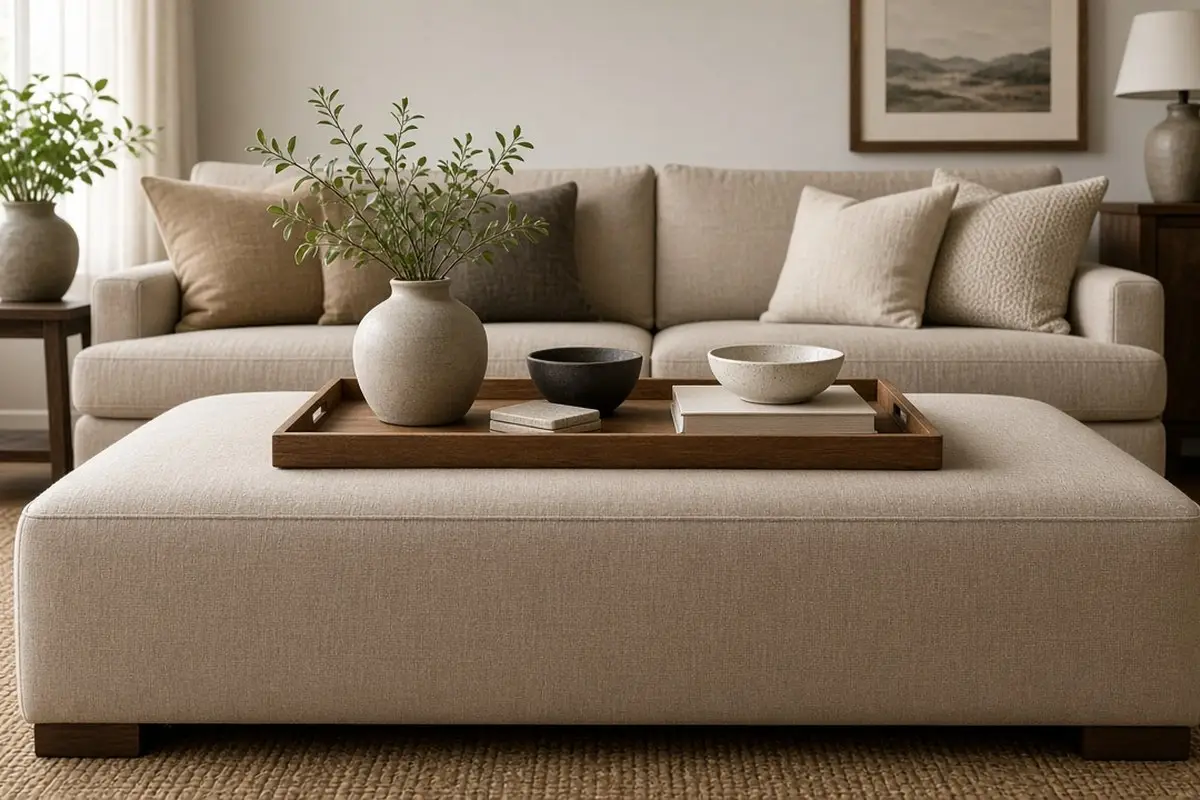
A large upholstered ottoman can replace the coffee table entirely. It is soft on shins, safe for small children, and comfortable for feet. With a tray on top, it holds drinks and books just as well as a table.
Size it the same way you would size a coffee table: about two thirds the length of the sofa, and 16 to 18 inches from its front edge. Height should be level with the sofa seat or one or two inches lower. A higher ottoman feels like a barrier. A much lower one is awkward to reach. Choose a firm top. Soft, squashy ottomans tip trays and spill coffee.
Leather and tight-weave fabrics wipe clean, which helps when the ottoman doubles as a table. If you love linen, look for a performance version that resists stains.
Get the look
2. Storage ottoman
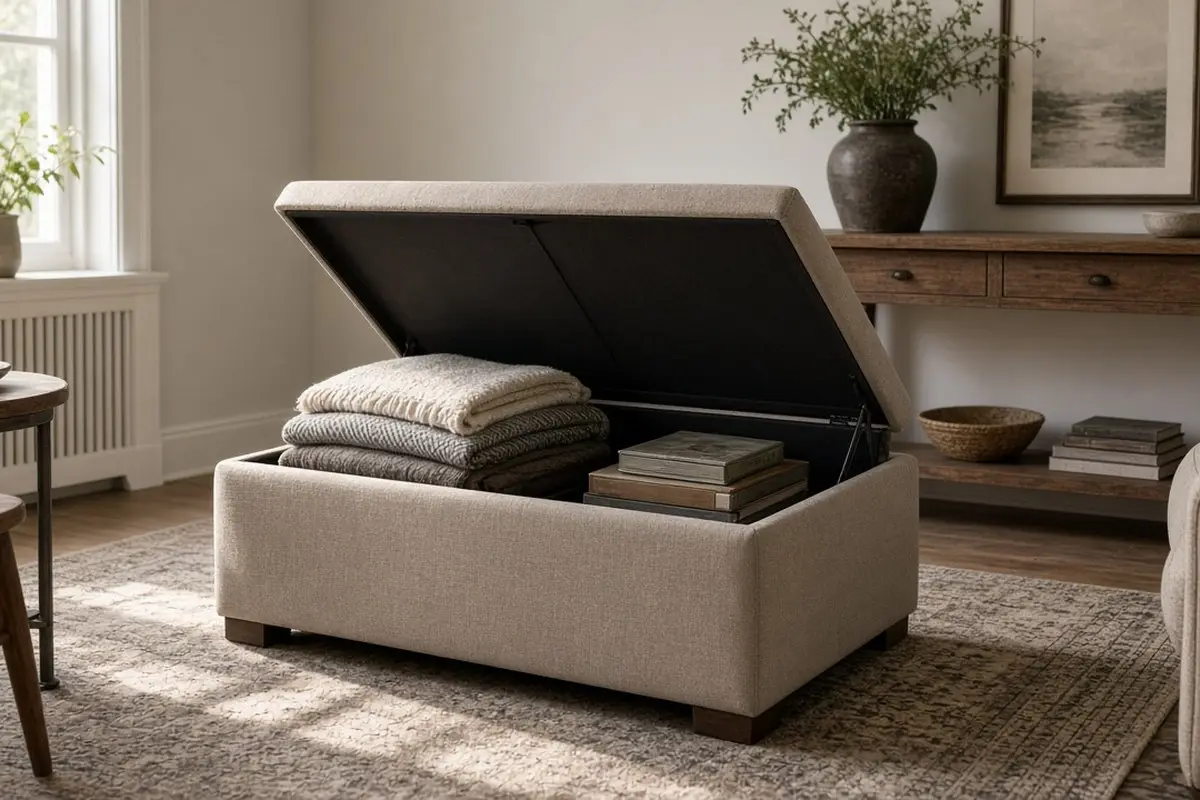
A storage ottoman is the easiest place to hide the things a living room collects. Throw blankets, board games, spare chargers, kids’ toys, magazines. A lift-top lid or a removable top gives you a whole box of space under the cushion.
Look for a lid with a hinge that holds it open, or one that lifts off fully and flips into a tray. Soft-close hinges protect fingers. Check the interior too. A lined inside keeps fabric from snagging on rough wood.
Do not overfill it. A storage ottoman that is crammed shut becomes a chore to open, and then the blankets end up on the floor again. Keep it about three quarters full, so the lid closes easily.

3. Extra seating for guests
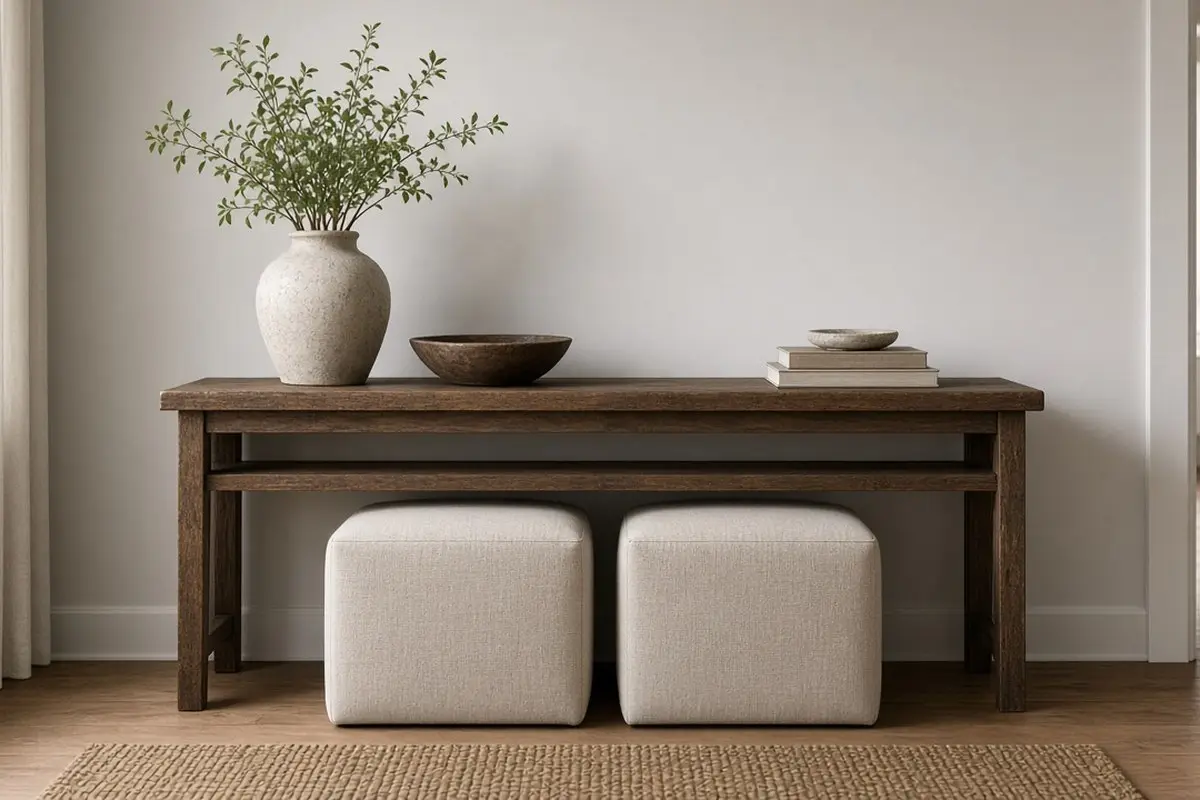
A pair of small ottomans or poufs gives you two extra seats that tuck away when not needed. Slide them under a console table or beside the sofa. When guests arrive, pull them into the circle.
For seating, choose ottomans with a firm, flat top about 17 to 18 inches high, which is close to a standard chair seat. Too low and adults have to fold their knees. Too soft and people sink and feel unsteady. Square or cube shapes are more stable than round ones for sitting.
Two matching cubes look tidy under a console. Two different poufs look relaxed and collected. Choose the style that matches the rest of the room.
4. Round ottoman styling with a tray
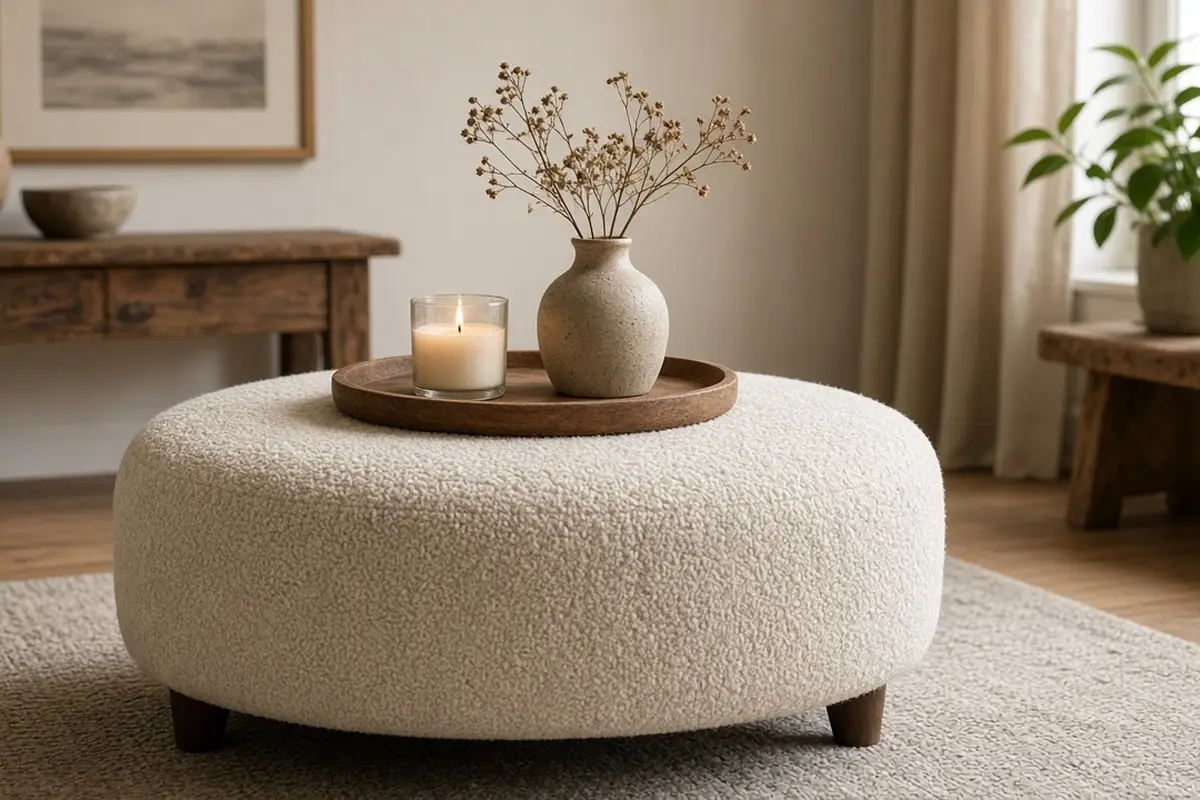
A round ottoman softens a room full of rectangles: a rectangular sofa, rectangular rug, rectangular TV. Its curve breaks the grid and invites people to move around it. Styling it well is mostly about the tray.
Use a round or square tray that covers about half the top. Inside it, keep three things at most: a candle, a small plant or vase, and a book or two. Leave the other half bare for feet or a cup. When you want to put your feet up, the tray slides to one side and the rest of the top is ready. That ease is the whole point of a round ottoman, and an overloaded tray takes it away.
Swap the tray contents with the seasons rather than adding more. A small pumpkin in autumn, a bowl of pine cones in winter, a jug of cut stems in spring. One change at a time keeps the piece looking fresh without turning it into a shelf. A round ottoman covered edge to edge in objects looks like a display, not a place to rest.
Pick the tray in a material that contrasts with the ottoman. Wood on fabric, brass on leather, or woven rattan on velvet.
5. A soft landing for small children
A hard coffee table and a toddler learning to walk are a worrying combination. Swap the table for an upholstered ottoman during those years. It gives children something to pull up on and no corners to bump.
Choose a sturdy base that does not tip when a child leans on one side. Avoid casters, which can roll away under small hands. A washable slipcover or a performance fabric handles spills, crayons, and sticky fingers.
When the children are older, you can move the ottoman to a bedroom or entry and bring the table back.
Get the look
6. End-of-sofa side table
A small ottoman with a firm top can stand in for a side table at the end of the sofa. Place a small tray on it for a drink and a phone. It works best beside a low sofa where a standard side table looks too tall.
This is a good role for a leather or woven pouf, which holds its shape. Set it close enough to reach without leaning, about six inches from the sofa arm.


7. A bench at the window
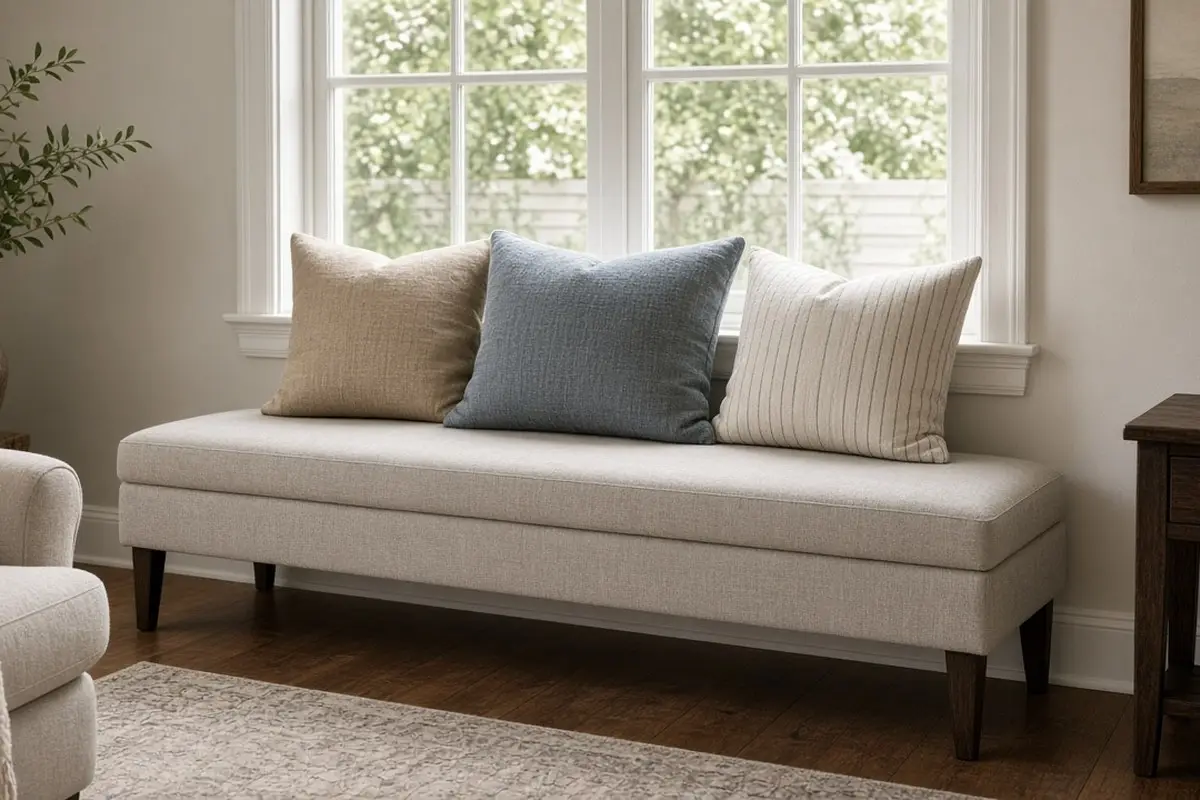
A long, narrow ottoman under a window works as a window seat without any building. Add a couple of cushions against the wall and it becomes a reading spot. It also gives a living room a second place to sit that is not facing the TV.
Measure the window width and choose an ottoman about two thirds of it. Keep it low enough that the window sill is above the cushion line.
Get the look
8. Mobile ottoman on casters
An ottoman on casters can travel. It moves to the sofa for feet, to the chair for a guest, to the window for reading. For people who rearrange often, or in a small living room, wheels make one piece do the work of three.
Choose locking casters so it stays put when someone sits. Check the floor too: casters roll easily on hard floors and less well on thick rugs.
Get the look

9. Pair of ottomans in place of a coffee table
Two square ottomans placed side by side make a coffee table you can split. Push them together for a tray and books, or pull them apart for two extra seats. This setup suits flexible living rooms that host often.
Choose ottomans of the same height so the tray sits flat when they are together. Small differences of half an inch show up as a wobbly tray and tipped glasses.
This setup also helps in rooms with an awkward shape. Two pieces can be arranged as a square, a long rectangle, or an L around a corner sofa. A single coffee table cannot change its shape when the room changes.
10. A spot of color or pattern
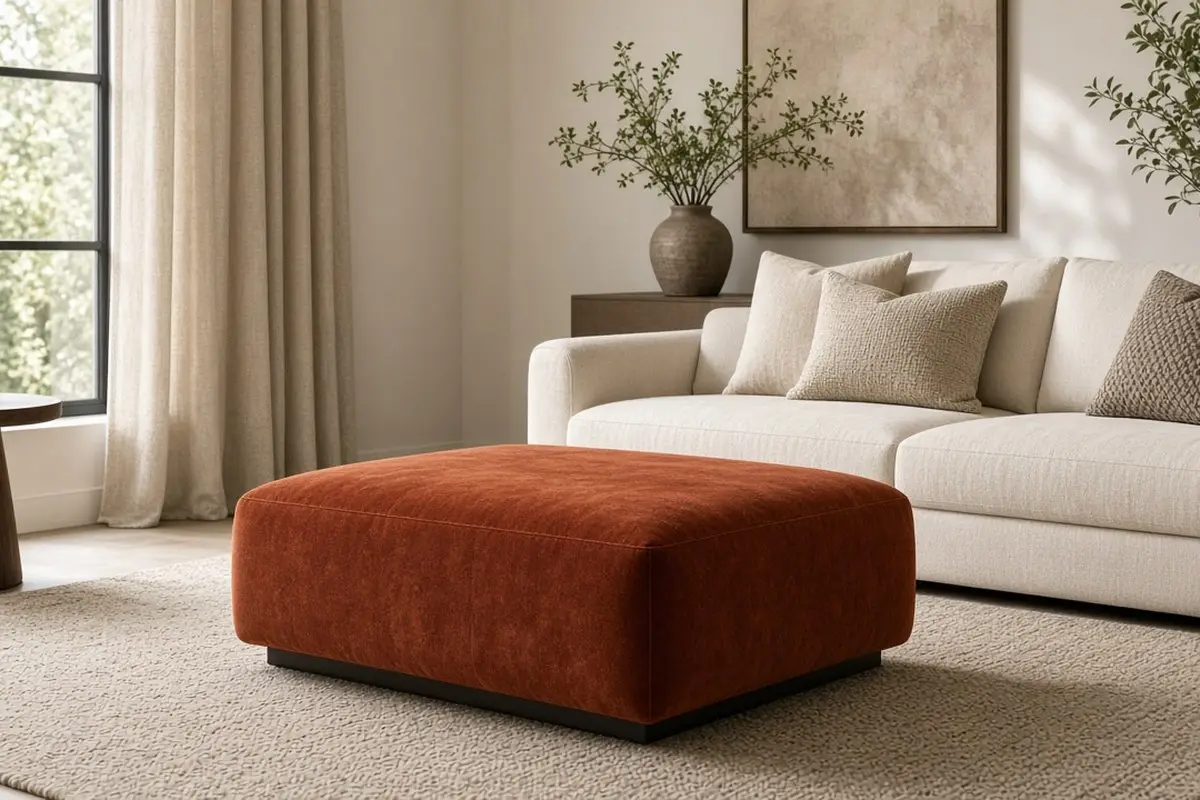
An ottoman is small enough to carry a color or pattern you might not want on the sofa. A velvet ottoman in rust or teal, a kilim-covered pouf, a leather one in cognac. It brings in the accent at the center of the room, where everyone sees it.
If the rest of the room is neutral, an ottoman is a low-risk place to try a bold idea. If it is wrong, it is easy to move to another room.
Tie the ottoman’s color back to the room once or twice. A pillow on the sofa in the same rust, or a print on the wall with a thread of the same teal, makes the ottoman look chosen rather than borrowed. Without that echo, a bold ottoman can look like it wandered in from another house. With it, the whole room seems planned around that one soft piece.
Get the look
Tips Before You Start
- Match ottoman height to the sofa seat or slightly lower.
- Choose a firm top if it will hold trays.
- Use a performance or wipeable fabric in family rooms.
- Pick locking casters if it needs to move.
- Keep storage ottomans three quarters full.
- Style a tray with three objects at most.
FAQ
Can an ottoman replace a coffee table?
Yes. Choose a firm, large ottoman, add a tray, and size it to two thirds of the sofa length.
What size ottoman goes with a sofa?
About two thirds the sofa length for a coffee table ottoman, or 18 to 24 inches square for an extra seat.
Are storage ottomans comfortable to sit on?
Most are, if the top is padded and firm. Check the lid can bear weight before you buy.
Do ottomans work in small living rooms?
Very well. They do several jobs and can tuck away. The small bedroom that feels bigger post applies the same multi-use idea, and the living room edits you already own can help you place it.
How do I clean an upholstered ottoman?
Vacuum it weekly with an upholstery brush and blot spills quickly. Check the fabric code before using any cleaner.
An ottoman is one of the hardest-working pieces in a living room. Give it a clear job, or two, and choose the size, top, and fabric that fit. It will repay you every evening.