
11 TV Consoles for Rooms That Do Not Want a Media Wall

On this page13 sections
Media walls are everywhere online: a full wall of cabinetry, shelves, and lit niches with the TV floating in the middle. They can look impressive, but they are expensive, permanent, and they make the television the main event of the room. Many people would rather the TV be one quiet object among others, something that disappears when it is off.
A good TV console does that. It holds the screen at the right height, hides the boxes and cords, and looks like a nice piece of furniture in its own right. The eleven consoles below suit rooms that want a TV without a shrine to it. If the TV shares a wall with a window or door, the living room edits you already own post can help you test positions first.
As an Amazon Associate I earn from qualifying purchases.
1. The low media console
A low media console, around 18 to 22 inches high, is the most flexible choice. It keeps the screen at a comfortable viewing height when mounted above or set on top, and it leaves the wall above open for art or nothing at all. Low pieces also make a ceiling look higher, which helps in small rooms.
Choose a console at least as wide as the TV, and ideally a foot wider on each side. A console narrower than the screen makes the TV look top-heavy. Depth around 16 inches is plenty for most streaming boxes and a soundbar. Anything deeper eats floor space for no reason.
Look for doors rather than open cubbies if you want the room calm. Closed fronts hide the clutter of controllers and cables, which is half the battle.
2. A sideboard in place of a TV stand
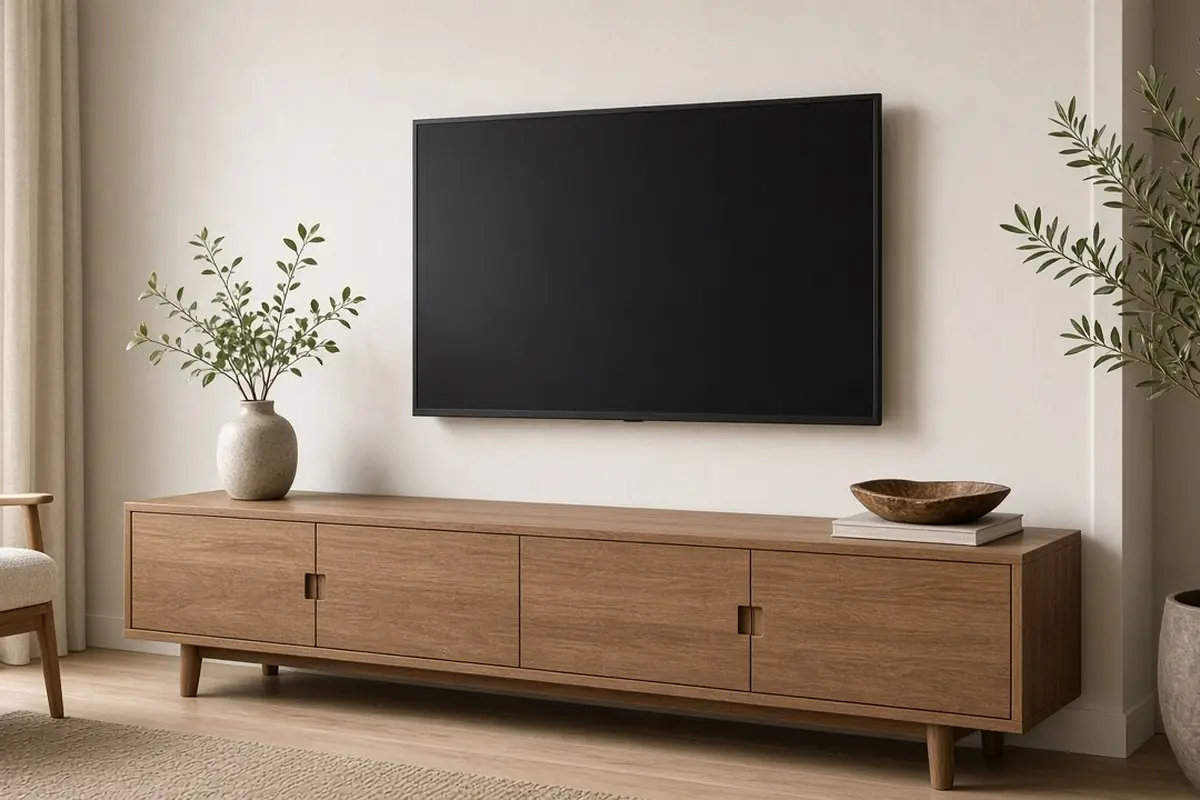
A dining sideboard often makes a better TV stand than a TV stand. It is built as furniture, with real wood, nice legs, and good hardware. It looks like something you chose, not something that came with the TV.
Check the height. Most sideboards are 30 to 34 inches tall, which is fine if the TV sits on top and your sofa is deep. If the screen ends up too high, mount the TV a little lower on the wall behind and let it hover just above the sideboard. Drill a hole in the back panel for cords. It is a small job that turns any sideboard into a living room tv stand.
3. A cord hiding console
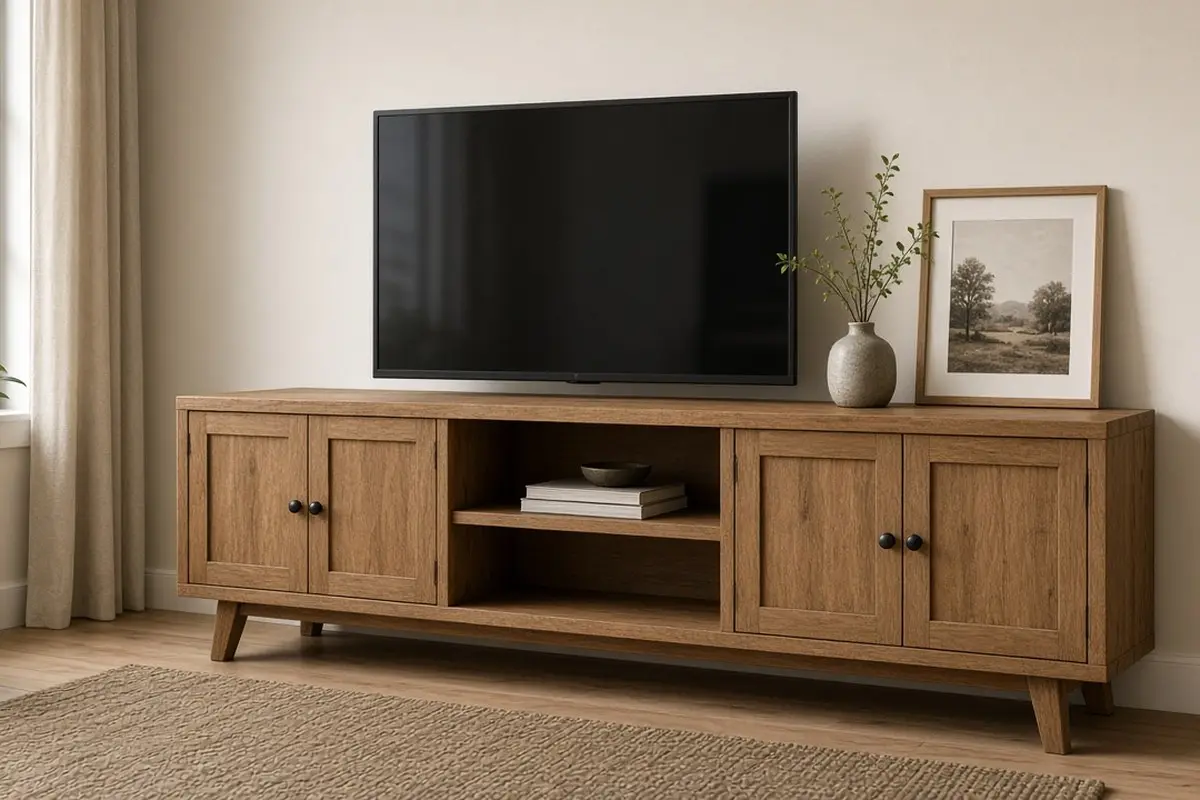
Cords are the main reason TVs look messy. A cord hiding console has openings in the back, channels inside, and room for a power strip so every wire stays out of sight. Some have a built-in cable spine that runs up the wall to a mounted screen.
If your console does not have these, add them. Cut a cord hole, stick a power strip inside, and use a paintable cord cover from the console to the TV. The room will look more finished than any decorative object could make it.

4. A floating console
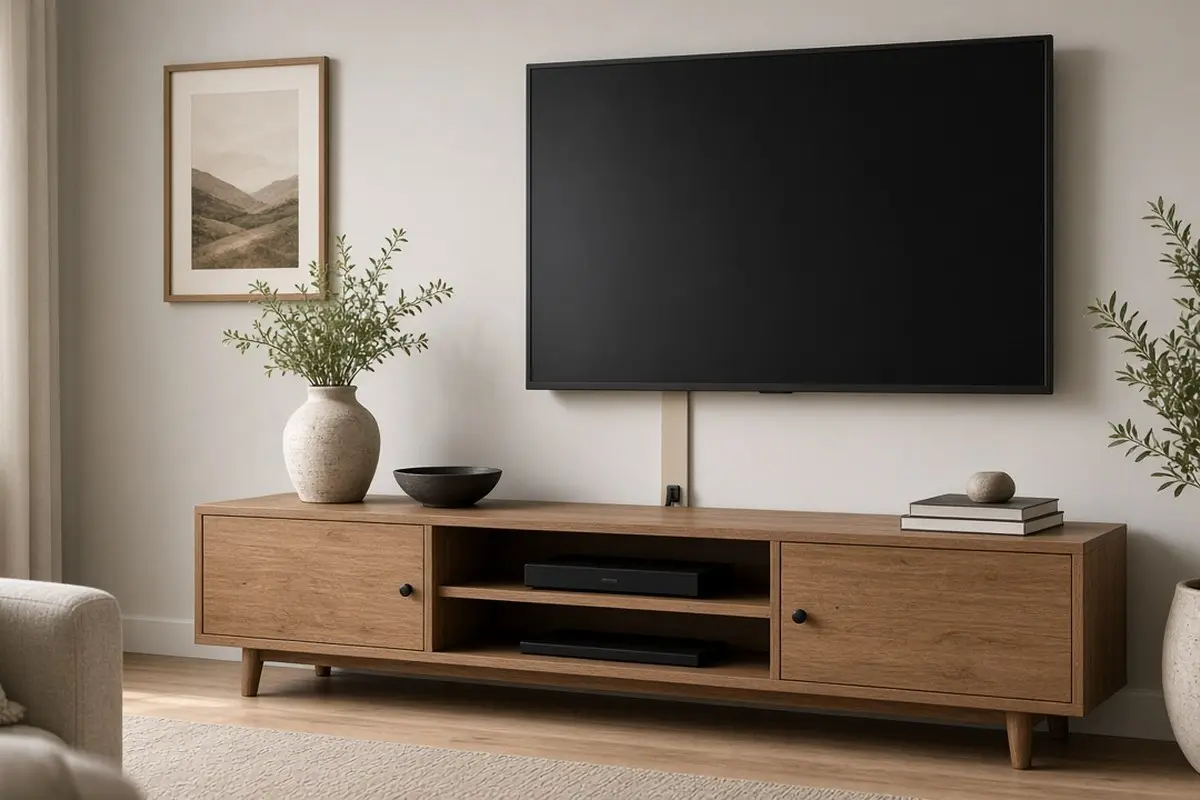
A wall-mounted floating console frees the floor beneath it, which makes a small room look larger and makes cleaning easier. It suits rooms with modern or minimal furniture. Mount it at about 16 to 20 inches off the floor so the TV above lands at eye level.
Use heavy-duty brackets into studs, not drywall anchors. A console with a TV, soundbar, and boxes on it is heavier than it looks. If you rent, ask before drilling, or choose a console with slim legs that gives a similar floating look.

5. Rattan or cane fronts
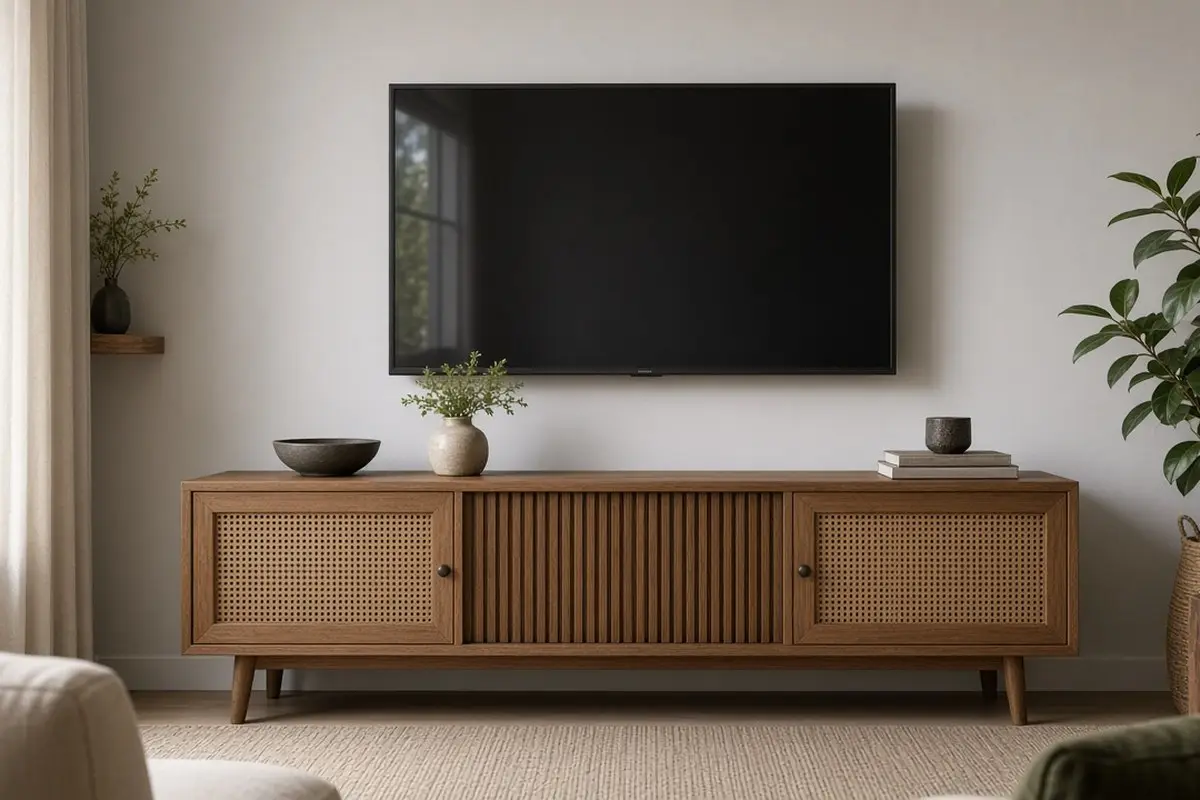
Cane or rattan doors let remote signals through while hiding the boxes behind them. That small detail makes them one of the most practical choices for a TV console. They also add a warm texture that softens a dark screen.
Pair a cane console with lighter wood floors and linen, and it suits a relaxed or coastal room. With dark wood and brass, it looks more traditional.
6. A long, low bookcase
A horizontal bookcase, about two shelves high, works as both TV stand and library. The screen sits in the middle and books fill the rest. When the TV is off, the eye goes to the spines, and the screen fades into a sea of color.
Keep the books in loose groups with some gaps, so the shelf looks lived in rather than crammed. Put the heaviest books at the ends for stability.
7. A console that matches the room’s wood
If you have an oak coffee table and oak frames, an oak console looks like it belongs. Matching the wood of the console to the other wood in the room makes the TV area feel like part of the room rather than a separate tech zone.
You do not need an exact match. A similar tone, light or medium or dark, is enough. Avoid putting a glossy black console in a room otherwise full of warm wood.

8. A painted vintage dresser
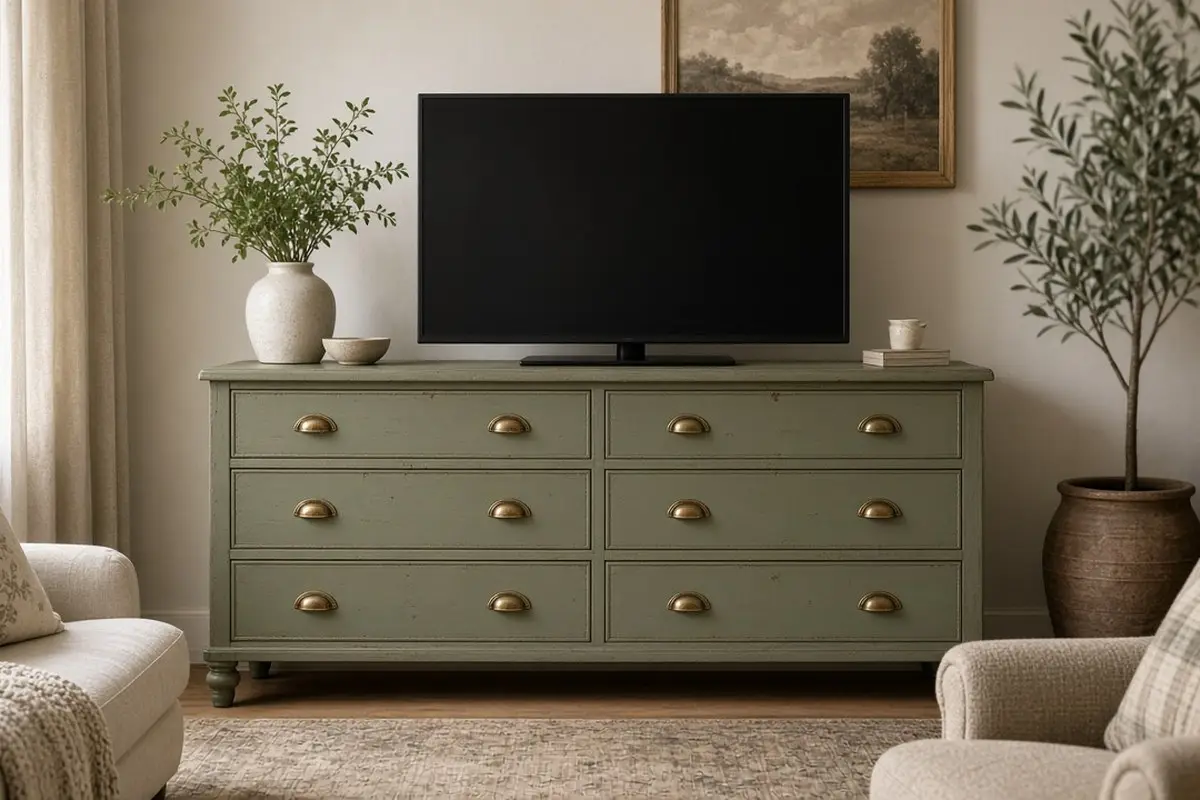
An old dresser painted in a soft color can become a characterful TV stand. Drawers hold remotes, cables, and games. The top holds the screen. This suits a room that already has older or mixed furniture.
Choose a dresser that is low and wide, under 34 inches. Secondhand shops and online marketplaces often have solid wood dressers that only need a scrub and a coat of paint. Check that the drawers slide well before you buy; a sticky drawer is annoying every time you reach for the remote.
Give the dresser a top coat after painting, especially on the top surface, where remotes and mugs will scratch it. A water-based clear finish keeps the color from yellowing. Paint it in a color from the room, sage or navy or warm white, and change the hardware. Drill a cord hole in the back.
9. A corner TV stand
In a room where every long wall has a window or door, a corner may be the best place for the TV. A corner console angles the screen toward the seating and uses space that is otherwise dead. Choose one with a flat front edge, rather than a triangle, so it looks like a proper piece of furniture.
Check the viewing angle from every seat before committing. A corner TV can leave the person on the far end of the sofa looking at the screen sideways. Swivel mounts or a slight turn of the console fix most of this. Fill the space behind the console’s angled back with a tall plant or a floor lamp so the corner does not collect dust and cords.
10. A simple shelf under a mounted TV
If the TV is wall-mounted, you might not need a console at all. A single deep shelf, about 10 inches, holds a streaming box and a soundbar. The floor stays clear and the wall stays simple. It is the least furniture you can use.
Hide cords with an in-wall kit or a cord cover. Without that, the shelf will draw attention to the wires.

11. Style the console lightly
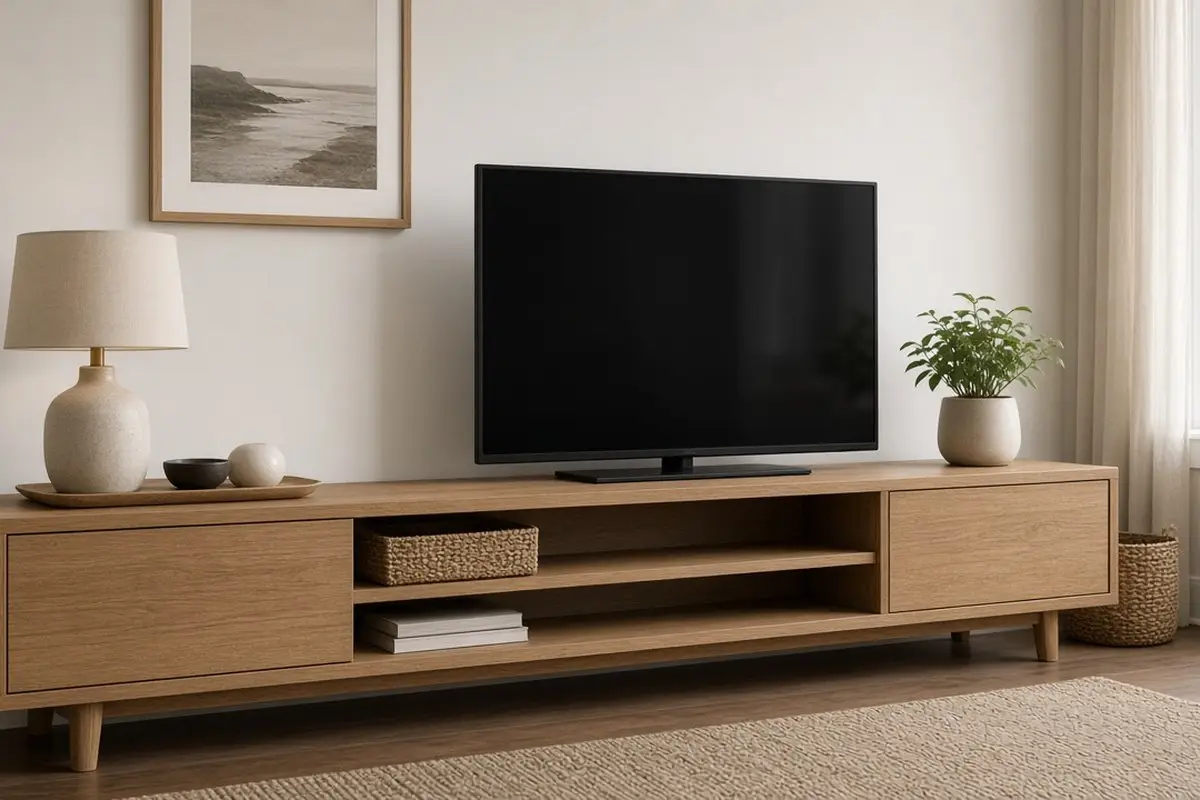
Whatever console you choose, keep the top light. A lamp at one end, a plant or stack of books at the other, and one small object near the middle. Leave the area directly in front of the screen clear. The console should frame the TV, not compete with it.
A lamp beside the TV also cuts eye strain in the evening. Watching a bright screen in a dark room is tiring. A soft light nearby fixes that.


Tips Before You Start
- Choose a console wider than the TV, ideally by a foot on each side.
- Aim for a screen center around 42 inches above the floor.
- Prefer closed doors to hide boxes, or cane for remote signals.
- Mount floating consoles into studs.
- Plan cord holes and a power strip before styling.
- Keep the console top light.
FAQ
How wide should a TV console be?
At least as wide as the TV, and ideally about two feet wider overall.
What height should a TV console be?
Around 18 to 24 inches for most sofas. Taller pieces work if the TV is mounted lower.
How do I hide TV cords without a media wall?
Use a cord-hiding console, a cord cover painted to match the wall, or an in-wall kit. The wall updates without furniture post covers paint touch-ups around covers.
Can I use a dresser as a TV stand?
Yes, if it is low and wide and you drill a cord hole in the back. For more budget swaps, see the hundred dollar room refresh.
Is a media wall ever worth it?
In a dedicated TV room or a house you plan to stay in for many years, it can be. For most living rooms, a good console does the same job, costs far less, needs no carpenter or permit, and leaves you free to move the TV, change the layout, or take the piece with you when you move.
A TV console can let you enjoy films and still have a living room that looks like a living room. Pick a low, wide piece with good doors, hide the cords, and style it lightly. The TV will be there when you want it and quiet when you do not.