
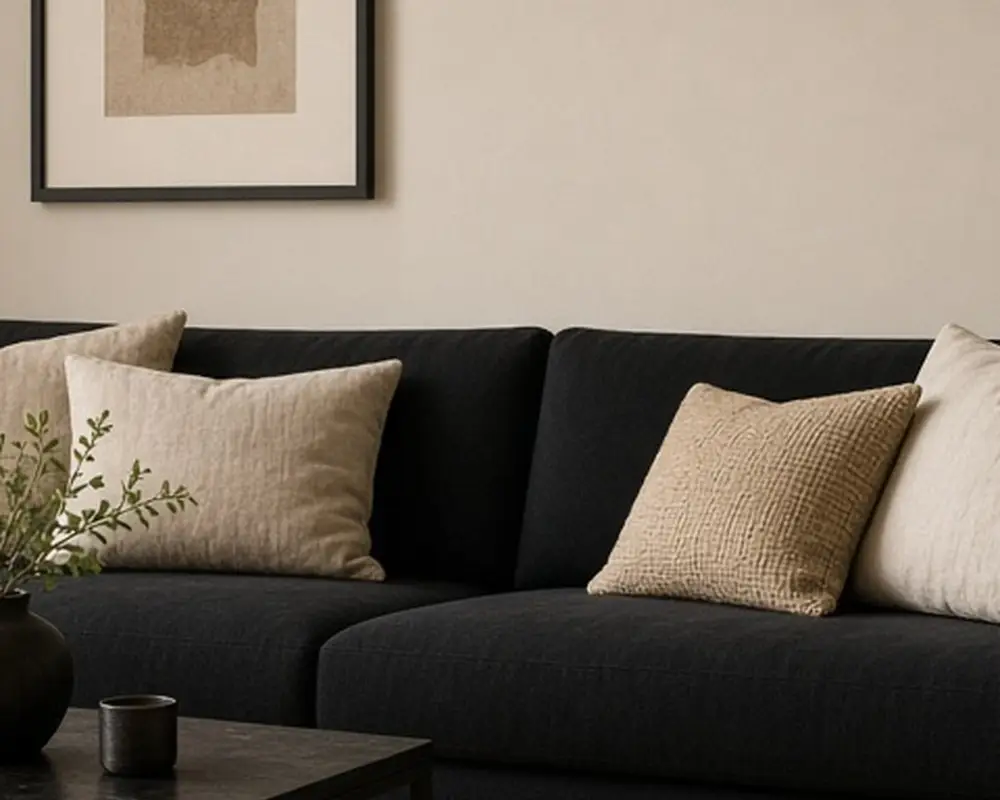
11 Black and Beige Living Rooms With a Soft Edge

On this page13 sections
- Warm the beige before you add any black
- One black anchor, not a black theme
- Choose soft black over jet black
- Beige sofa with black trim
- Use wood as the referee
- Black in thin lines only
- Texture on everything beige
- A high contrast living room needs warm light
- Let art carry the black
- Repeat black three times
- Soften the floor last
- Tips Before You Start
- FAQ
A black and beige living room can look sharp in a photo and tiring in person. The problem is usually not the black. It is the beige that has gone gray, or the black that shows up in five hard lines at once. When the beige is warm and the black is spread thin, the room keeps its contrast and still feels like somewhere you would sit with a cup of tea.
The rooms below use black the way you would use pepper. A little in the right place does more than a lot everywhere. If your room already leans brown, the brown and beige living room post is the gentler cousin of this one.
As an Amazon Associate I earn from qualifying purchases.
1. Warm the beige before you add any black
Start with the walls. A beige with a yellow or pink base holds up next to black. A beige with a green or gray base goes flat and looks like cardboard beside it. Hold a black sock or a black book against your paint sample. If the beige suddenly looks dirty, it is the wrong beige for this room.
Once the wall is right, the black can be quite strong and the room will not feel cold. Get this step wrong and no amount of throw pillows will fix it. Paint a large sample, two feet square, and look at it in the evening with your usual lamps on.


2. One black anchor, not a black theme
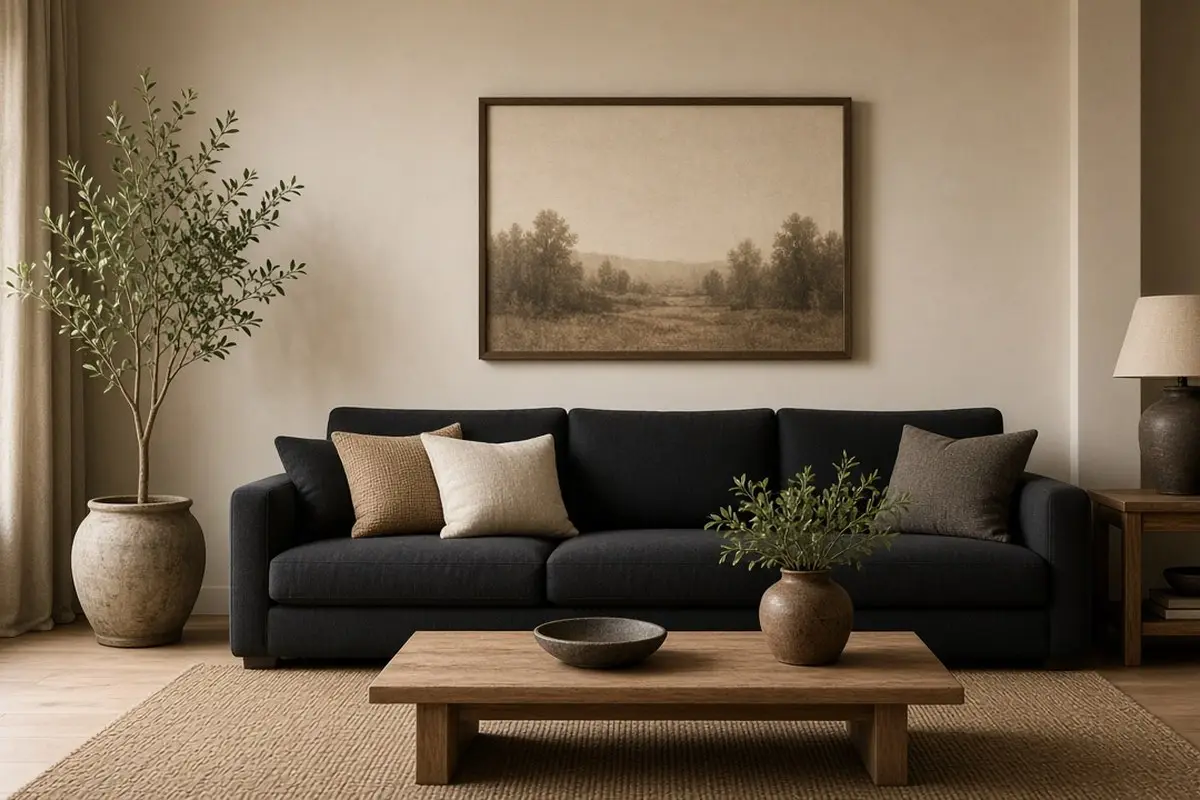
Pick one large black piece and let it lead. That might be the sofa, a sideboard, or a big framed print. Everything else stays beige, cream, wood, and linen. A single black anchor gives the room a center of gravity. Three or four large black pieces turn it into a showroom.
If the anchor is the sofa, keep the rug light so the sofa has something to sit on visually. If the anchor is a sideboard, put it on the wall you see when you walk in. That wall gets the contrast. The rest of the room rests.
3. Choose soft black over jet black
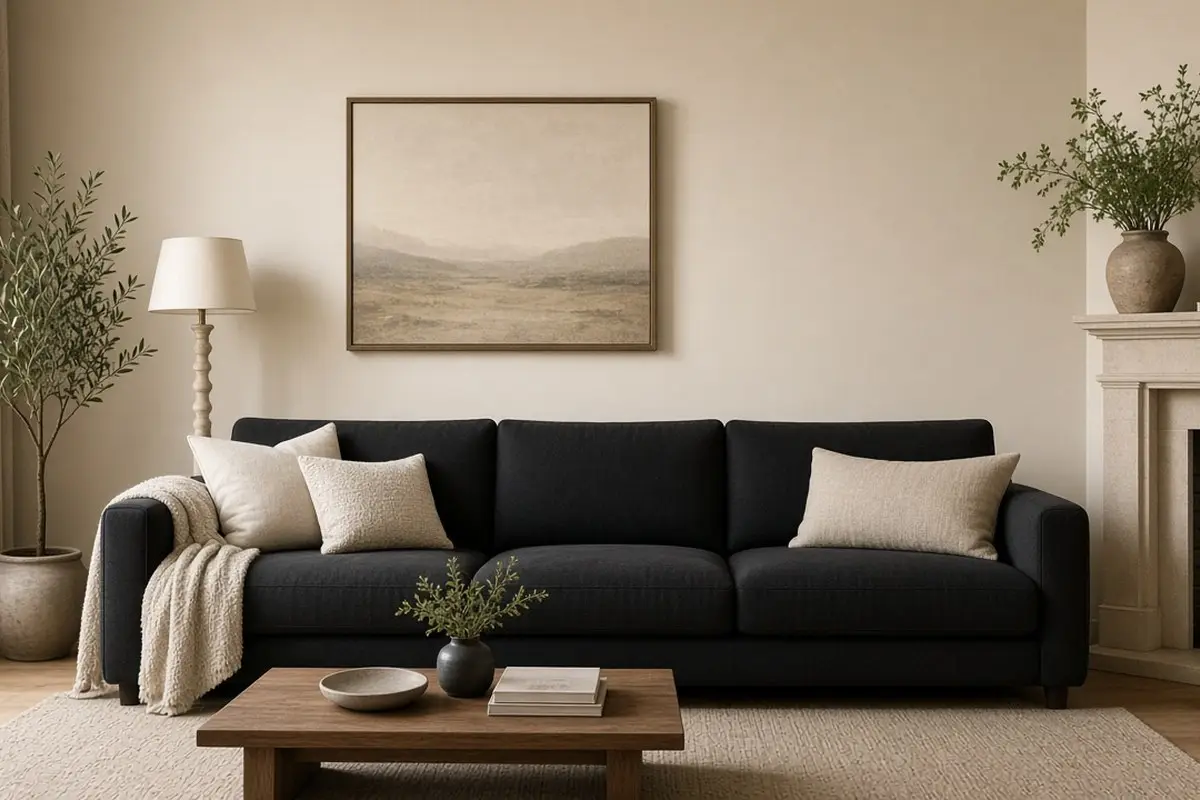
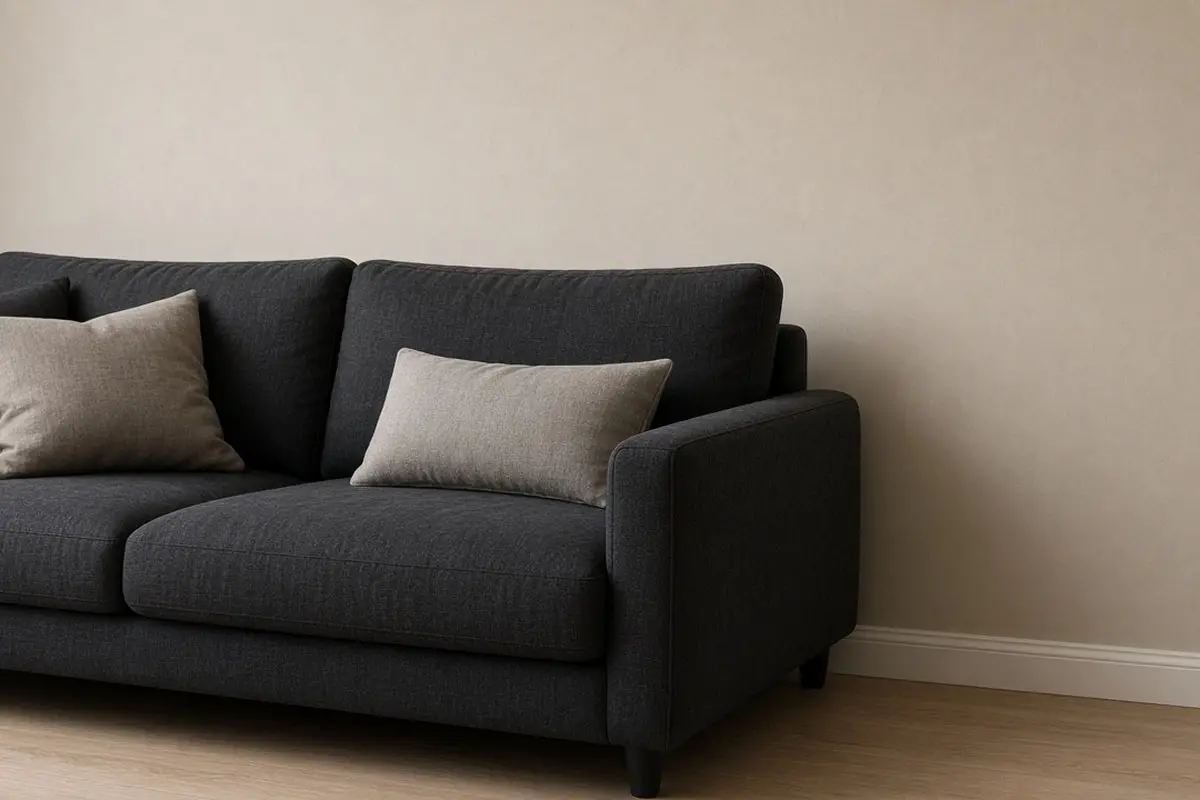
Jet black reads as plastic in daylight. Soft black, the kind with a touch of brown or charcoal, looks richer and kinder next to beige. On fabric this means a washed black linen or a charcoal bouclé. On wood it means a black stain where the grain still shows through.
You can test this at home. Lay a true black T-shirt next to a faded black one on the sofa. The faded one usually looks better against beige. That is the black you want to buy.
Get the look
4. Beige sofa with black trim
If a black sofa feels like too much, flip it. A beige sofa with black legs, black piping, or a thin black frame gives the same contrast in a small dose. The eye catches the outline and fills in the rest. This is the safest way into black and beige for a room with kids or pets, because beige fabric hides dust better than black.
Look for sofas with a slim black metal base or tapered black legs. If your current sofa has wooden legs, many brands sell screw-in replacements in black. It is one of the cheapest changes in this list.


5. Use wood as the referee
Black and beige alone can feel like a debate. Medium wood settles it. Oak, walnut, or even a plain pine stool sits between the two colors and makes them look like they belong in the same house. A wood coffee table, a wood picture frame, or wood curtain rings are enough.
Avoid very orange wood if your beige is pink. The two can clash and make the room look dated. A honey or mid-brown oak is the easiest choice with almost any warm beige.

6. Black in thin lines only
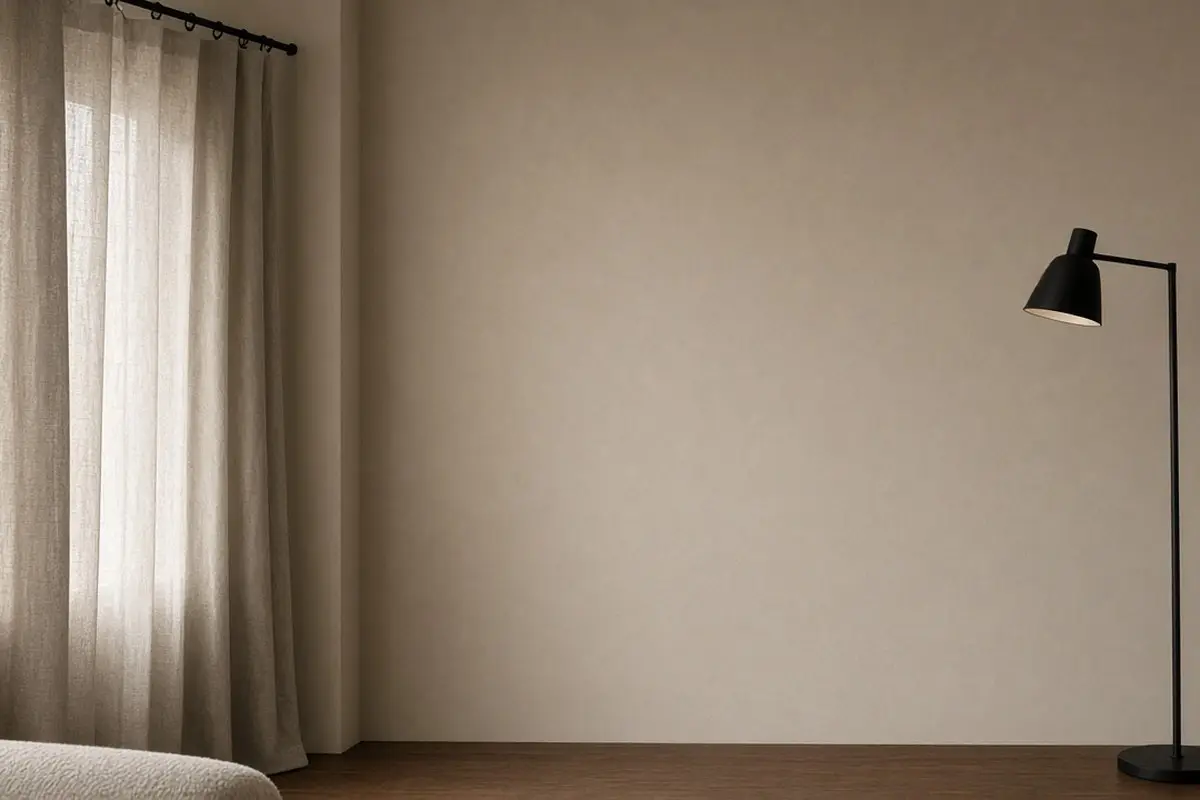
Thin black lines are where this palette gets its soft edge. A black curtain rod, a black lamp stem, a black picture frame, a black window grid. Each one is a pencil stroke. Together they outline the room without filling it in.
Keep the thick shapes beige and the thin shapes black. When a thick shape goes black, ask whether it is the one anchor from idea two. If it is not, it probably should be beige.
Get the look
7. Texture on everything beige
A beige room with no texture looks like a waiting area. Once black is in the room, the beige has to work harder. Use a nubby rug, a linen curtain, a wool throw, a jute basket. The small shadows in a woven surface make beige look warm and full instead of pale.
A simple rule: every beige surface larger than a pillow should have some weave or grain you can see from the sofa. Flat cotton is fine for a pillow cover. It is too plain for a rug.

8. A high contrast living room needs warm light
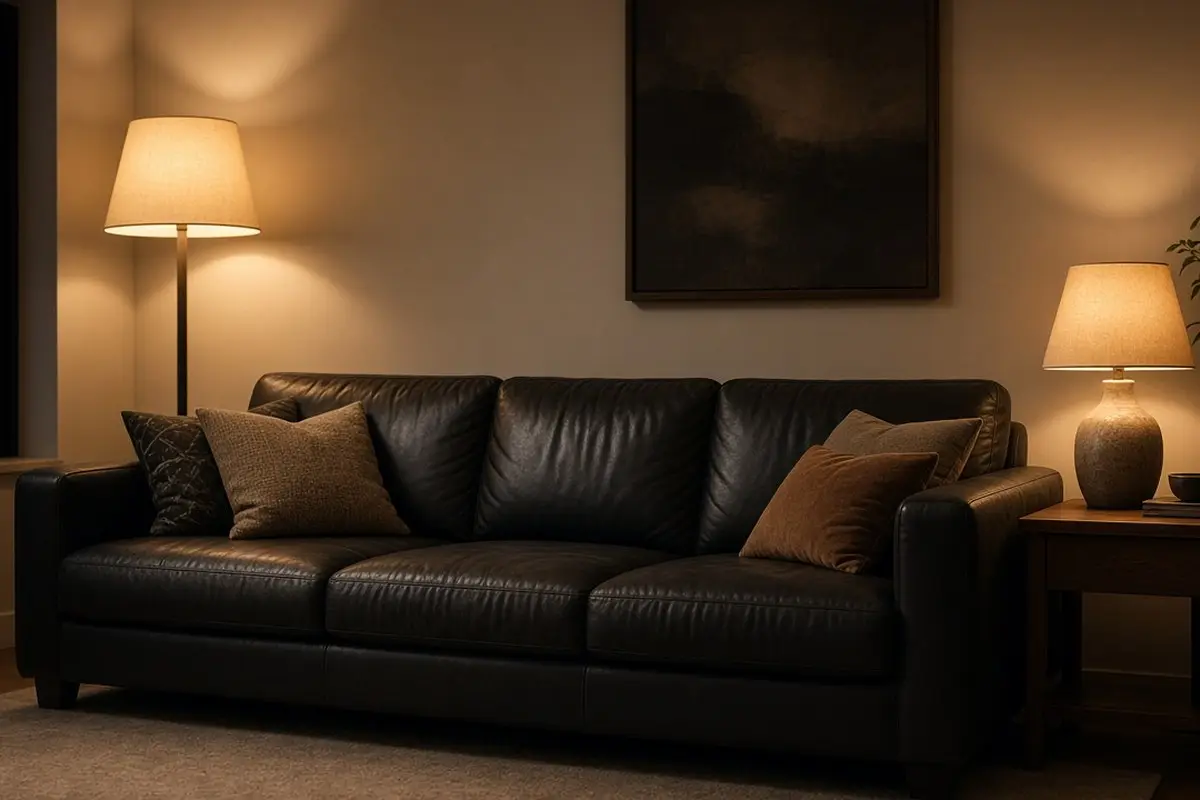
Black and beige under a cool bulb look like a printed page. Under a warm bulb they look like a room. Use 2700K bulbs in every lamp, and keep at least three lamps at different heights so no one corner goes dark. Black absorbs light, so a room with black in it needs a little more lamp than you think.
Put one lamp near the black anchor. The light will catch the texture of the fabric or wood and stop it from reading as a hole in the room.


9. Let art carry the black
If you do not want black furniture at all, put the black on the wall. A large black ink drawing, a charcoal sketch, or a black and white photo in a wide cream mat gives you contrast with nothing to dust. It is also the easiest version to undo.
Hang it at eye height, with the center around 57 to 60 inches from the floor. Too high and the black floats away from the furniture, which makes the room feel unfinished.

Get the look
10. Repeat black three times
Once you have the anchor and a few thin lines, check the room from the door. Can you count black in three places spread around the room? One on each side and one in the middle works well. If all the black sits on one wall, the room tips. If it sits in ten places, it starts to buzz.
Three is the number that makes black look planned. A black lamp on the left, a black frame in the center, and a black bowl on the right is enough.

Get the look
11. Soften the floor last
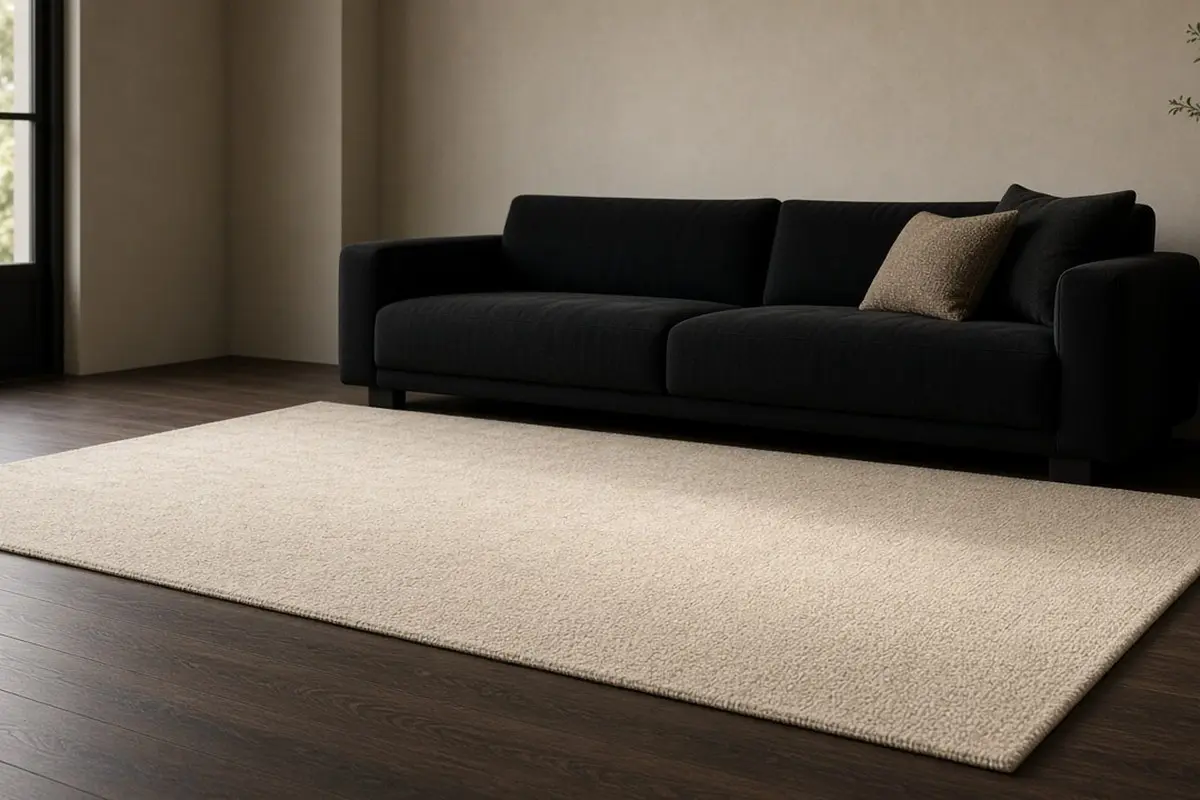
The final step is the floor. A beige or cream rug under a black sofa gives the soft edge this whole palette depends on. If the floor is dark, the rug matters even more. A dark floor with a black sofa and no rug turns the bottom of the room into one heavy band.
Size the rug so at least the front legs of the sofa and chairs sit on it. A rug that floats in the middle of the room makes the furniture look like it is backing away from it.

Tips Before You Start
- Test your beige next to something black before you buy a gallon.
- Pick one black anchor and say no to a second large black piece.
- Use soft or charcoal black rather than jet black on fabric.
- Add one wood piece to settle the contrast.
- Use 2700K bulbs and at least three lamps.
- Count black in three spots from the doorway.
- Size the rug so the front sofa legs sit on it.
FAQ
Does black make a small living room look smaller?
A large black piece can, if it sits on the wall opposite the door. Thin black lines do not. In a small room, keep the black in frames, rods, and lamp stems, and let the big pieces stay beige. The small living room edits post has more ways to free up space without new furniture.
What color walls go with a black sofa?
A warm beige, an oat, or a soft cream. Stay away from cool grays, which make the black look harsh. If you like a little color, a pale blue and beige mix can also work behind a black sofa.
How do I stop black and beige from looking dated?
Use texture, wood, and warm light. The dated look comes from glossy black, flat beige, and matching sets. Mixed materials make the same colors look current.
Can I mix black and brown in the same room?
Yes, as long as one leads. Let black be the accent and brown live in the wood. When both try to be the anchor, the room feels muddy.
Black and beige reward restraint. Get the beige warm, keep the black thin, and let wood and lamps do the softening. The contrast will still be there, just without the edge that makes you want to leave the room.