
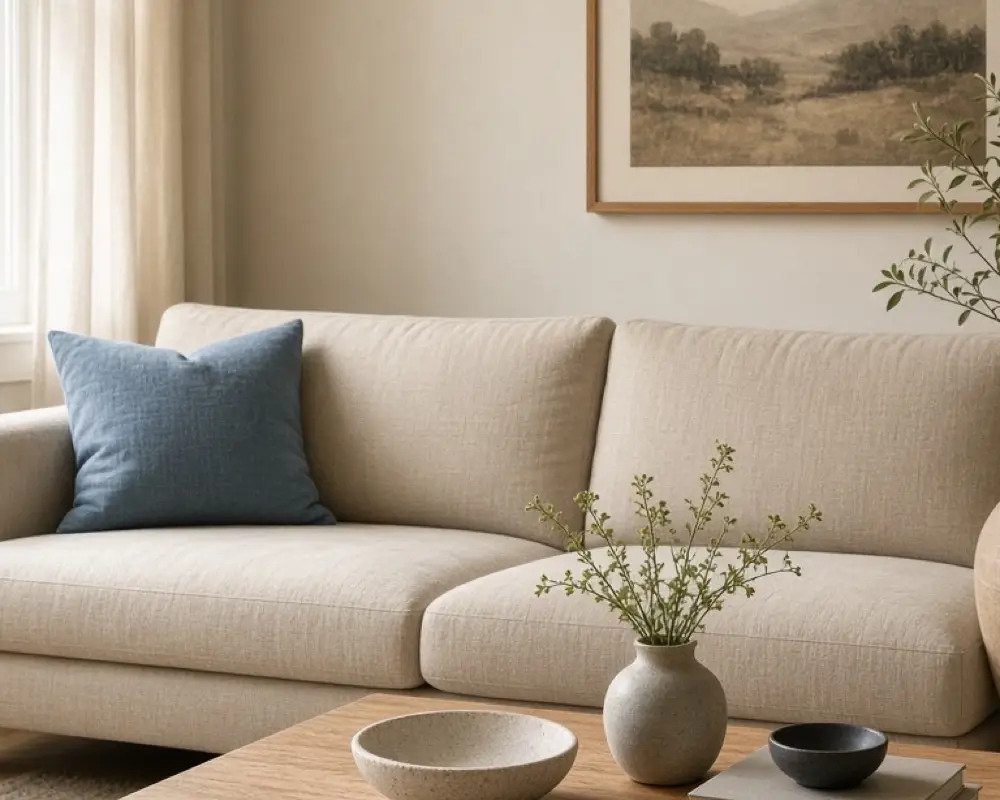
13 Blue and Beige Living Rooms That Do Not Feel Nautical

On this page15 sections
- Choose dusty blue, not marine navy
- Keep the beige warm
- Leave the nautical objects out
- Use oak, not driftwood
- Keep the rug solid
- Choose brass over chrome
- Paint only one wall blue
- Skip the outdoor fabric
- Hang a landscape, not a seascape
- Leave the curtains beige
- Check the room at night
- Refuse the stripe set
- Stop at two blues
- Tips Before You Start
- FAQ
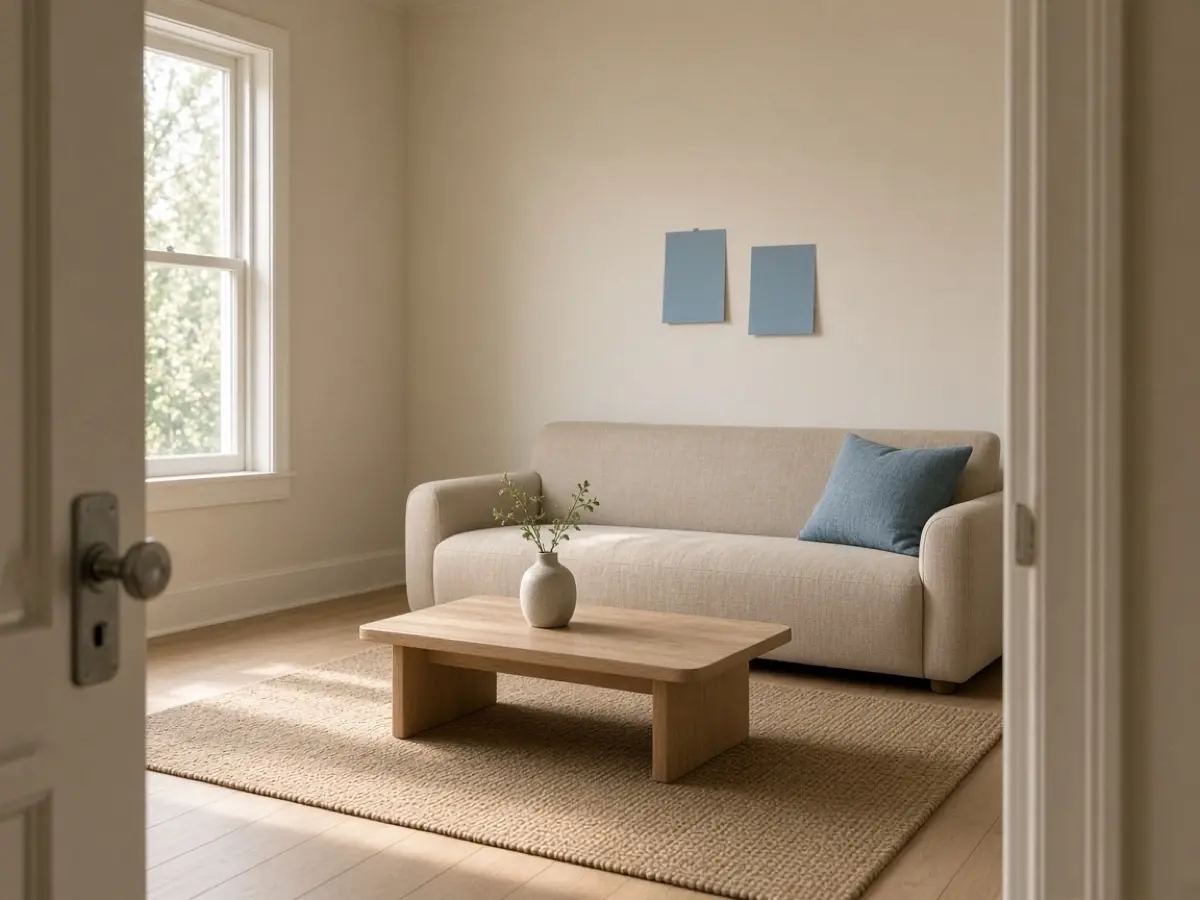
A blue and beige living room tips into a beach house when the blue is navy, the beige is whitewashed, and the art has a shell. We want the blue of a worn shirt and the beige of sand with yellow in it, in a room that could be a mile from any water. No rope, no anchors, no stripe that reads like a deck chair.
The brown and beige room already solved warm neutrals after dark. This one adds a single blue and keeps that warmth. If the blue goes cold at night, it is the wrong blue, not a reason to add a lighthouse.
As an Amazon Associate I earn from qualifying purchases.
1. Choose dusty blue, not marine navy
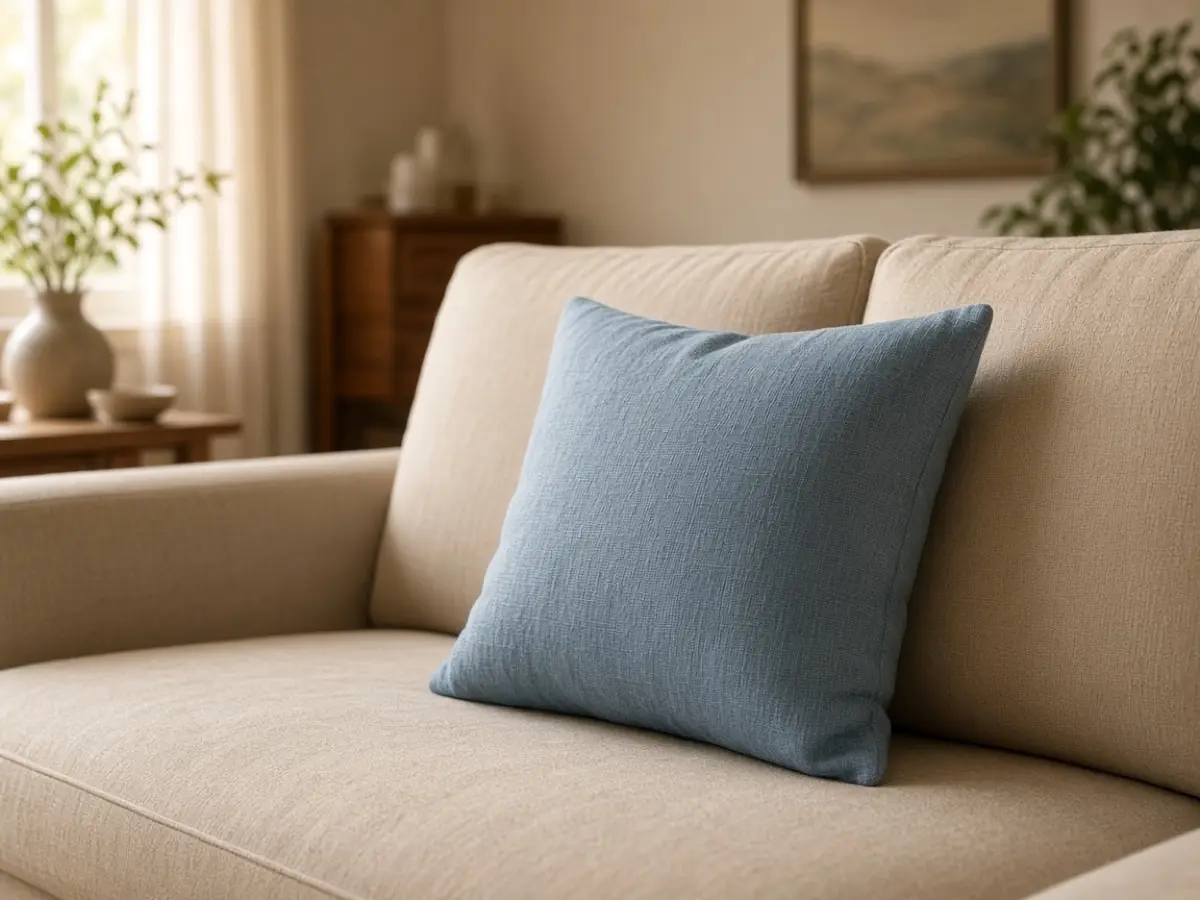
Dusty blue, slate with a little gray, or a blue that has green in it will sit next to beige without shouting. Marine navy with white piping is a uniform. Hold the fabric next to your beige sofa in daylight and again under a 2700K lamp. If it looks like a yacht cushion under the lamp, put it back.
Use the blue in one large piece or a few small ones, not both. A blue sofa plus blue pillows plus a blue rug plus blue art is a blue room that happens to have a beige wall. Pick the sofa or the pillow, and let beige stay the larger area.


2. Keep the beige warm
The beige has to have yellow or red in it, the same test as the brown-and-beige post. A gray-beige next to blue goes coastal or clinical, depending on the bulb. Paint a sample or hold the sofa fabric against a white sheet of paper. If the beige looks gray, it will look grayer beside blue.
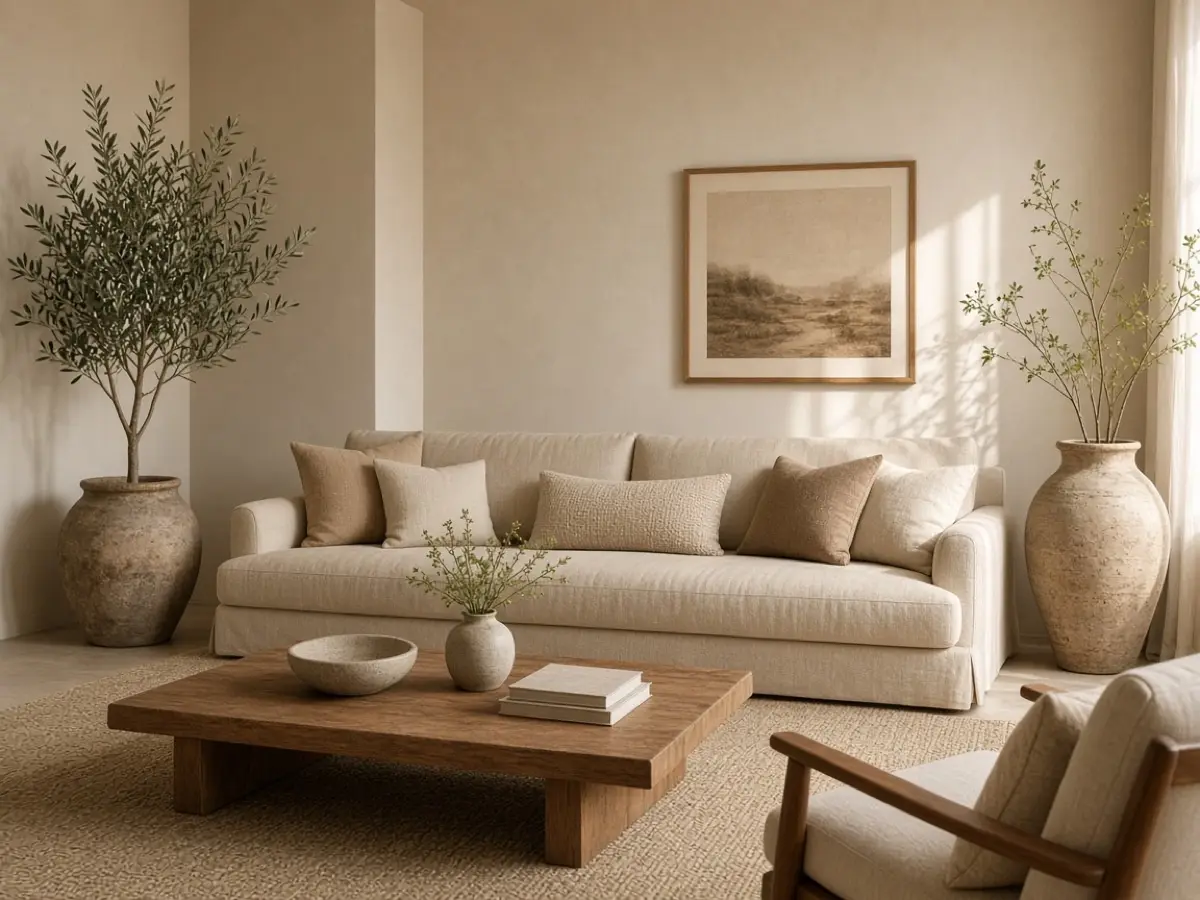
Walls can be the warm beige and the sofa a slightly deeper sand. That gives the blue something soft to land on. A stark white wall with a navy sofa is a different scheme, and it is the one this list is avoiding. If your walls are already white, warm them with wood and a beige textile before you add blue.


3. Leave the nautical objects out
No rope mirror, no coral, no anchor, no oar, no blue-and-white porcelain that is trying to be a ship. Those objects are the scheme, even if the sofa is quiet. A wood bowl, a plain frame, and a book are inland. If a piece only makes sense near water, it does not belong in this living room.
Look at the coffee table from the doorway. If the first thing you see is a theme, remove it. The living room edits already argued for fewer objects. Here the edit is specific: anything that explains the blue as “ocean” goes. The blue can just be blue.


4. Use oak, not driftwood
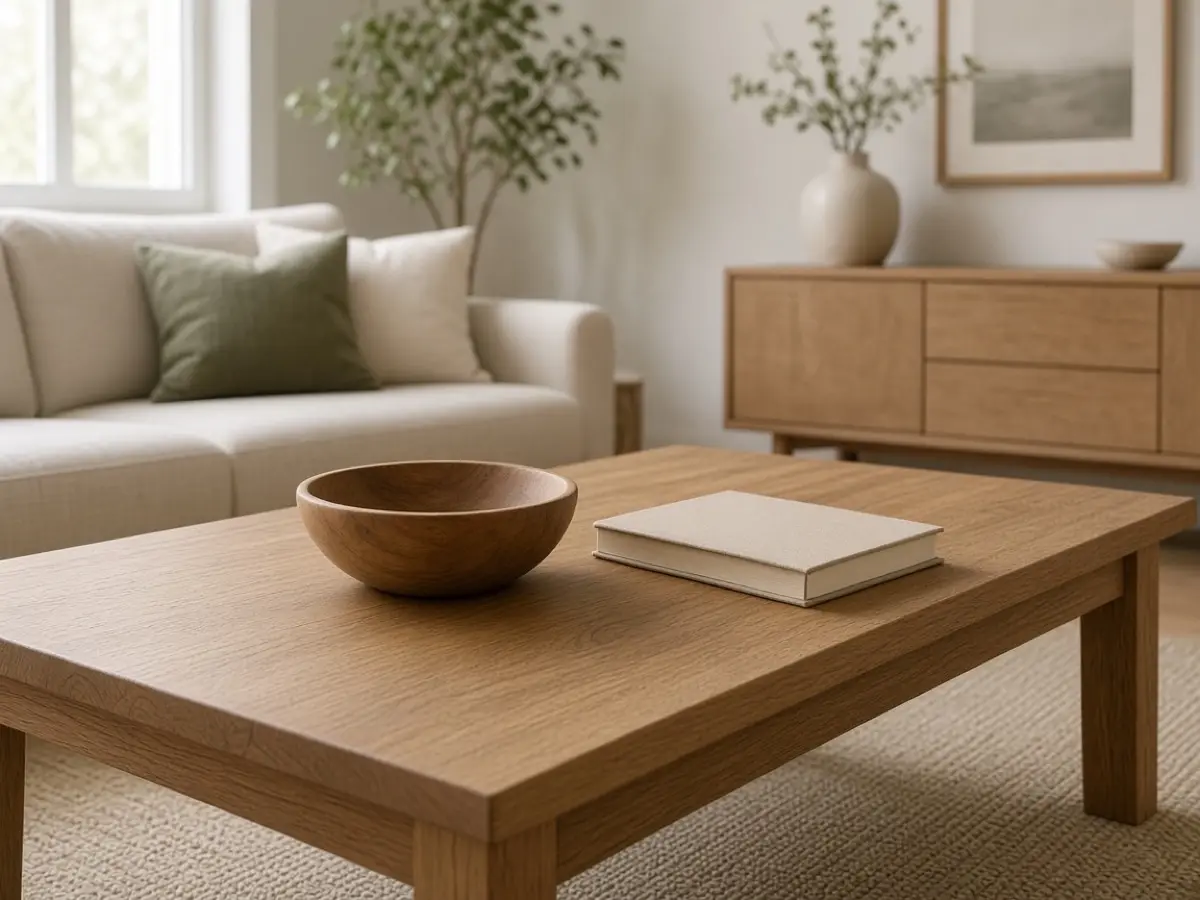
Whitewashed, gray, and bleached wood reads as boardwalk next to blue. Oak, walnut, or a honey wood with a clear finish reads as a house. If the coffee table is already gray-washed, a walnut tray on top changes what the lamp hits, which is the same move as in the brown room. You do not have to refinish the table this month.
One wood tone. A white coffee table, a gray side table, and a blue chair is a catalog of finishes. Pick the warmest wood you own and repeat it once. The blue stays the accent. The wood is the ground.


5. Keep the rug solid
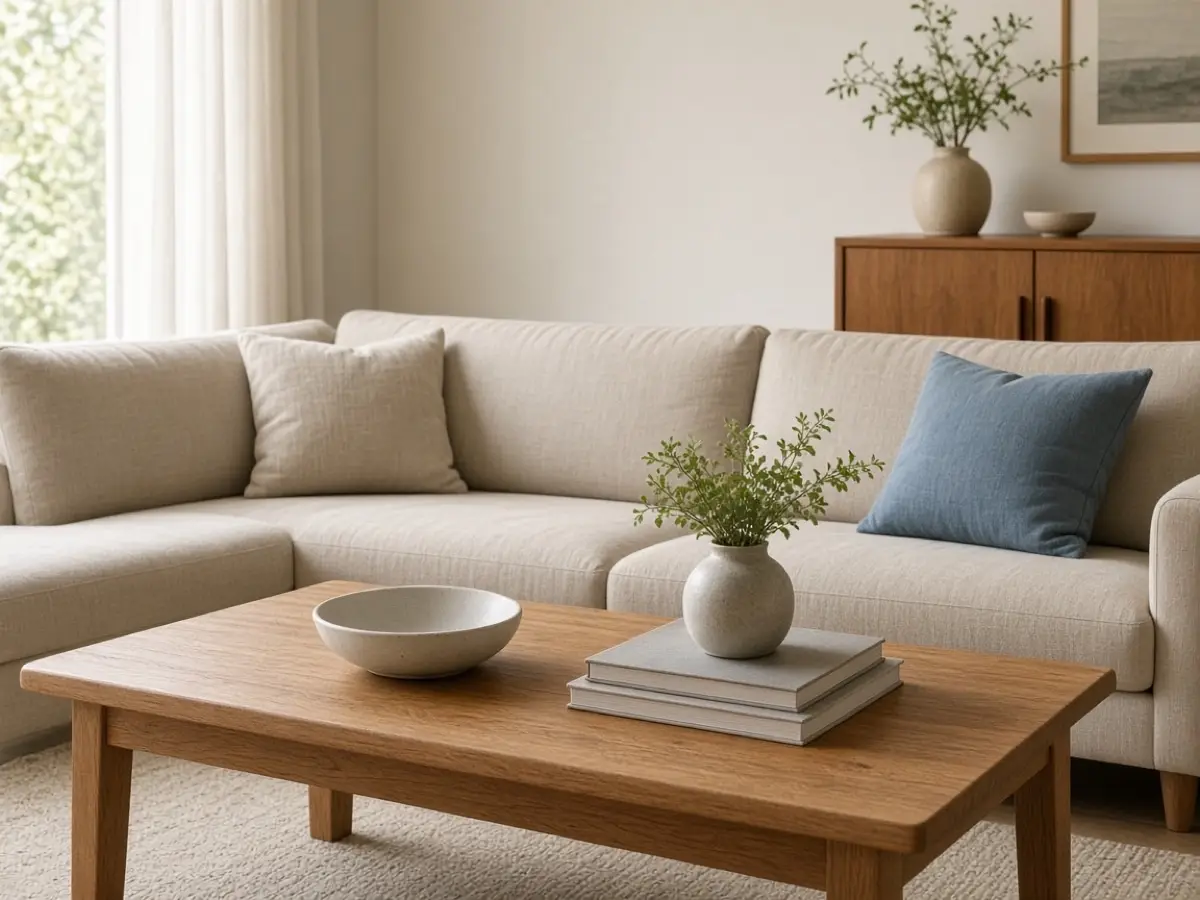
A rug with a wave, a knot, or a navy stripe on white will nautical the room faster than the pillow. A solid beige, a solid dusty blue, or a faded pattern that does not depict water is the rug. If you already own a striped flatweave, turn it so the stripes are not the first thing at the door, or put it in a hall where it is not the whole floor.
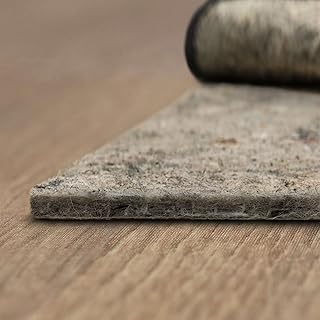
The front legs of the sofa sit on it. A rug smaller than the seating looks like a beach towel. Size it so the blue pillow and the beige sofa both have floor under them that agrees. Charcoal is not the answer. Charcoal plus blue goes cold.

6. Choose brass over chrome
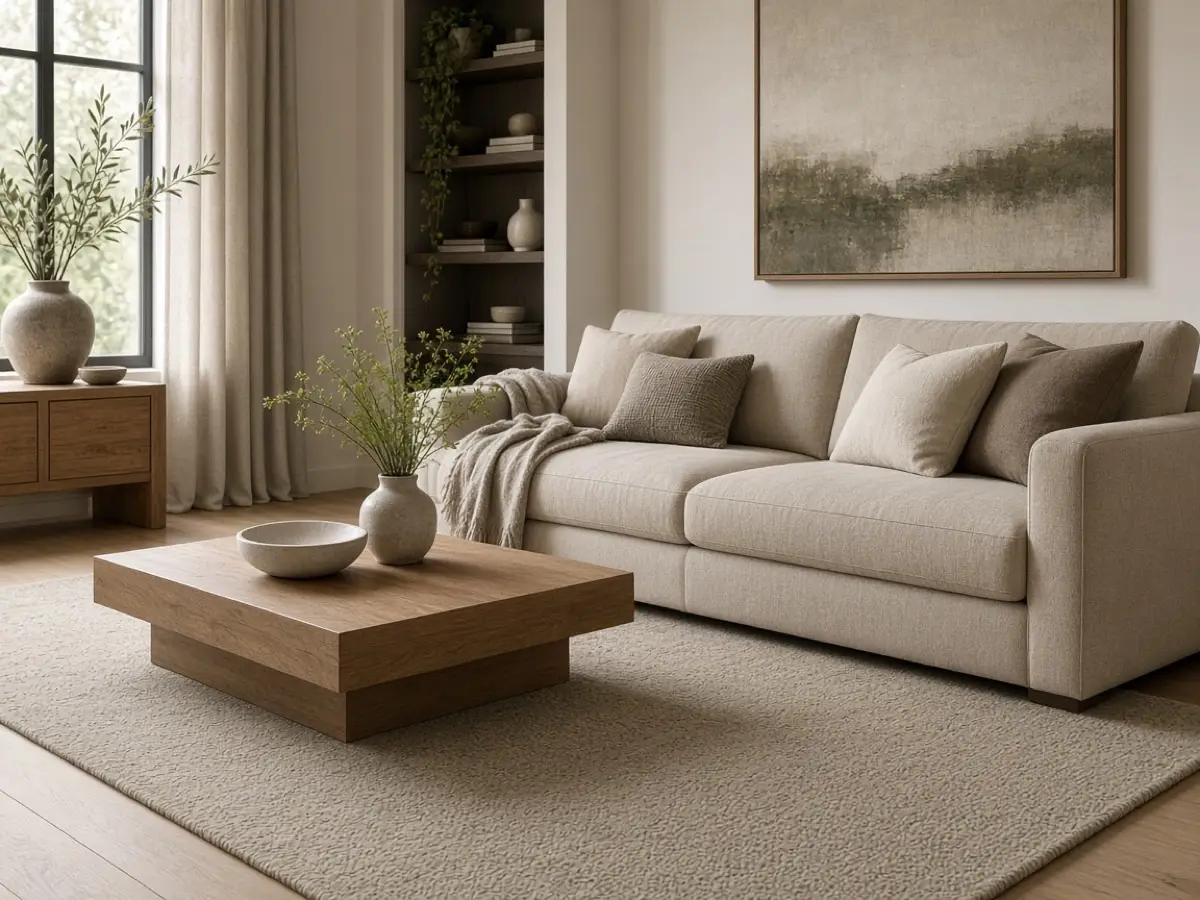
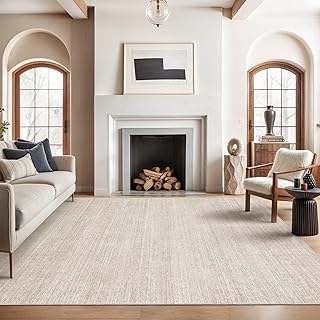
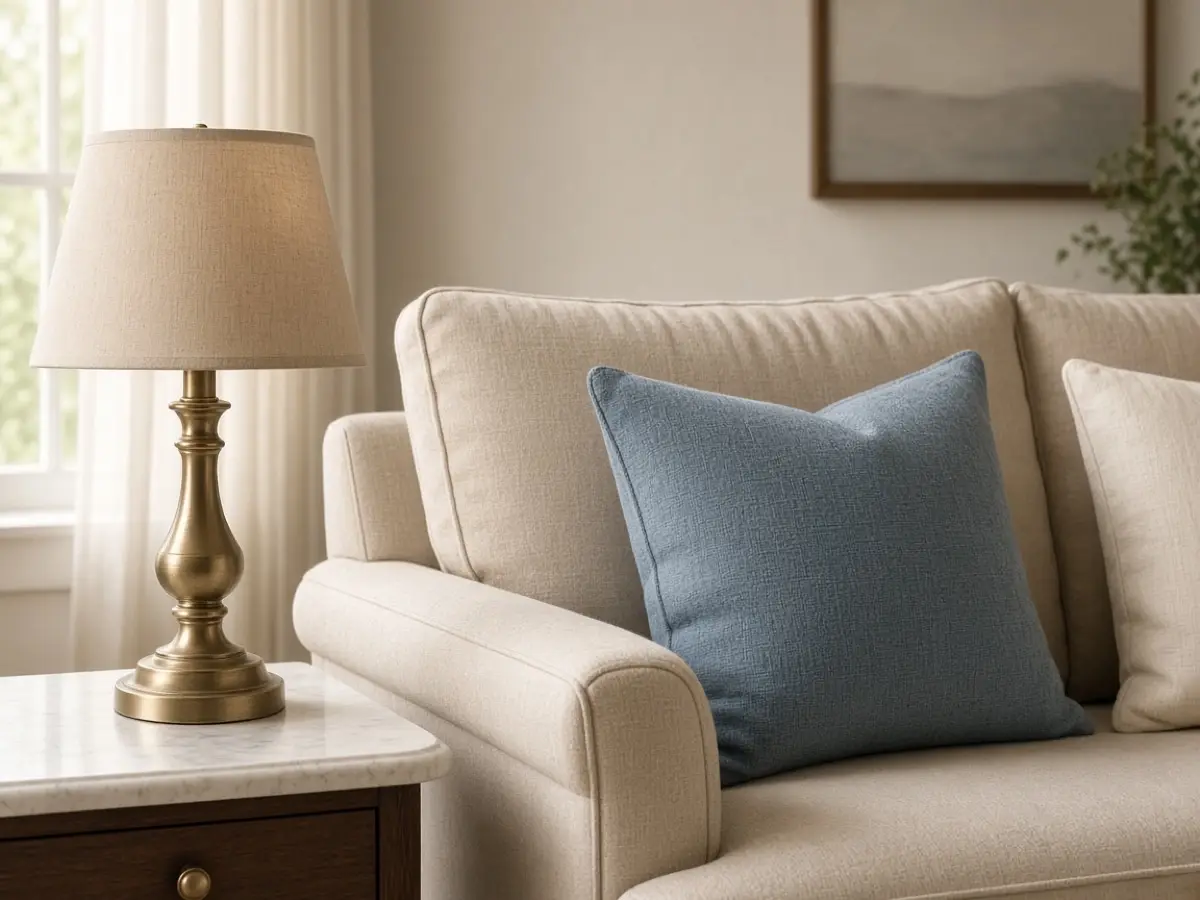
Chrome and nickel next to blue look like a boat fitting. Brass, bronze, or an aged gold on the lamp stays warm and inland. You do not need much. One lamp in brass and a wood frame will outweigh a chrome floor lamp that flashes cold. If the curtain rod is chrome, it is the piece to change, because it sits on the wall you see with the blue.
The wall updates post already moved rods and frames. Here the metal has a color job. Warm metal keeps dusty blue from going icy after dark. Cool metal undoes the beige.


7. Paint only one wall blue
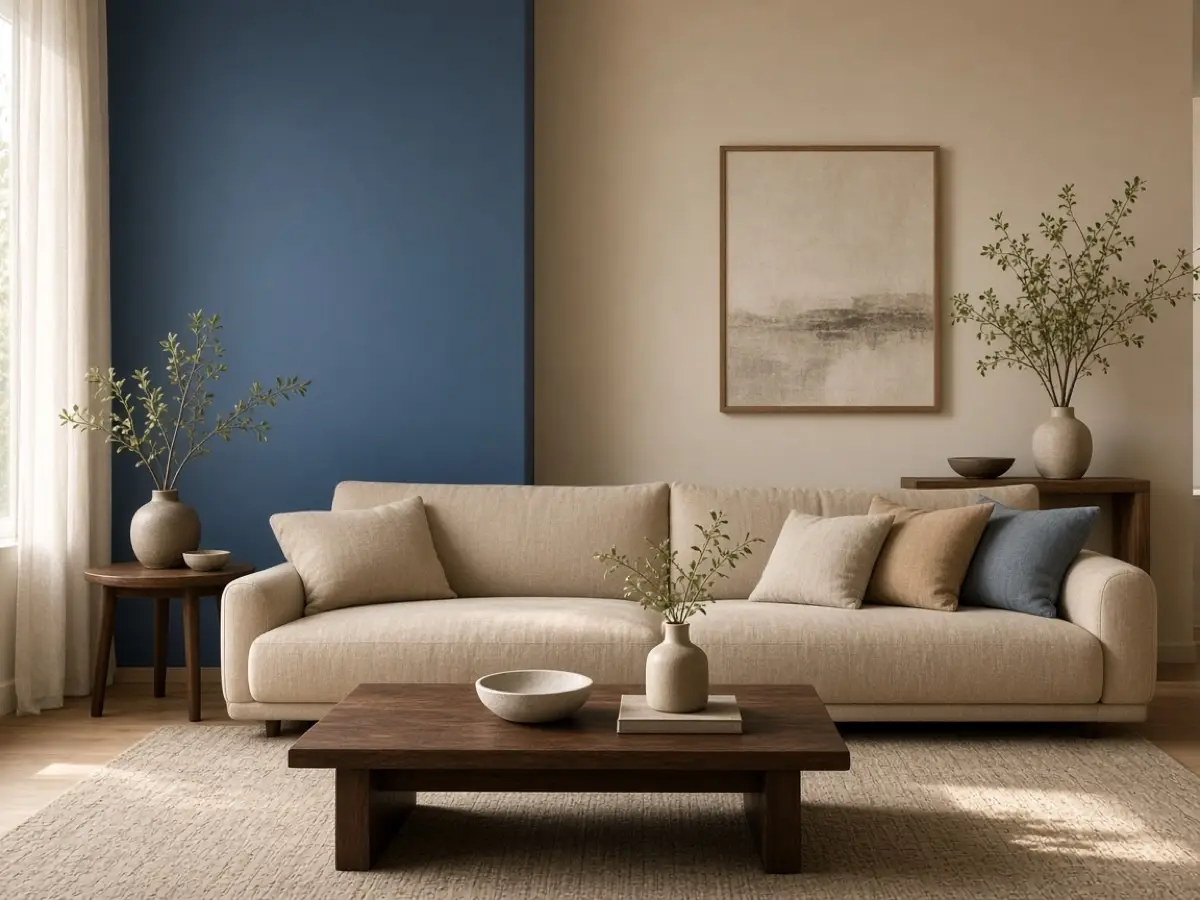
If the blue is paint, it is one wall, the one you see when you enter, in a dusty finish not a glossy marine. The other walls stay warm beige. A room wrapped in blue with beige furniture can work in a large house and feels like a cabin in a small one. Eggshell, so it does not glare.
Sample it next to the sofa fabric. Paint chips lie. A blue that looked soft in the store can look like a pool at home if the undertone is bright. The one deeper wall method applies. One wall, then stop and live with it for a week of evenings.


8. Skip the outdoor fabric
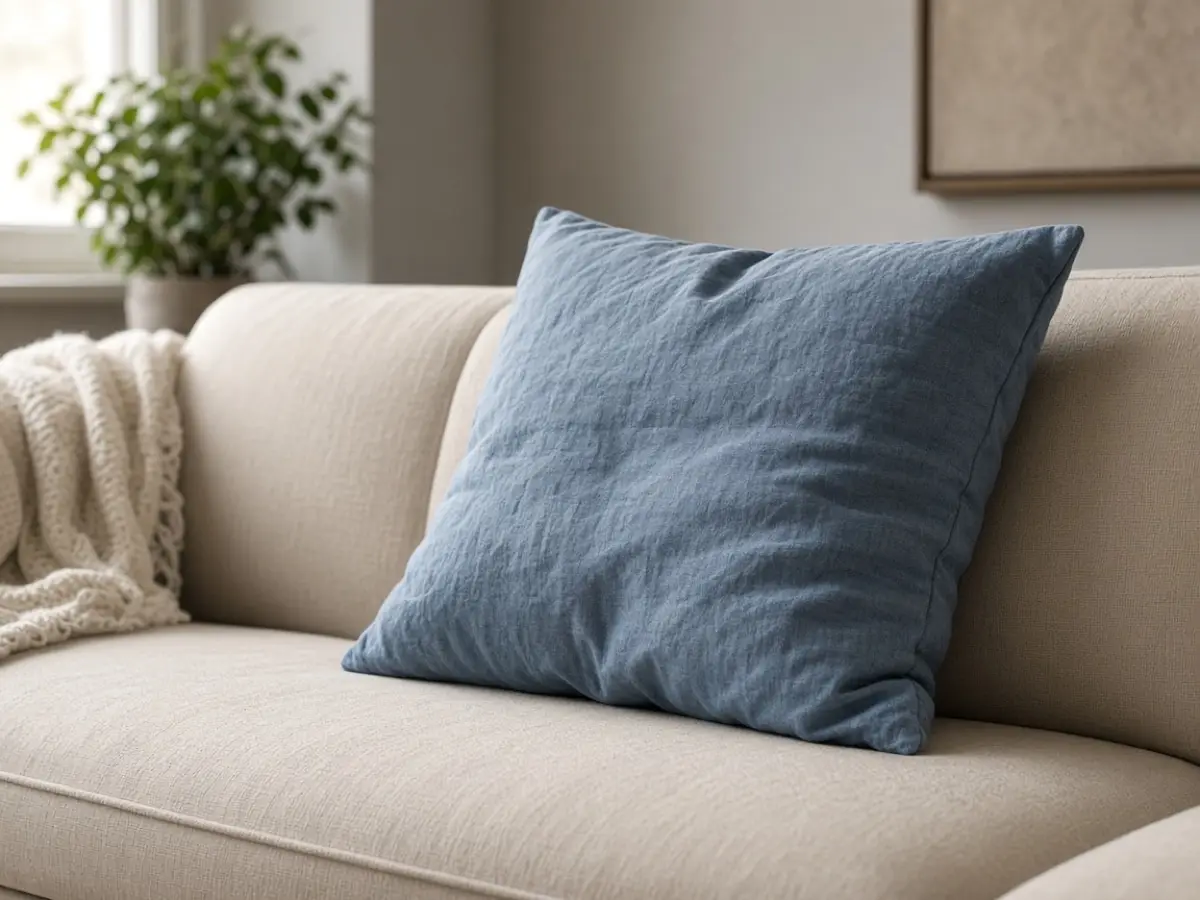
Performance fabric in bright blue, made for a patio, brings the deck inside. A linen or a cotton in a muted blue wrinkles and looks like clothing, which is what you want. If you need a cover you can wash because of kids or dogs, choose a muted one without white piping. Piping is the nautical tell even when the color is quiet.
The pillow should be one, or two if they are the same. A set of four in different blues is a collection. Collections on a sofa are how a simple scheme becomes a theme. One blue pillow on a beige sofa is the whole sentence.


9. Hang a landscape, not a seascape
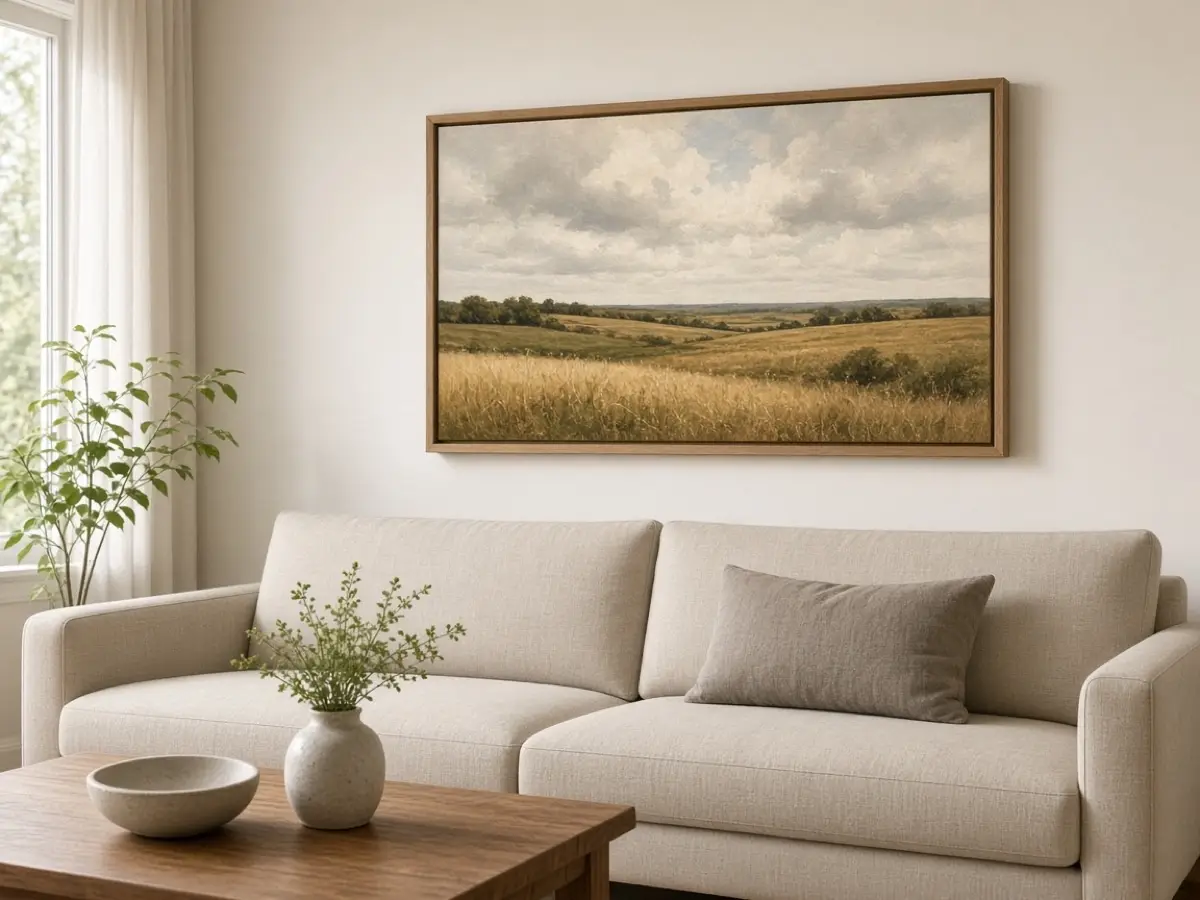
Art of a field, a tree, or a plain abstract in blue and sand supports the room. Art of a wave, a boat, or a shell explains it too hard. If the print you own is a seascape and you love it, hang it in a hall, not above the blue pillow. The living room does not need a caption.
Frame it in wood, not a white frame with a navy mat. The mat is another stripe. A simple wood frame and a wide enough border, hung near 57 inches to the center, matches the wall height rule. One picture. A gallery of blues is a second scheme.


10. Leave the curtains beige
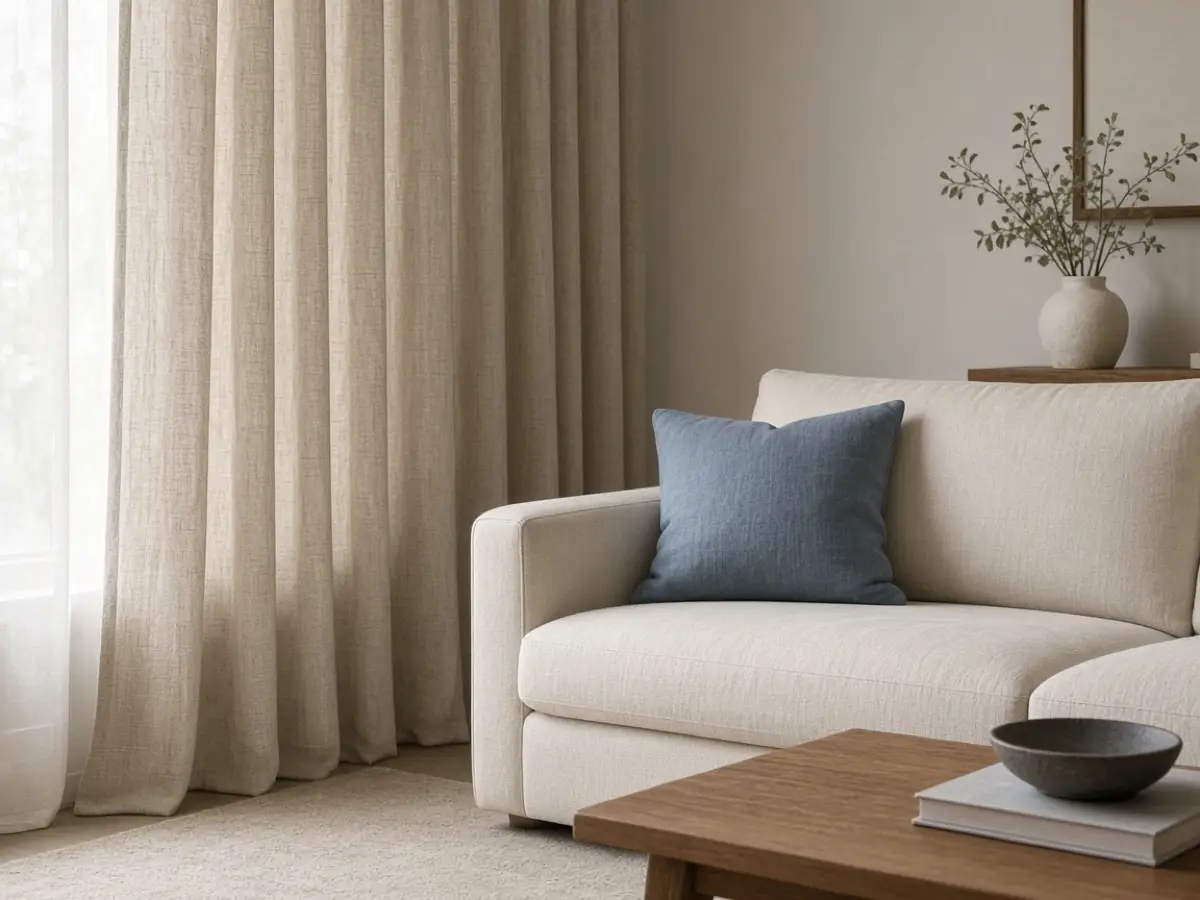
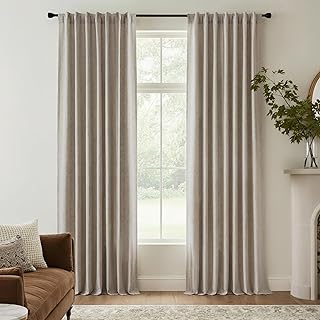
Blue curtains plus a blue pillow plus a blue wall is a lot of blue at the edge of the room, where you notice it every evening. Beige or warm cream curtains, lined if the street is bright, keep the window in the neutral family. The blue stays on the sofa, where you can change it. Curtains are harder to change.
Hang them high and wide if the rod is still sitting on the trim. The higher line makes the wall taller and has nothing to do with the coast. It is just proportion. The porch is where seasonal color can live. The living room curtains should work in March.


11. Check the room at night
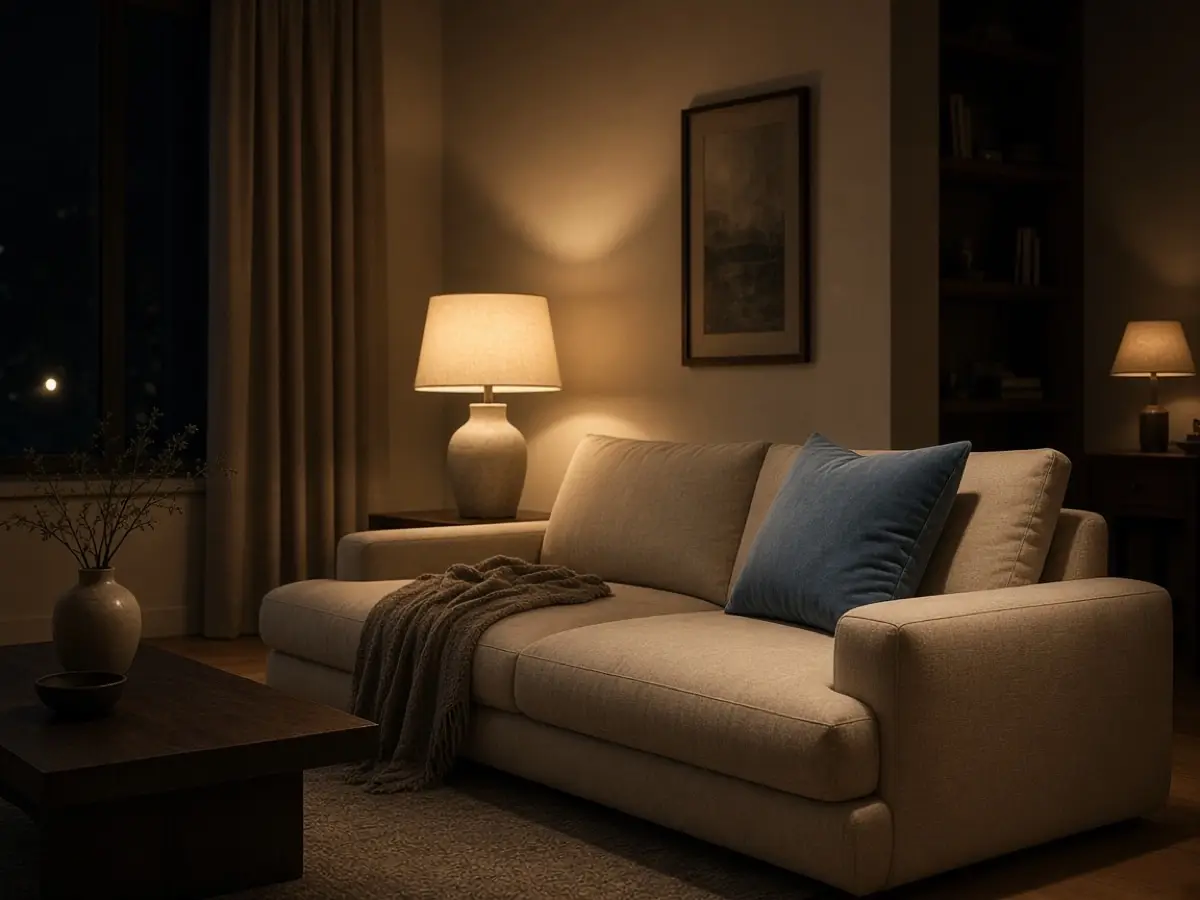
Blue is the color most likely to go cold under a cool bulb. At 8 p.m., with the ceiling light off and the lamps on, the beige should still look sand and the blue should still look dusty. If the blue looks electric, the bulb is too cool or the blue is too bright. Fix the bulb first. It is cheaper than a new pillow.
Two lamps, not one overhead. The brown-and-beige post made that case, and it matters more here because blue eats warm light. A single ceiling can is how a careful scheme becomes a waiting room. Sit in the chair you actually use, not only in the doorway.


12. Refuse the stripe set
One striped pillow can be a shirt. Four striped pillows, a striped throw, and a striped rug are a uniform. If you want a stripe, make it a thin one in blue and beige, on a single pillow, and keep every other textile solid. Wide navy-and-white stripes are the deck chair. They will override the dusty blue no matter what the walls do.
Fold the throw in a solid camel or beige. A striped throw on the arm is the first thing a photo sees and the first thing a guest sees. You can like stripes in a bedroom or a hall. This living room is trying not to explain itself.



13. Stop at two blues
Count the blues from the doorway. Pillow, wall, art, rug, vase. If you can count more than two, remove one before you add anything. Two is a scheme. Three is a theme. The beige, the oak, and the brass are doing the rest of the work, and they need room.
Then leave it. A blue and beige room that does not feel nautical is mostly a room that stopped in time. Another object with a shell on it will undo the week. Sit down at night. If it feels like your house and not a rental by the water, you are finished.


Tips Before You Start
- Use dusty blue, not marine navy with white piping.
- Keep the beige warm. Gray-beige next to blue goes cold.
- Oak and brass stay inland. Driftwood and chrome do not.
- One blue wall or a blue pillow, not both plus a blue rug and blue curtains.
- No shells, rope, anchors, or seascapes in this room.
- Look at the room at night before you buy a second blue.
FAQ
How do I decorate with blue and beige without looking coastal?
Choose a dusty blue, a warm beige, oak, and brass. Skip navy-and-white stripes, rope, shells, and bleached wood. Keep the blue to about two places in the room.
What kind of blue works with beige?
A muted, slightly gray or green blue. It should still look soft under a warm lamp at night. Bright marine blue next to white-beige is the coastal combination.
Can I use a navy sofa with beige walls?
You can, and it will feel stronger and more formal. To keep it from feeling nautical, skip the white stripe, the chrome, and the sea art. Add oak and a warm bulb.
Should curtains be blue in a blue and beige room?
Usually no. Beige curtains let the blue stay on the sofa or one wall, where you can change it. Blue curtains plus blue pillows make the edge of the room the loudest part.
Blue and beige stay inland when the blue is dusty, the beige is warm, and the objects do not explain the water. Two blues, then stop.